阿摩線上測驗
登入
首頁
>
研究所、轉學考(插大)◆普通化學
>
111年 - 111 高雄醫學大學學生轉系考試:普通化學#109910
> 試題詳解
23. Which of the following is most soluble in water
(A)
(B)
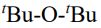
(C)

(D)
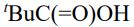
(E)

答案:
登入後查看
統計:
A(4), B(0), C(1), D(7), E(0) #2973577
詳解 (共 2 筆)
uu(已上榜)
B1 · 2023/10/12
#5945764
(共 1 字,隱藏中)
前往觀看
4
0
MoAI - 您的AI助手
B2 · 2025/12/12
#7237235
這是一道關於有機化學中「水溶性(Solu...
(共 2510 字,隱藏中)
前往觀看
0
0
其他試題
19. Which one of these statements about strong acids is true? (A) All strong acids have H atoms bonded to electronegative oxygen atoms. (B) Strong acids are 100% ionized in water. (C)The conjugate base of a strong acid is itself a strong base. (D) Strong acids are very concentrated acids. (E) Strong acids produce solutions with a higher pH than weak acids.
#2973573
20. You have 500.0 mL of a buffer solution containing 0.20 M acetic acid (CH3COOH) and 0.30 M sodium acetate (CH3COONa). What will the pH of this solution be after the addition of 20.0 mL of 1.00 M NaOH solution?(A) 4.41 (B) 4.74 (C)4.56 (D) 4.92 (E) 5.07
#2973574
21. Which one of the following reactions would you expect to have the lowest △S°? (A)(B) (C) (D) (E) All the above reactions have the same △S°
#2973575
22. The formula “” should be a. Alkanes; b. Alkenes; c. Alkynes; d. Cycloalkane (A) a or b (B) b or c (C)c or d (D) a or d (E) b or d
#2973576
24. In the complex ion , the oxidation number of Co is (A) +1 (B) +2 (C)+3 (D) -2 (E) -1
#2973578
25. Which complex has the less unpaired electrons (A) (B) (C)Na3[CoCl6] ; (D) [Cr(NH3)3(H2O)Cl2]Cl (E)
#2973579
1. Aquaporins (A) allow water to cross the plasma membrane via facilitated diffusion. (B) allow water to cross the plasma membrane against its concentration gradient. (C) allow for the active transport of water. (D) are found in all cells. (E) all are correct.
#2973580
2. The nitrogen-fixing activity of cyanobacteria takes place in (A) thylakoid (B) heterocyte (C) chloroplast (D) plasmid (E) endospore
#2973581
複選題3. Which substance could be an enzyme cofactor? (A) protein (B) polypeptide (C) zinc atom (D) ribosome (E) vitamin
#2973582
4. How does inhibition of an enzyme-catalyzed reaction by a competitive inhibitor differ from inhibition by a noncompetitive inhibitor? (A) Competitive inhibitors interfere with the enzyme; noncompetitive inhibitors interfere with the reactants. (B) Competitive inhibitors bind to the enzyme reversibly; noncompetitive inhibitors bind to it irreversibly. (C) Competitive inhibitors change the enzyme's tertiary structure; noncompetitive inhibitors cause polypeptide subunits to dissociate. (D) Competitive inhibitors bind to the active site of the enzyme; noncompetitive inhibitors bind to a different site. (E) Noncompetitive inhibitors bind to the active site of the enzyme; competitive inhibitors bind to a different site.
#2973583