阿摩線上測驗
登入
首頁
>
學士後西醫-化學
>
114年 - 114 國立中興大學_公費生招生考試_學士後醫學系:化學#126482
> 試題詳解
27.Which configuration corresponds to (R) in the given molecule
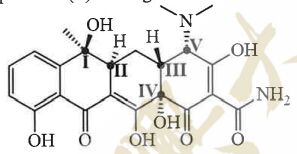
(A) I
(B) II
(C) III
(D) IV
(E) V
答案:
登入後查看
統計:
A(3), B(1), C(3), D(1), E(0) #3426973
詳解 (共 1 筆)
MoAI - 您的AI助手
B1 · 2025/09/20
#6762152
很高興能為您提供詳細的解答說明。由於題目...
(共 910 字,隱藏中)
前往觀看
4
0
相關試題
1.Which equation correctly describes the change in Gibbs free energy for a reaction at non-standard conditions? (A) AG = AG° + RT ln(Q) (B) AG = ΔΗ - TAS (C) AG = -RT ln(K) (D) AG = RT In(Q/K) (E) AG = AG° - RT ln(K)
#3426947
2.In a system at equilibrium, how are AG and the equilibrium constant K related? (A) AG = 0; K = 1 (B) AG° = -RT ln(Q/K) (C) AG > 0; K < 1 (D) AG = RT ln(K) (E) AG° = -RT ln(K)
#3426948
3.What is the primary effect of adding a catalyst to a reversible reaction at equilibrium? (A) Increases the forward rate only. (B) Shifts the equilibrium constant. (C) Alters the reaction enthalpy. (D) Increases the activation energy required for the reaction. (E) Increases the rates of both forward and reverse reactions equally.
#3426949
4.Who did not contribute the Atomic Theory? (A) John Dalton (B) Emil Fischer (C) Ernest Rutherford (D) James Chadwick (E) J. J. Thomson
#3426950
5.Indicate which of the following sets of quantum numbers (n, l, ) in an atom is acceptable: (A) (1, 0, 2, -1/2) (B)(C)(D)(E) (3, 2, 1, 1)
#3426951
6.Phenyl Grignard reagent reacts with 2-methylpropanal to form a secondary alcohol. The <sup>1</sup>H NMR spectrum of 2-methylpropanal displays the two methyl groups as equivalent (a single doublet at δ 1.1). However, in the product alcohol (a racemic mixture), the <sup>1</sup>H NMR now shows two distinct 3H doublets, one at δ 0.75 and one around δ 1.0. Why do the two methyl groups in the product have different NMR chemical shifts? What is the term applied to such protons? (A) The presence of the hydroxyl group creates an asymmetric center, making the methyl groups homotopic. (B) The formation of a chiral center in the product makes the two methyl groups diastereotopic, meaning they experience different chemical environments. (C) The hydroxyl group participates in hydrogen bonding, causing different splitting patterns for the methyl groups, which are now homotopic. (D) The two methyl groups in the product remain chemically equivalent, and the observed difference in NMR chemical shifts is due to rotational averaging. (E) The steric hindrance of the bulky phenyl group shields one methyl group, making them enantiotopic rather than diastereotopic.
#3426952
7.What does the pre-exponential factor in the Arrhenius equation represent? (A) Activation energy. (B) Reaction probability. (C) Temperature dependence. (D) Molecular orientation during collisions. (E) Frequency of collisions.
#3426953
8.How does enzyme turnover number (k<sub>cat</sub>) relate to reaction velocity? (A) Determines the maximum reaction velocity when the enzyme is saturated with substrate. (B) Reflects the enzyme's catalytic efficiency relative to substrate concentration. (C) Is directly proportional to the rate constant for enzyme-substrate binding. (D) Indicates the fraction of substrate molecules converted to product per second. (E) Describes the maximum catalytic rate normalized by the enzyme’s molecular weight.
#3426954
9.A researcher is studying an enzyme-catalyzed reaction and observes that adding a certain compound decreases the reaction rate without affecting the substrate binding at the active site. Which mechanism most likely explains this observation? (A) The compound increases substrate affinity. (B) The compound stabilizes the enzyme’s active form. (C) The compound induces a conformational change, reducing enzyme activity. (D) The compound decreases the reaction rate by irreversibly inhibiting the enzyme. (E) The compound physically blocks the active site, preventing substrate binding.
#3426955
10.The following NMR spectrum corresponds to a compound with the molecular formula . Propose a structure and explain how it is consistent with the observed absorptions. (A)Ⅰ (B)Ⅱ(C)Ⅲ(D)Ⅳ(E)Ⅴ
#3426956
相關試卷
114年 - 114 國立中興大學_公費生招生考試_學士後醫學系:化學#126482
2025 年 · #126482
113年 - 113 國立中興大學_公費生招生考試_學士後醫學系:化學科#119556
2024 年 · #119556
112年 - 112 國立中興大學_學士後醫學系招生考試試題_學士後醫學系甲、乙組:化學#113979
2023 年 · #113979
109年 - 109 高雄醫學大學_學士後醫學系招生考試:化學#87230
2020 年 · #87230
108年 - 108 高雄醫學大學_學生轉系考試試題:普通化學#86806
2019 年 · #86806
108年 - 108 學士後西醫:化學#77055
2019 年 · #77055
107年 - 高雄醫學大學 107 學年度學士後醫學系招生考試試題(共同科目)--化學#75186
2018 年 · #75186
106年 - 106 高雄醫學大學_學士後醫學系招生考試:化學#77049
2017 年 · #77049
99年 - 學士後西醫化學99化學#36021
2010 年 · #36021
97年 - 學士後西醫化學97化學#78689
2008 年 · #78689