阿摩線上測驗
5.承上題,上述病人10年後某日突發右腰劇痛,上廁所發現有血尿現象。急診室醫師以超音波檢查發現病人兩側 腎臟中皆有結石,最大者直徑約1.2公分,但照一般X光片卻無法明顯看到結石。有關此病人結石之處置,下列何種藥物治療最不恰當?
(A)allopurinol
(B)potassium citrate
(C)probenecid
(D)sodium bicarbonate
(A)allopurinol
(B)potassium citrate
(C)probenecid
(D)sodium bicarbonate
答案:登入後查看
統計: A(186), B(210), C(576), D(181), E(0) #3118866
統計: A(186), B(210), C(576), D(181), E(0) #3118866
詳解 (共 5 筆)


ciwa901215
#6396584
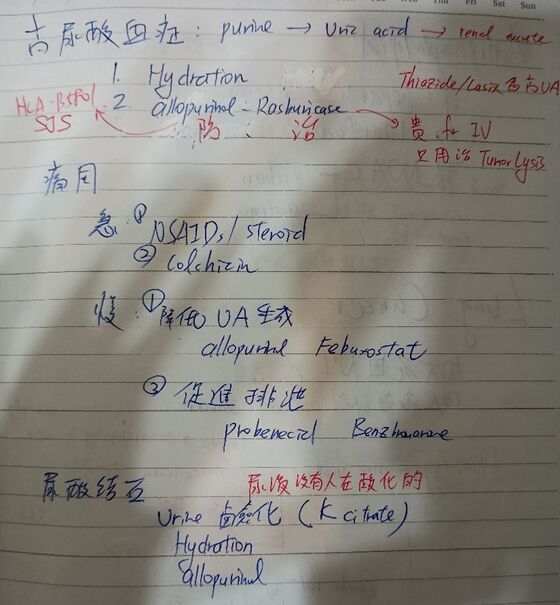
尿酸結石的處置原則包括:
- 鹼化尿液(pH 提高至 >6.5)以增加尿酸溶解度:
- 可用 potassium citrate 或 sodium bicarbonate
- 使用 allopurinol 抑制尿酸生成
- probenecid 會增加尿酸排出,反而可能加重尿酸結晶和結石形成
2
0

james
#6002489
Ref:Uric Acid Nephrolithiasis - StatPearls - NCBI Bookshelf (nih.gov)
Medical Management [14]
-
Urinary alkalinization helps dissolve and prevent uric acid stones. The goal is a urinary pH that is consistently above 6.5. Ultrasound and CT scans can be used to monitor the response to treatment. Potassium citrate is usually preferred, but sodium citrate and sodium bicarbonate can also be used. However, sodium-based alkalinizing agents tend to increase urinary calcium excretion and may promote the formation of calcium-based nephrolithiasis.[67]
-
Potassium citrate: 15 to 30 mEq, 2 or 3 times daily
-
Sodium bicarbonate: 500 to 1000 mg 3 times a daily
-
Acetazolamide: 500 mg per day increases urinary pH by inhibiting urinary bicarbonate absorption, but it also lowers citrate excretion and can cause volume depletion
-
-
Xanthine oxidase inhibitors are used in patients with hyperuricemia or hyperuricosuria. Adjust as needed for optimal serum uric acid levels of 6 mg/dL or less and urinary levels of 600 mg/d or less.
-
Allopurinol: 100 to 300 mg daily; usual dose is 300 mg
-
0
1

JuJu
#7439418
0
0
Darren
#7400179
Probenecid 減少腎小管再吸收 反而尿中尿酸濃度上升 更易結石
0
0