阿摩線上測驗
登入
首頁
>
研究所、轉學考(插大)◆有機化學及無機化學
>
103年 - [非官方正解]103 國立成功大學_碩土班招生考試試題_化學系:有機化學#123767
> 申論題
題組內容
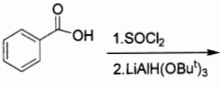
四、請寫出下列各反應的生成物
14.
申論題作答 (共 1 筆)
依時間顯示最近 1 筆。
一起撐住一起上榜
申論題作答 #84764
94 分
94
總分
題意符合度
95分
論證結構
92分
語言表達
95分
2分4秒
總時間
0
人解鎖
2026.06
作答大綱
步驟一:醯氯化反應(Acid Chloride Formation)步驟二:選擇性還原反應(Sel...
正文
步驟一:醯氯化反應(Acid Chloride Formation) 羧酸(−COOH)直接用強還原...
解鎖 286 字
相關申論題
15.
#525693
16.
#525694
17.
#525695
18.
#525696
一、請將下列兩段英文翻譯成中文 Part I (30 points) Researchers associated with the international motor vehicle industry first identified the “lean manufacturing” paradigm, which is a philosophy intended to significantly reduce cost and cycle time throughout the entire value chain while continuing to improve product performance. Airlines, like the automotive industry, strive for leanness, because being lean means being competitive by eliminating the non-value added practices. The implementation of complex lean initiatives is critical for quality improvement and survival. In order to compete in this new economy companies must have: (1) quality beyond the competition; (2) technology before the competition; and (3) costs below the competition (Gregory Watson, 1993). In other words, many companies must strive to be better, faster, and cheaper than their competitors. These are some of the characteristics of a “lean” enterprise. (Adopted from Less is More: The Concept of a “Lean” Airline by Dennis F.X. Mathaisel and Clare L. Comm.)
#525697
一、請將下列兩段英文翻譯成中文 Part II (30 points) Hubs are likely to be more successful if they have a large local traffic base, minimal existing competition, room for expansion, good weather and a spatial geography suited to aircraft schedules and to being a natural waypoint (Wheeler, 1989; Huston and Butler, 1991). Several types of hubs have developed. ‘Hourglass’ hubs (Doganis and Dennis, 1989) serve directional traffic, the waves alternating in direction. The East-West flows have particularly ‘peaky’ daily characteristics due to the time zone changes along the routes. ‘Gateway’ hubs (e.g. New York Kennedy or London Heathrow) also exhibit this ‘peaky’ characteristic as they link long haul with domestic traffic. The effective city pair markets are only approximately half the theoretical (n(n + 1)/2 in the case of these directional hubs. Alternatively, hubs can be more omnidirectional. These may be called ‘hinterland’ or ‘speciality’ hubs (Horner, 1989). In the latter, the airlines hubbing there will specialise in linking secondary cities to primary cities. In the former, regional feeder airlines will have close relationships with the trunk carriers, adding to the trunks’ own through traffic. (Adopted from European airline networks and their implications for airport planning by Robert E Caves)
#525698
二、請將下列中文翻譯成英文 Part III (40 points) 駕駛者對於擁擠之反應,可透過改變路徑或出發時間因應之,因此,如何 分散時間與空間上需求之集中,使車流量能隨時隨處保持於臨界流量之下,即 成為交通管理之要務與努力達成之目標。 各類疏解尖峰擁擠的策略雖不斷被提出,也或多或少獲致某一程度的效 果,但即使採用最先進的駕駛資訊系統亦無法明確掌握住出於駕駛者自由意志 的出發時間與路徑選擇,此仍因面對各式各樣的資訊,使用者之反應與行動為 一相當複雜且難以了解的過程。 關鍵詞:交通管理、駕駛資訊。
#525699
1. 試求下列有效數字運算之結果﹕140+7.68+0.01438×95×1.792
#525700
2. 根據路易士觀念,解釋何者為酸 ﹖何者為鹼 ﹖
#525701
3. 試定義“同分異構物”,並用 C5H12的結構式說明。
#525702
相關試卷
115年 - [無官方正解]115 國立中山大學_碩士班考試入學招生考試試題_化學系:有機化學及無機化學#138420
115年 · #138420
114年 - [無官方正解]114 國立中山大學_碩士班考試入學招生考試試題_化學系:有機化學及無機化學#138439
114年 · #138439
113年 - [非官方正解]113 國立中山大學_碩士班暨碩士在職專班招生考試試題_化學系碩士班:有機化學及無機化學#119266
113年 · #119266
112年 - [非官方正解]112 國立中山大學碩士暨碩士專班招生考試_化學系碩士班:有機化學及無機化學#119263
112年 · #119263
111年 - [非官方正解]111 國立中山大學_碩士班暨碩士在職專班招生考試_化學系:有機化學及無機化學#126310
111年 · #126310
110年 - [非官方正解]110 國立中山大學碩士暨碩士專班招生考試_化學系碩士班:有機化學及無機化學#110464
110年 · #110464
109年 - [無官方正解]109 國立中山大學_碩士班考試入學招生考試試題_化學系:有機化學及無機化學#138499
109年 · #138499
108年 - [無官方正解]108 國立中山大學_碩士班考試入學招生考試試題_化學系:有機化學及無機化學#138538
108年 · #138538
107年 - [無官方正解]107 國立中山大學_碩士班考試入學招生考試試題_化學系:有機化學及無機化學#138542
107年 · #138542
105年 - [無官方正解]105 國立中山大學_碩士班暨碩士專班招生考試_化學系:有機化學與無機化學#138560
105年 · #138560
 阿摩線上測驗
登入
阿摩線上測驗
登入