所屬科目:研究所、轉學考(插大)◆分子生物學
1. One major problem of replicating linear DNA is that (A) the replicated DNA duplexes form catenane (B) the ends of linear DNA cannot be completely replicated (C) the replicated DNA duplexes are covalently linked (D) all of the above
2. When a rare base 5-methyl cytosine is deaminated in the DNA, what kind of mutation will be produced in the replicated DNA. (A) CG to TA (B) CG to GC (C) CG to AT (D) deletion of one base pair
3. A mutation that produces a temperature-sensitive phenotype is generally caused by: (A) base-pair substitution (B) macro-deletion (C) translocation (D) insertion
4. To determine if DNA replicates semi-discontinuously or discontinuously in both strands, the bacteria were pulse-labeled with radioactive H-thymidine and the sizes of labeled DNA were analyzed by sedimentation in: (A) Neutral sucrose gradient. (B) CsCl density gradient. (C) Alkaline sucrose gradient. (D) Alkaline CsCl density gradient.
5. The base composition of nucleic acids isolated from an unknown virus was found to contain 23% A, 23% U, 24% G and 30% C. The nucleic acid of this virus is likely: (A) Single-stranded RNA (B) Double-stranded DNA (C) Single-stranded DNA (D) Double-stranded RNA
6. Which of the following information would allow you to know if a gene may be interrupted by introns (A) knowing the amino acid sequence of the gene product (B) knowing the nucleotide sequence of cDNA (C) knowing the restriction map of this gene on chromosome (D) knowing the restriction maps of this gene on chromosome and cDNA
7. Which of the following DNA repair processes can reverse the UV-induced photoproduct, cyclobutadipyrimidines, directly to its original state (i.e., two pyrimidines): (A) excision repair (B) mismatch repair (C) recombination repair (D) enzymatic photoreactivation
8. In homologous recombination in E. coli, the protein that resolves the Holliday juncture into recombinant products is: (A) RecA. (B) RuvA (C) RuvB. (D) RuvC.
9. Which component of polymerase is required only for transcriptional initiation? (A) Alpha subuint (B) beta subunit (C) (sigma 70) subunit (D) holoenzyme
10. What is not involved in stopping synthesis of Trp mRNA? (A) RNA stem-and-loop structure (B) Attenuator of mRNA structure (C) Rho protein (D) Sigma 70 protein
11. Which signal is induced by amino acid starvation to stop continuous translation? (A) GGpGG (B) ppGpp (C) ATP (D) GTP
12. Which statement is correct for the "intron" of a human gene? (A) An RNA region that interrupts transcribed part of a gene (B) A gene region that is ultimately represented in its mature RNA (C) 5' splicing donor (D) 5'-untranslated region or 5'-UTR
13. Which is a common factor in the positive regulation simultaneously of a set of gene expression in bacteria? (A) IPTG (B) attenuator (C) CRP-CAMP (D) Ara C-arabinose
14. An experiment on wild-type and a Rpb4 mutant polymerase II indicates that both proteins exhibited same activity in RNA synthesis. What is the information provided by this result? (A) Rbp4 mutation is lethal (B) Rbp4 is a core subunit (C) Rbp4 is nonessential (D) Rbp4 is essential
15. RNA polymerses I, II, and III were assayed for enzymatic activity with increasing concentrations of a-amanitin (0.02 ~ 200 µg/ml). Which of the following polymerases is extremely sensitive to a-amanitin and capable of making mRNA? (A) Polymerase I (B) Polymerase II (C) Polymerase III (D) none of the above
16. Which RNA type is not synthesized by polymerase II? (A) microRNA (miRNA) (B) ribosomal 28S rRNA (C) small nuclear RNA (snRNA) (D) heteronuclear RNA (hnRNA)
17. Which statement is least or not appropriate for RNA interference (RNAi)? (A) it may inhibit translation of specific gene (B) it may cause specific mRNA degradation (C) it involves the control of gene expression (D) none of the above
18. A hybrid cell or heterokaryon was generated by fusion of an S-phase and an M-phase human cells. What is the most likely state of the nucleus of the S-phase cell following few hours of incubation? (A) G1 phase (B) S phase (C) G2 phase (D) M phase
19. If a loss of function mutation was found in the 5'UTR of a gene, what would be the most likely effect of this mutation? (A) A truncated protein was made from this gene (B) The levels of protein encoded by this gene was reduced significantly (C) The mRNA level of this gene was increased (D) The upstream gene was not expressed
20. Morphogen is very important during development to induce different cell fates, which of the following features does not belong to it? (A) A concentration gradient (B) Only produced by certain cells (C) Is diffusible (D) expresses ubiquitously
21. How will you detect a deletion mutation, except? (A) RNA in situ hybridization (B) PCR to determine the DNA size (C) DNA sequencing (D) Western Blotting to determine protein expression
22. Expression of His x 6-tagged fusion protein in E.coli is frequently performed by molecular biologists to prepare recombinant proteins for experiments. What kind of metal ion can be used to selectively bind the His x 6-tagged fusion protein, which allows investigator to purify recombinant proteins more easily? (A) (B) (C)(D)
23. The restriction map of plasmid pBR322 is shown below. If a foreign DNA fragment is inserted into this plasmid at the BamHI site, what will be the antibiotic resistance of the new plasmid? (A) Resistant to tetracycline (B) Resistant to ampicillin (C) Resistant to ampicillin and tetracycline (D) No resistance to ampicillin and tetracycline
24. PCR is a well-known technique to amplify DNA fragments conveniently. Please estimate the theoretical numbers of DNA fragments when 22 cycles was carried out in a PCR reaction to amplify a DNA fragment with a pair of primers: (A) ~500,000 (B) ~1,000,000 (C) ~2,000,000 (D) ~4,000,000
25. Forensic uses of DNA fingerprinting and DNA typing have been successfully applied in identifying criminal. Where are the probes for DNA fingerprinting (typing) derived from? (A) High GC-rich sequences (B) High AT-rich sequences (C) Minisatellite sequences (D) Palindrome sequences
26. Which one of the following methods can be used to locate genes in chromosomes? (A) FISH (B) Southern blot (C) Northern blot (D) EMSA
27. Nine promoters (promoter 1-7) are individually cloned into the CAT (chloramphenicol acetyl transferase) reporter plasmid, and each plasmid is transfected into cells, followed by assay of the CAT activity using thin-layer chromatography. The result is shown below. According to this result, which promoter has the strongest activity? (A) Promoter 1 (B) Promoter 2 (C) Promoter 4 (D) Promoter 6
28. What is the major determinant in the measurement of the size of a DNA fragment during agarose gel electrophoresis? (A) charge of a DNA fragment (B) molecular weight of a DNA fragment (C) charge to molecular weight ratio of a DNA fragment (D) friction force between DNA fragment and agarose gel
29. DNase footprinting is usually used to: (A) determine the sequence of DNA fragment (B) locate a protein binding site in a DNA fragment (C) locate the 5'-end of a DNA fragment (D) locate the 3'-end of a DNA fragment
30. Which of the followings can not help you discover a tumor suppressor gene? (A) Cell transformation assay using NIH-3T3 cells transfected with random DNA fragments from human cancer cells. (B) Positional cloning of the genes causing rare familial cancers (C) Defining chromosomal locations commonly deleted in tumor cells (D) Testing tumors for mutations in genes known to be involved in cell cycle regulation.
31. The primary RNA transcript of the chicken ovalbumin gene is 7700 nucleotides long, but the mature mRNA that is translated on the ribosome is 1872 nucleotides long. This size difference occurs primarily as a result of: (A) capping (B) cleavage of polycistronic mRNA (C) removal of poly A tails (D) splicing
32. RNAs that catalyze biological reactions, such as self-splicing introns, are known as: (A) enzymes (B) spliceosomes (C) ribozymes (D) lariats
33. Which statement is not true about nucleic acid hybridization? (A) it depends on complementary base pairing (B) a polysaccharide can hybridize with a DNA strand (C) a DNA strand can hybridize with another DNA strand (D) an RNA strand can hybridize with a DNA strand
34. Promoters for eukaryotic mRNA synthesis: (A) are more complex than prokaryotic promoters (B) can require binding of multiple transcription factors to form a transcription complex (C) have specific DNA sequences such as the "TATA" box that are recognized by proteins (D) all of the above
35. mRNA will form hybrids only with the coding strand of DNA because: (A) DNA will not reanneal at high temperatures (B) the salt concentration will affect DNA reannealing (C) DNA will not reanneal at low temperatures (D) RNA:DNA hybridization follows the base-pairing rules
36. Which of the followings is not involved in regulating the synthesis of RNA in the eukaryotic nucleus? (A) active genes in euchromatin, and inactive genes in heterochromatin (B) amplification of some genes such as rRNA genes (C) use of different RNA polymerases to transcribe different classes of RNA (D) spliceosomes that stimulate synthesis of intron-containing hnRNAS
37. Which of the followings best describes the complete sequence of steps occurring during every cycle of PCR?
1. The primers hybridize to the target DNA.
2. The mixture is heated to a high temperature to denature the double-stranded target DNA.
3. Fresh DNA polymerase is added.
4. DNA polymerase extends the primers to make a copy of the target DNA. (A) 2, 1, 4 (B) 1, 3, 2, 4 (C) 3, 4, 1, 2 (D) 3, 4, 2
38. Which of the followings is used to make complementary DNA (cDNA) from RNA? (A) restriction enzymes (B) gene cloning (C) DNA ligase (D) reverse transcriptase
39. The first cloned cat, called Carbon Copy, was a calico, but she looked significantly different from her female parent. Why? (A) The environment, as well as genetics, affects phenotypic variation. (B) Fur color genes in cats are influenced by differential acetylation patterns. (C) Cloned animals have been found to have a higher frequency of transposon activation (D) X inactivation in the embryo is random and produces different patterns.
40. DNA microarrays have made a huge impact on genomic studies because they (A) can be used to eliminate the function of any gene in the genome. (B) can be used to introduce entire genomes into bacterial cells. (C) allow the expression of many or even all of the genes in the genome to be compared at once. (D) allow physical maps of the genome to be assembled in a very short time.
二、問答題 1. Both bacterial strains A and B possess gene X on their chromosomes. However, only strain A shows a positive reaction with anti-protein X antibody in the Western analysis. What mutation(s) does strain B have? Describe an experiment to identify the possible mutation(s).
2. At 8:00 a.m. a closed flask of sterile broth is inoculated with 10,000 bacteria. The lag phase lasts 2 hour. At 4:00 p.m. the log phase culture has a population of 1 x 10⁷ bacteria. What is the generation time of this bacterium? Please include your calculation in your answer.
3. Read the following paragraph and answer the question:
Using transgenic plants as a novel and safe system for vaccine production, which could become an attractive alternative in animal health care. The fact that feeding animals with transgenic plants expressing a recombinant antigen caused a systemic immune response demonstrates the viability of using recombinant plants as both an expression and delivery system for oral vaccines. The establishment of plant-based immunization methods for microbial antigens may be an inexpensive alternative to conventional fermentation systems for vaccine production, as plants can be grown inexpensively in large quantities and provide a practical and feasible delivery system.
Question: Please name two advantages of using transgenic plants for vaccine production.
(a) What is the full term for "PCR" described above?
(b) Explain why PCR is an indispensable technique in medical and biological research.
 阿摩線上測驗
登入
 (sigma 70) subunit (D) holoenzyme
 (B)
 (C)
 (D)

 (A) Resistant to tetracycline (B) Resistant to ampicillin (C) Resistant to ampicillin and tetracycline (D) No resistance to ampicillin and tetracycline
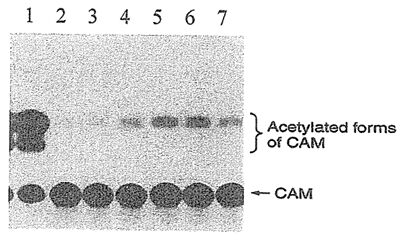 (A) Promoter 1 (B) Promoter 2 (C) Promoter 4 (D) Promoter 6