所屬科目:研究所、轉學考(插大)◆生物化學
4. If the of the reaction A →B is -40 kJ/mol, under standard conditions the reaction: (A) is at equilibrium. (B) will never reach equilibrium. (C) will not occur spontan neously. (D) will proceed spontancously from left to right. (E) will proceed spontancously from right to left.
5. In hemoglobin, the transition from T state to R state (low to high affinity) is triggered by: (A) binding. (B) heme binding. (C) oxygen binding. (D) subunit association. (E) subunit dissociation.
7. Which one is an ω-6 fatty acid? (A)(B)(C) (D)(E)
12. Starch is a high molecular weight polymer of D-glucose in α1→4 linkage. It is synthesized by starch synthase, which transfers glucose residues from _______to preexisting starch molecules. (A) glucose 6-phosphate (B) ATP-glucose (C) ADP-glucose (D) sucrose (E) glucose 1-phosphate
13. Which of the following descriptions about the melting temperatures of the fatty acids are correct? (A) 1,3, and 4 only (B) 3,4, and 6 only (C) 2,3, and 5 only (D) 3 and 6 only (E) 1 and 4 only
14. Oxidative stress results when the superoxide anion () is formed as a side reaction of mitochondrial electron transport. This oxygen anion radical is made nontoxic by the action of enzymes in the mitochondrial matrix. Which of the following enzymes acts on two , converting then to one molecule of water and one of H2O2? (A) Glutathione reductase. (B) Superoxide hydroxylase. (C) Glutathione peroxidase. (D) Glutathione. (E) Superoxide dismutase.
25. Cellulose fibers resemble with the protein structure in the form of: (A) β-sheets. (B) α-helices. (C) β-turns. (D)AII of the above(E) both β-sheets and u-helices.
7". The sequence of this peptide should be:
(A) ASQHPIMLWG (B) CVKILVGAEQNR(C) AVEFFTRDQPHK(D) AYKLWPIEAGQA (E) RGDSSERTVVNCA
30. The following figure describes the torsion angle of the residue i in a protein. What does the figure tell you? (A) It is Φ angle -90 degrce. (B) It isωangle +90 degree. (C) It is Φ angle t90 degree. (D) It is φ angle -90 degree. (E) It is Φ angle +90 degree
32. In the following diagram of the first step in the reaction catalyzed by the protease chymotrypsin, the process of general base catalysis is illustrated by the number__________ , and the process of covalent catalysis is illustrated by the number ____________.(A) 3;2 (B) 1;3 (C) 2;3 (D) 2; 1
35. Which of the following statements is incorrect? (A) 2, 3, and 5 are incorrect. (B) 1, 3, and 4 are incorrect. (C) 1,3, and 5 are incorrect. (D) All are incorrect. (E) None is incorrect.
43. Which of the following statements in the enzyme cofactors involved in one-carbon transfer reactions is false? (A) Tetrahydrofolate, S-adenosylmethionine, and biotin are important cofactors involved in the reactions of one-carbon transfers. (B) S-Adenosylmethionine is synthesized from ATP and methionine. (C) In the activated-methyI cycle for the synthesis of methionine and S-adenosylmethionine, homocysteine is converted to methionine through the donation of the methy! group frommethylenetetrahydrofolate. (D) Acetyl-CoA carboxylase, which catalyzes the formation of malonyl-CoA from acetyl-CoA, contains a biotin prosthetic group. (E) The methyl group donated from S-adenosylmethionine is more reactive than that donated from N5-methyltetrahydrofolate.
48. Which of the followings is not a function of DNA polymerase I from E. col? (A) Adding nucleotides to the primer strand (C) 5'→3' exonuclcase activity (D) proofreading (B) 3'→5' exonuclease activity (E) E. coli DNA polymerase I has all of the above functions.
 阿摩線上測驗
登入
 of the reaction A →B is -40 kJ/mol, under standard conditions the reaction: (A) is at equilibrium. (B) will never reach equilibrium. (C) will not occur spontan neously. (D) will proceed spontancously from left to right. (E) will proceed spontancously from right to left.
 binding. (B) heme binding. (C) oxygen binding. (D) subunit association. (E) subunit dissociation.
 (B)
 (C)
 (D)
 (E)

 (A) 1,3, and 4 only (B) 3,4, and 6 only (C) 2,3, and 5 only (D) 3 and 6 only (E) 1 and 4 only
 ) is formed as a side reaction of mitochondrial electron transport. This oxygen anion radical is made nontoxic by the action of enzymes in the mitochondrial matrix. Which of the following enzymes acts on two
 , converting then to one molecule of water and one of H2O2? (A) Glutathione reductase. (B) Superoxide hydroxylase. (C) Glutathione peroxidase. (D) Glutathione. (E) Superoxide dismutase.
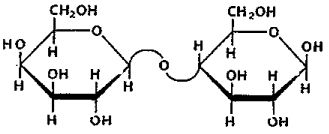
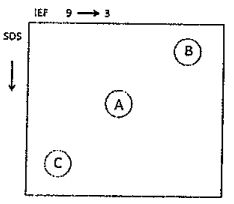 (A) 1, 2, and 5 are correct. (B) 2 and 4 are incorrect. (C) 1, 3, and 4 are incorrect.(D) Only 2 is correct. (E) Only land 3 are incorrect.
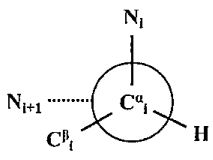 (A) It is Φ angle -90 degrce. (B) It isωangle +90 degree. (C) It is Φ angle t90 degree. (D) It is φ angle -90 degree. (E) It is Φ angle +90 degree
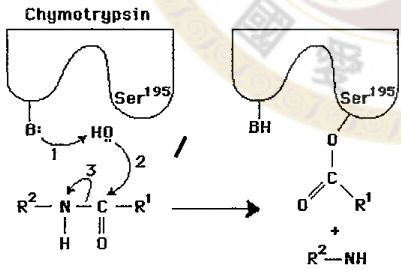 (A) 3;2 (B) 1;3 (C) 2;3 (D) 2; 1
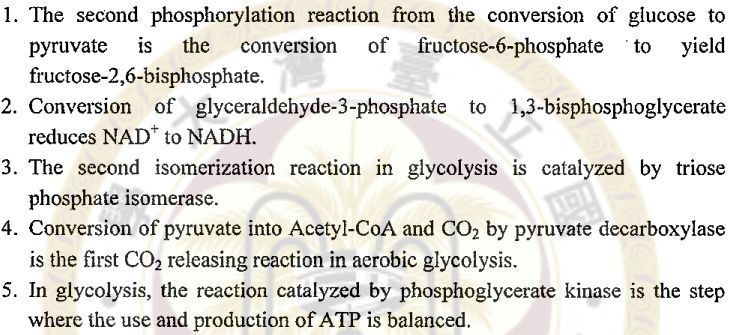 (A) 2, 3, and 5 are incorrect. (B) 1, 3, and 4 are incorrect. (C) 1,3, and 5 are incorrect. (D) All are incorrect. (E) None is incorrect.
 methylenetetrahydrofolate. (D) Acetyl-CoA carboxylase, which catalyzes the formation of malonyl-CoA from acetyl-CoA, contains a biotin prosthetic group. (E) The methyl group donated from S-adenosylmethionine is more reactive than that donated from N5-methyltetrahydrofolate.