28. There are four proteins A, B, C, D. (Protein A: homotetramer,  = 280,000, pI =6; Protein B: monomer,
  = 113,000, pI=7; Protein C: monomer,
  = 13,000, pI=8; Protein D is unknown). When Samuel used a gel filtration column to separate them, the elution sequence is A-D-B-C. Samuel dissolved the protein mixture in 20 mM phosphate buffer (pH 8) and loaded to a anion exchange column equilibrated with the same buffer. Protein D could not bind to this column. On an SDS-PAGE gel, protein D runs faster than protein B and slower than protein C.
1. If Samuel used SDS-PAGE to separate A, B, and C. The sequence of the protein bands shown in gel from top to bottom should be A-B-C.
2. The molecular mass of protein D must be between 13 and 113 kDa.
3. The pI of protein D might be higher than 8.
4. D is not a monomer.
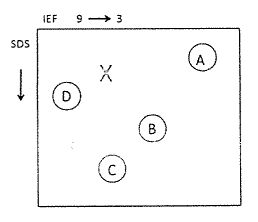
5. If Samuel used 2-Dimensional electrophoresis to separate them. We could predict that the relative positions of these four proteins is like the image below.
 (A) 1, 5 are correct. (D) 2, 4 are correct. (B) Only 2 is incorrect. (E) 3, 4 are correct. (C) 1, 3, 4 are correct.
 阿摩線上測驗
登入
阿摩線上測驗
登入
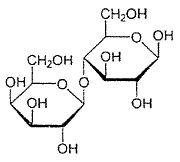 (A) Every turn of α-helix is 3.6 Å in length. (B) Amyloid is homopolysaccharide and composed of glucose linked by the α1→4 linkage. (C) Interconversion between α-D-Glc and β-D-Glc is called mutarotation. (D) Aldohexose has eight stereoisomers. (E) Glc-β1,4-Glc could be drawn as the structure below. CH2OH O | OH | CH2OH O | OH \ O / \ OH OH | OH
 (A) covalent nucleophilic catalysis. (B) covalent electrophilic catalysis. (C) specific base catalysis. (D) general base catalysis. (E) general acid catalysis.
 (C) Phytanic acid (D) Eicosapentaenoic acid
 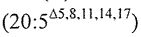 (E) Long chain odd number lipid
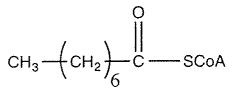 (A) 2. (B) 3. (C) 4. (D) 5. (E) 6.
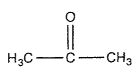 ②
②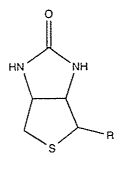 ③
③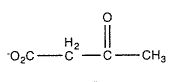 ④
④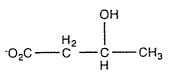 ⑤
⑤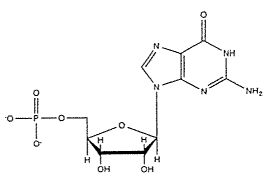 (A) ①②③ (B) ①②④ (C) ②③④ (D) ②③⑤ (E) ②④⑤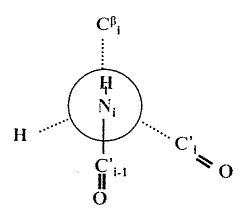

 for this enzyme is approximately:(A) 1 mM. (B) 2 mM. (C) 4 mM. (D) 6 mM. (E) 1000 mM.
 (A) CO2 would increase the activity of the enzyme. (B) CO2 would cause an apparent decrease in the
 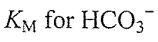 (C) CO2 would act as a noncompetitive inhibitor. (D) CO2 would act as a competitive inhibitor. (E) None of the above is correct.
 if glycolysis is to continue. Which of the following is the most important reaction involved in the reoxidation of NADH? (A) glucose 6-phosphate → fructose 6-phosphate (B) dihydroxyacetone phosphate → glycerol 3-phosphate (C) pyruvate → lactate (D) isocitrate → α-ketoglutarate (E) oxaloacetate → malate
 of 23.8 kJ/mol. Under what conditions (encountered in a normal cell) will the free-energy change (AG) be negative, enabling the reaction to proceed to the right? (A) Under standard conditions, enough energy is released to drive the reaction to the right. (B) If the concentrations of the two products are high relative to that of fructose 1,6-bisphosphate. (C) The reaction will not go to the right spontaneously under any conditions because the
  is positive. (D) When there is a high concentration of fructose 1,6-bisphosphate relative to the concentration of products. (E) None of the above.
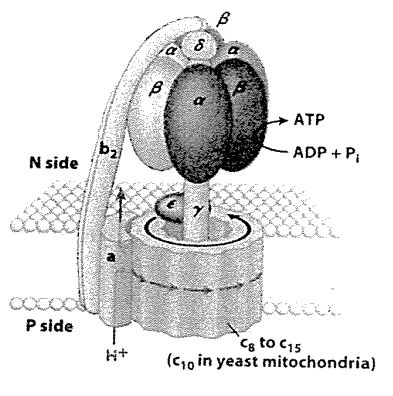 (A) 3 (B) 4 (C) 5 (D) 12 (E) 13
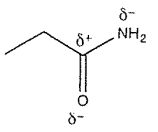 (B)
(B)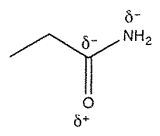 (C)
(C) (D)
(D) (E)
(E)