所屬科目:研究所、轉學考(插大)◆分子生物學
1. The famous movies star, Angelina Jolie, has her breast and ovaries removed because she inherits a mutant version of BRCA1. Which biological process is affected in BRCA1 mutant so that she has high risk of cancer? (A) DNA synthesis. (B) RNA synthesis. (C) DNA repair. (D) protein synthesis.
2. If proofreading by the editing of DNA polymerase is defective, which mutation may occur? (A) Translocation. (B) Inversion. (C) Single nucleotide substitution. (D) Large deletion.
3. How many times is a replication origin used during a cell cycle? (A) Once. (B) Twice. (D) Five times. (E) Twenty times.
4. DNA replication usually occurs in (A) G1 phase. (B) G2 Phase. (C) M phase. (D) S phase.
5. If deaminated C is not repaired, which type of mutation may occur? (A) Insertion. (B) Deletion. (C) Transition. (D) Translocation.
6. Which event is NOT the result of homologous recombination? (A) Double strand break. (B) Gene conversion. (C) Crossover. (D) Heteroduplex.
7. The step in DNA replication in which the replication proteins open up the double helix and prepare for complementary base pairing is called (A) initiation. (B) elongation. (C) termination. (D) translation.
8. The group of enzymes able to relax supercoils in DNA is called (A) primases. (B) helicases. (C) topoisomerases. (D) telomerases.
9. Eukaryotic chromosomes have evolved special structures at the ends of chromosomes to ensure the replication of the two ends of linear chromosomes. These structures are called (A) methylases. (B) capping proteins. (C) ligases. (D) telomeres.
10. Excision repair corrects DNA sequences by (A) removing a double-stranded fragment of damaged DNA. (B) removing and replacing incorrect nucleotides in a single strand of DNA. (C) excising the incorrect based from a nucleotide. (D) correcting A-T or C-G transitions.
11. Which type of transposons do not have RNA molecule as intermediate step during transposition events. (A) Retroviral-like retrotransposons. (B) DNA transposons. (C) Non-retroviral retrotransposons. (D) Copia
12. If 35% of the bases in a region of the human genome are cytosine, what percentage in that region are thymidine? (A) 15%. (B) 35%. (C) 65%. (D) 70%.
13. The specialized enzymes required for the movement of retroviral-like retrotransposons are (A) transposase and endonuclease. (B) primase and ligase. (C) integrase and reverse transcriptase. (D) RNA polymerase II and integrase.
14. Which of the following DNA repair mechanism is error-prone? (A) Homologous recombination. (B) Nonhomologous end-joining. (C) Mismatch repair. (D) Excision repair.
15. The importance of telomeres in eukaryotic cells is related to (A) the termination of DNA replication. (B) the initiation of RNA transcription. (C) the elongation of DNA replication. (D) the initiation of homologous recombination.
16. The correct order of the following RNA polymerization/modification events is _____.
1. The polyadenylation of the pre-mRNA sequence;
2. 5'-capping
3. splicing
4. promoter clearance (A) 1-2-3-4 (B) 3-2-1-4 (C) 4-2-3-1 (D) 2-3-4-1
17. Translation of mRNAs for transcription factors takes place at the _____of cells.(A) nucleus (B) mitochondria (C) ribosome (D) cytoplasm
18. Aminoacyl t-RNA synthetases _____.(A) are the enzymes that add amino acids to the growing peptide chains (B) recruit tRNAs to mRNA (C) match the anti-codons of the tRNAs and the codons of the mRNA (D) conjugate correct amino acids to the specific tRNAs
19. N-formyl-methionine can be found in the proteins of cells derived from _____.(A) E.coli (B) Homo sapiens (C) Mus musculus (D) C. elegans
20. Shine-Dalgarno sequence is the site where _____.(A) RNA polymerase II binds mRNA (B) ribosome binds and recognize mRNA (C) recombinase cut DNA (D) DNA polymerase III fill up gaps
21. The 5'-cap of eukaryotic mRNA is recognized and bound by _____.(A) eIF4E (B) eIF4G (C) eIF3 (D) 40S ribosome
22. Phosphorylation of _____ under heme starvation leads to translation repression. (A) eIF2B (B) eIF4G (C) eIF2 a (D) eIF3
23. In a dicistronic mRNA,_____. (A) the 5'-cistron has higher translation rate (B) the 3'-cistron translation is poly (A)-independent (C) translation of 5'-cistron is cap-independent (D) eIF4G is not required for translation of 3'-cistron.
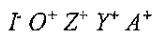
24. An I base in an anticodon can pair with _____ base at the position of a codon in a mRNA. (A) C (B) U (C) A (D) all of them
25. During mRNA splicing, the branch point is recognized by _____ snRNP. (A) U1 (B) U2 (C) U3 (D) U6
26. The catalytic center of a mRNA splicing complex is form by _____ snRNPs. (A) U2AF (B) U2/U5 (C) U2/U4 (D) U2/U6
27. The Tetrahymena 26S rRNA group I intron _____.(A) splices without protein factor (B) is cut by Ul/U5 snRNP (C) is cut by U2/U6 snRNP (D) is spliced as GU-AG intron
28. The poly (A) tail of a mRNA is _____.(A) added during late transcription (B) located right before 3'-UTR (C) synthesized by RNA polymerase II (D) encoded in the being transcripted gene
29. An experiment was designed to obtain nonspecific transcription from both strands of a DNA molecule. Which of the following strategies would be most effective in achieving this? (A) Include the RNA holoenzyme in the reaction. (B) Use the core enzyme of RNA polymerase. (C) Enrich the preparation with sigma subunit. (D) Use intact DNA.
30. Which of the following techniques is suitable for the study of DNA RNA hybrid formation during transcription? (A) DNA:protein crosslinking (B) DNAase I footprinting (C) DNA:RNA crosslinking (D) two-dimensional PAGE
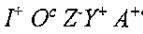
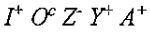
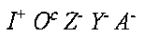
31. Which of the following plasmids could be used to restore inducible regulation of β-galatosidase in this mutant: ? (A)(B)(C)(D)
32. Which of the following would be effective in blocking transcription from the lac operon in the presence of permease? (A) antibody to RNA polymerase (B) antibody to the repressor protein (C) mutation in the operator (D) an antibody to β-galactosidase
33. Which of the following explains the events in late stage T4 infection in bacteria? (A) The host sigma factor specifies transcription of genes. (B) There is a high level of transcription of host genes. (C) Host polymerase holoenzyme directs transcription. (D) The host core enzyme participates in transcription conjunction with phage-encoded specificity factors.
34. Superinfection of lysogenized -infected (E) coli is prevented because (A) the superinfecting phage DNA is rapidly degraded by the host. (B) the superinfecting phage DNA is inhibited by excess repressor binding. (C) the superinfecting phage cannot replicate due to insufficient nucleotide precursors. (D) the superinfecting phage DNA is rapidly degraded by the host and the superinfecting phage DNA is inhibited by excess repressor binding are correct.
35. You have just discovered a new putative repressor in a strain of (E) coli that was sent to you by a colleague. One of the best ways to test for the specificity of this repressor for an operator sequence is to (A) replace the putative DNA-binding site with the binding site from another repressor. (B) change some of the amino acids in the binding site by site-directed mutagenesis. (C) insert an additional segment of amino acids next to the DNA binding site. (D) replace the putative DNA-binding site with the binding site from another repressor and change some of the amino acids in the binding site by site-directed mutagenesis.
36. Enhancers are usually quite a distance away from promoters. Which of the following best explains the interaction of such enhancers with promoters? (A) The enhancer is brought closer by sliding. (B) Promoter and enhancer region are brought closer by DNA looping. (C) Promoter and enhancer regions are bought together by the complete removal of supercoils. (D) The enhancer is brought closer by sliding and promoter and enhancer region are brought closer by DNA looping are correct.
37. Which of the statements about ribosomal genes is INCORRECT? (A) They have a higher GC content compared to other nuclear genes. (B) They have a different base composition compared to other nuclear genes. (C) There are no repetitive sequences. (D) They are found in the nucleolus.
38. Which of the following is true about the elongation complex? (A) The clamp does not come in contact with the RNA:DNA complex. (B) Processivity is slowed by the closing of the clamp. (C) The clamp closes over the RNA:DNA hybrid in the enzyme's cleft. (D) Five loops in the clamps play a role in the movement of the enzyme.
39. An electrophoretic mobility shift assay (EMSA) was conducted to check for the binding of TFIIB to a segment of a DNA promoter region. Which of the following approaches could be used to confirm that TFIIB is indeed binding? (A) Use an antibody to TFIIB and check for a supershift by EMSA. (B) Complete TFIIB binding with TFIID. (C) Conduct a nuclear run-off assay. (D) Both A. Use an antibody to TFIIB and check for a supershift by EMSA and B. Complete TFIIB binding with TFIID are correct.
40. Human SL1 is composed of all of the following except (A) TBP. (B) TAF 30. (C) TAF: 110. (D) TAF163.
41. Which of the following are typical features of transcriptional activators in eukaryotes? (A) transcription-activation domain (B) DNA-binding domain (C) kinase domain (D) transcription-activation domain and DNA-binding domain
42. Predict the effect of blocking GTPase activity by a mutant lacking the GAP gene. Which of the following would be a possible outcome if cells in this mutant are treated with a growth factor? (A) a sustained level of transduction (B) dramatically reduced interaction of the growth factor with the receptor (C) inactivation of MEK (D) dephosphorylation of the growth factor receptor
43. Which of the following is the most common type of histone modification? (A) lysine e-amino methylation (B) serine o-phosphorylation (C) lysine n-phosphorylation (D) histidine n-phosphorylation
II. Short essay questions: Please answer the following question as sufficient as you can.
1. Please compare the process of mRNA translation in prokaryotes and eukaryotes.
2. Please provide a specific example that utilize the mechanisms of either DNA recombination or transposons to edit genome, such as transgene, transformation, mutagenesis, mosaic clone analysis, gene knockout, gene replacement. In your example, you need to specify the mechanism(s), the feature of DNA sequences, and the enzyme(s) that are applied in this methodology to which organism or cells. If you don't have an example, you may design one.
3. What is SOS response?
4. What proteins bind to the telomeres and are presumably involved in forming telomeric heterochromatin in yeast?
 阿摩線上測驗
登入
 position of a codon in a mRNA. (A) C (B) U (C) A (D) all of them
 ? (A)
 (B)
 (C)
 (D)