所屬科目:研究所、轉學考(插大)◆分子生物學
1. Which of the following is the correct order of chromatin folding?(A)30 nM fiber formation, nucleosome formation, radial loop formation(B)radial loop structure, 30 nM fiber formation, nucleosome formation(C)nucleosome formation, 30 nM fiber formation, radial loop structure(D)30 nM fiber formation, radial loop formation, nucleosome formation(E)nucleosome formation, radial loop formation, nucleosome formation
2. Which of the following descriptions of chromatin remodeling is NOT correct?(A)Remodeling requires ATP for energy(B)BRG1 associates with BAFS(C)BRG1 is an ATPase(D)SWI/SNF binds to DNA through SANT domain(E)All SWI/SNF, ISWI, NuRD and INO80 family proteins make the DNA moreaccessible
3. The binding of which of the following snRNPs to spliceosome requires ATP?(A)U1(B)U2(C)U4(D)U5(E)U6
4. The catalytic center of the spliceosome appears to include(A)Mg2+(B)U2 and U6 snRNP(C)the branch point region of the intron.(D)Mg2+ and the branch point region of the intron.(E)Mg2+, U2, and U6 snRNP, and the branch point region of the intron.
5. Which of the following is NOT the possible action for miRNA?(A)targets viral DNAs(B)mRNA degradation(C)stimulate translation(D)translation initiation blockade(E)translation elongation blockade
6. Which of the following is responsible for the binding between the 30S ribosomal subunit and the initiation site of a message? (A)Kozak sequence (B)Shine-Dalgarno sequence (C)TATA Box sequence (D)Internal Ribosome Entry sequence (E)Ribosome Exit sequence
7. Which of the following initiation factor is a target for translation control byheme-controlled repressor (HCR) in heme-starved reticulocytes?(A)eIF1(B)eIF2(C)eIF3(D)eIF4F(E)eIF6
8. Which of the following factor is a guanine nucleotide exchange factor (GEF)involved in protein translation?(A)eIF5A(B)eIF5B(C)EF-Tu(D)EF-Ts(E)EF-G
9. Which of the following description is NOT correct for translocation intranslational elongation during protein synthesis?(A)GTP and EF-G facilitate translocation.(B)Translocation activity appears to be inherent in the ribosome.(C)Translocation activity can be expressed without EF-G and GTP in vitro.(D)GTP hydrolysis occurs after translocation.(E)New round of elongation cannot occur if EF-G is not released from theribosome.
10. Which of the following factor does NOT bind to the A site of ribosome?(A)IF2/tRNA(B)EF-Tu/tRNA(C)EF-G(D)RF3/RF1(E)RRF
11. Which of the following is the primase that synthesizes primers during DNAreplication in E. coli?(A)RNA polymerase(B)HU protein(C)DnaA(D)DnaB(E)DnaG
12. Which of the following subunits of DNA polymerase III holoenzyme is referred to as the "sliding clamp"? (A) α (B) β (C)γ (D)x(E) θ
13. Which of the following is NOT part of the E. coli primosome?(A)DnaA(B)DnaB(C)DnaG(D)TerE(E)oriC
14. Chi sites stimulate which of the following recombination pathways?(A) λ Red(B) λ Int(C)E. coli RecBCD(D)E. coli RecE(E)E. coli RecF
15. Hybrid dysgenesis refers to the fact that in Drosophila a cross between a P male and an M female produce offspring that are (A)blind. (B)dead. (C)hairless. (D)sterile. (E)wingless.
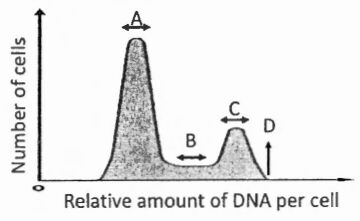
16. Bromodeoxyuridine (BrdU) is a synthetic nucleoside that is an analog ofthymidine and therefore can be used to label newly synthesized DNA. Lily hastreated cells with BrdU transiently for 2 hours, and then immediately uses the cellsorting machine to collect cells with different DNA content. Which fraction of thecell do you expect to detect BrdU signal?(A)A(B)B(C)C(D)D(E)C+D
17. A typical Tag DNA polymerase makes 1 nucleotide mistake in every 10^5nucleotide copies. However, the error rate of DNA replication in a human cell isabout 1/10^9. Which of the following is NOT the reason for this high fidelity?(A)DNA polymerase can proofread(B)DNA polymerase is still active at 95 degree in Celsius.(C)DNA polymerase can couple with the mismatch repair(D)DNA methylation serves as a template for correcting mistakes(E)DNA polymerization occurs only from 5' to 3'
18. Which of the following pairs of codons might you expect to be read by the same tRNA as a result of wobble?(A)CUU and UUU(B)GAU and GAA(C)CAC and CAU(D)AAU and AGU(E)UAG and UAA
19. Which of the following RNA may block translation of targeted proteins?(A)miRNA(B)mRNA(C)siRNA(D)Inc RNA(E)dsRNA
20. Which of the following is a stop codon?(A)AUG(B)UGG(C)GAG(D)CGA(E)UAG
21. Please describe what is the "CTD code" of RNA polymerase II (3 points), and the roles of CTD code in gene expression? (4 points).
22. Please describe the mechanism for transcription termination by RNA polymerase II (8 points).
a. What are Amber mutations (4 points)?
b. How can Amber suppressors reverse the effect of Amber mutations (4 points)?
a. How is the poliovirus genetic material different from a typical cellular mRNA(2 points)?
b. How does the poliovirus take advantage of this difference during translation (5 points)?
25. Please describe the differences between viral retrotransposons (Ty element), LINES (L1 element) and SINES (Alu element) (9 points).
26. Please describe the mechanisms of regulating Error-Prone Repair (SOS response) to turn on/off in E. coli (6 points).
A. 5'-GCGGGCCAGCCCGAGTGGGTAGCCCAGG-3'3'-CGCCCGGTCGGGCTCACCCATCGGGTCC-5'
B. 5'-ATTATAAAATATTTAGATACTATATTTACAA-3'3'-TAATATTTTATAAATCTATGATATAAATGTT-5'
C. 5'-AGAGCTAGATCGAT-3'3'-TCTCGATCTAGCTA-5'
28. Epigenetic modulation can control gene expression without changing DNAsequences. Please explain how this is achieved (5 points).
 阿摩線上測驗
登入