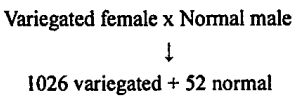
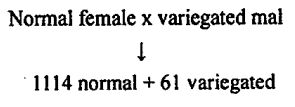
所屬科目:研究所、轉學考(插大)-普通生物學
1. Characteristic of simple epithelium is that they (A) are arranged indiscriminately (B) continue to divide and help in organ function (C) Make a definite layer (D) None of above
2. All of the following statements about muscle contraction are true EXCEPT; (A) The ends of actin filaments move closer together (B) Calcium-troponin binding precedes actin-myosin binding (C) Calcium-tropomyosin binding precedes actin-myosin binding (D) ATP hydrolysis precedes actin-myosin binding (E) The length of myosin filaments does not change
3. Negative-feedback mechanisms are: (A) most often involved in maintaining homeostasis (B) activated only when a variable rises above a set point (C) analogous to a furnace that produces heat (D) involved in contractions during childbirth (E) found only in birds and mammals
4. The energy content of fats (A) is released by bile salts (B) may be lost unless an herbivore easts some of its feces (C) is more than two times that of carbohydrates or proteins (D) can reverse the effects of malnutrition (E) Both C and D are correct
5. Which of the following is mismatched with its function? (A) most B vitamins - coenzymes (B) Vitamin E - antioxidant (C) Vitamin K - blood clotting (D) Iron-component of thyroid hormones (E) Phosphorous-bone formation, nucleotide synthesis
6. Which organ receives only oxygenated blood? (A) lung (B) liver (C) spleen (D) gill
7. What is the function of the cilia in the trachea and bronchi? (A) to sweep air into and out of the lungs (B) to increase the surface area for gas exchange (C) to vibrate when air is exhaled to produce sounds (D) to dislodge food that may have slipped past the epiglottis (E) to sweep mucus with trapped particles up and out of the respiratory tract
8. Which organ receives only oxygenated blood? (A) lung (B) liver (C) spleen (D) gill
9. Which one of the following mammalian cells is not capable of metabolizing glucose to carbon dioxide aerobically? (A) liver cells (B) red blood cells (C) white bold cells (D) un-striated muscle cells
10. Uric acid is the chief nitrogenous wasters in (A) frog (B) birds (C) fishes (D) man
11. The functional unit of contractile system in striated muscle is (A) myofibril (B) cross bridges (C) Z band (D) Sarcomere
12. During depolarization (A) moves out of the neuron (B) moves into the neuron (C) Organic ions move out of the neuron (D) All of the above (E) None of the above
13. Major cytoskeletal protein in microvilli, filopodia, contractile rings, and growth cones (A) actin (B) tubulin (C) troponin (D) calmodulin (E) fibronectin
14. What is the name of the iron-containing protein that gives red blood vessel their color? (A) hemocyanin (B) pyrite (C) hemoglobin (D) myoglobin
15. Cornea transplant in humans is almost never rejected. This is because (A) it is composed of enunleated cells (B) it is a non living layer (C) it has no blood supply (D) its cells are least penetrable by bacteria
16. During the propagate ion of a nerve ion of a nerve impulse, the action potential results from the movement of (A) K+ ions from intracellular fluid to extracellular fluid (B) K+ ios from extracellular fluid to intracellular fluid (C) Na+ ions from extracellular fluid to intracellular fluid (D) Na+ ions from intracellular fluid to extracellular fluid
17. Alzheimer's disease in human is associated with the deficiency of (A) dopamine (B) glutamic acid (C) acetylcholine (D) gamma aminobutyric acid
18. The cells responsible for color vision in vertebrates are called (A) rod cells (B) cone cells (C) bipolar cells (D) cupula cells (E) ampullae
19. During depolarization (A) moves out of the neuron (B) moves into the neuron (C) Organic ions move out of the neuron (D) All of the above (E) None of the above
20. Two antagonistic hormones are (A) MSH and TSH (B) calcitonin and parathyroid hormone (C) ADH and GH (D) oxytocin and prolactin
21. Which of the following statements about prostaglandins is true? (A) They are one of the types of target cells (B) They are produced by endocrine glands. (C) They travel throughout the body by circulating in the blood. (D) All of the above are true. (E) None of the above is true.
22. Type I diabetes mellitus is caused by a deficiency of (A) exercise (B) glucagon (C) glucose (D) glycol (E) insulin
23. Nerve impulses are normally carried toward a neuron cell body by the neuron's (A) Synaptic cleft (B) Axon (C) Hormones (D) Dendrites
24. In sensory neurons, stimuli are received by the (A) Axons (B) Dendrites (C) Cell body (D) Myelin
25. Ovulation is caused by the hormone (A) FSH (B) Progesterone (C) Oxytocin (D) Estrogen (E) Luteinizing Hormone
26. Which of the following statements is NOT true? (A) Evolutionary theory holds that all of life has a common ancestor. (B) Cladistics involves the identification of evolutionary branches that consists of an ancestral species and all its descendants. (C) Parsimony is the search for the least complex explanation for an observed phenomenon. (D) Comparisons of molecules that evolve very fast would help to determine the phylogenetic relationships of fungi, plants and animals. (E) Phylogenies are based on homologies in fossils and living organisms.
27. Which of the following is NOT true? (A) Alpha-amanitin inhibits the activity of all three RNA polymerases of eukaryotes by interacting with a bridge helix in the enzymes. (B) Chloramphenicol blocks translation by inhibiting the peptidyl transferase activity of ribosome. (C) Cycloheximide blocks translation by interfering with the translocation step in protein synthesis. (D) Cytochalasin B inhibits cytoplasmic division by blocking the formation of contractile microfilaments. (E) None of the above.
28. "GGATGGTCTT" is the partial sequence of gene X. What would be the sequence of the mRNA transcribed from this gene? (A) UUCUGGUAGG (B) AAGACCAUCC (C) GGAUGGUCUU (D) CCUACCAGAA (E) None of the above.
29. In _____ reproductive isolation develops and new species arise without geographic separation. (A) Adaptive radiation (B) Adaptive speciation (C) Allopatric speciation (D) Sympatric speciation (E) Tempo of speciation
30. Which of the following enzymes may be used to detect single nucleotide mutation? (A) DNase I (B) DNA ligase (C) Exonuclease (D) Integrase (E) Restriction enzyme
31. For a population to be in Hardy-Weinberg equilibrium, it must satisfy the following conditions except: (A) The population is very large. (B) Mating is random and all individuals are equal in reproductive success. (C) Lack of gene flow. (D) Mutations do not alter the gene pool. (E) None of the above.
32. Which of the following plays an essential role in sex determination of Drosophila melanogaster? (A) Alternative spicing (B) cis splicing (C) RNA editing (D) Self splicing (E) trans splicing
33. The plasmid vector most commonly used to introduce genes into plant cells is: (A) the CoEl plasmid (B) the Ti plasmid (C) the R1 plasmid (D) the Ri plasmid (E) Plasmid pUC19
34. The phenomenon that more than one phenotypic characteristic are controlled by a single gene is known as: (A) Polyploid (B) Polychaete (C) Pleiotropy (D) Polygenic (E) Polymorphism
35. Which of the following about meiosis is NOT true? (A) Meiosis is preceded by the replication of chromosomes. (B) Crossing over occurs in Prophase I, which typically occupies most of the time required for meiotic cell division. (C) At Metaphase I, the chromosome tetrads are aligned on the metaphase plate. (D) The sister chromatids making each doubled chromosomes separate at Anaphase I. (E) In Telophase I, the chromosomes arrive at the poles of the cell, followed by cytokinesis.
二、問答題:1. Please describe how might "reproductive barriers" function to prevent populations of closely related species from interbreeding?
2. Please describe three mechanisms by which genes can move from one cell to another in bacteria.
3. Please describe in detail the difference in the cell wall structure of Gram-positive and Gram-negative bacteria.
4. (1) What is the humoral immunity and cell-mediated immunity?
(2) How are antigen-presenting cells, T lymphocytes, and B lymphocytes involved in the humoral immunity and cell-mediated immunity?
5. Please describe the function and where produced/found in plant of five major types of hormones which regulate growth and development.
(A)
(B)
(1) 100% recombinants:_____
(2) 0% recombinants:_____
(3) 50% recombinants:_____
 阿摩線上測驗
登入
 moves out of the neuron (B)
 moves into the neuron (C) Organic ions move out of the neuron (D) All of the above (E) None of the above
 moves out of the neuron (B)
 moves into the neuron (C) Organic ions move out of the neuron (D) All of the above (E) None of the above