13. In vacuum, an electromagnetic wave traveling along the x axis has an electric field and a magnetic field
  whose magnitudes depend on x and t as
E(x,t)=E0sin(kx一ωt),B(x,t)=B0sin(kx-ωt+Φ),
where E0 and B0 are the amplitudes of 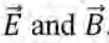 . Which fact below is correct? (A)
  (B)The directions of and are arbitrary once they are perpendicular to x. (C)Φ=π/2 (D) ωk =c (E)This is a linearly polarized wave.
 阿摩線上測驗
登入
阿摩線上測驗
登入
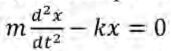 (B)
(B)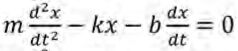 (C)
(C)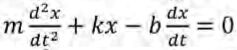 (D)
(D)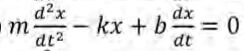 (E)
(E) 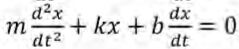
 (D)2f (E)4f
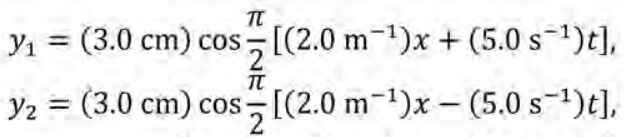 are sent to a long string to create a standing wave. Let x be positive (x ≥ 0). Where is the first node (the smallest value of x)? (A) 5 cm (B) 10 cm (C)50 cm (D) 100 cm (E) 200 cm
 (B)LI2 (C) 2LI2 (D)
 (E)4LI2
 is placed between two mirrors of distance
 apart. If object
  away from mirror 1 (see the right figure), what is the distance of the second closest image of object
 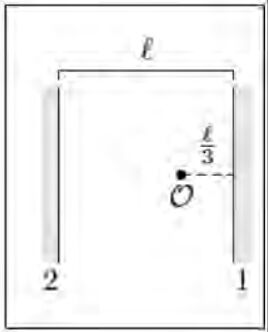 (A)
(A) is proportional to the number of undeeayed substance. (B) The rate of decay
  (B) The wave function can be determined via a series of measurements. (C) Since it is not a function of velocity, it does not carry the information of momentum. (D) All of the above. (E) None of the above.
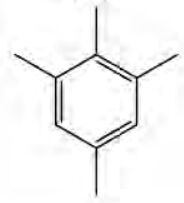 (B)
(B)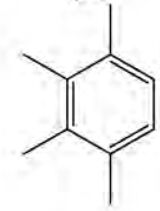 (C)
(C)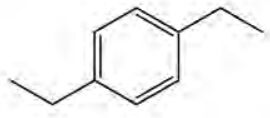 (D)
(D)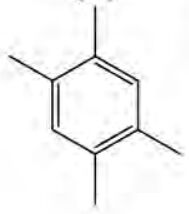 (E) None of the above
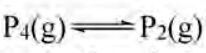 has a reaction enthalpy of △H = 217 kJ mol-1, If the bond energy of a single phosphorus-phosphorus bond is 200 kJ mol-', how much is the bond energy of the
 bond? (A) 92 kJ mol-1(B) 192 kJ mol-1(C) 292 kJ mol-1(D) 392 kJ mol-1(E) 492 k)mol-1
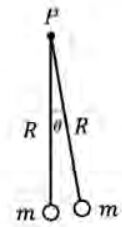
 ) rolls without sliding from a bowl of radius R from height h (see figure below). The coefficient of static friction between the ball and the bowl is μ. What is the maximum height it can reach on the other side of the bowl?
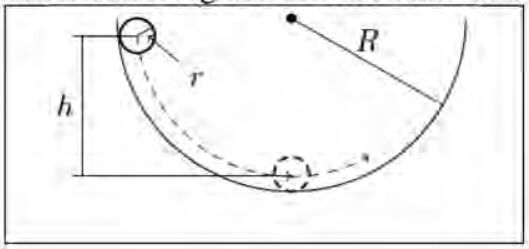 (A)
(A) (B)
(B) 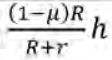 (C)h (D)
 (E)μh
(E)μh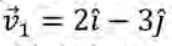 while another 4-kg piece carries velocity
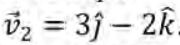 . What is the velocity
  of the third piece? (A) Cannot be determined without knowing the energy provided by the explosion (B)
 (C)
(C) (D)
(D) (E)
(E)
 (A)
(A) (B)
(B) (C)
(C) (D)
(D) (E)
(E)
 (A) 102 mH (B) 15.38 mH (C) 140mH (D) 7.81 mH (E) 60 mH
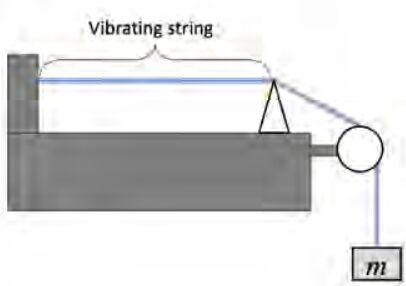 (A)m (B)
 (C)2m (D)m/2 (E)4m
 in the figure will keep the block and the pulleys in equilibrium. The block has mass m. Neglect the mass of pulleys and strings and friction in the system. What is the strength of
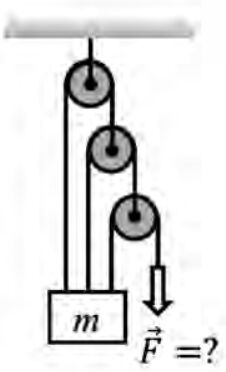 (A)mg (B)mg/3 (C)mg/5 (D)mg/7 (E) mg/9
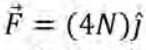 acts on a 0.25 kg object that has position vector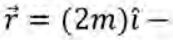
 and velocity
  What is the object's angular momentum about the origin? (A) -1.5 kg m2/s (B) 1.5 kg m2/s (C) -0.75 kg m2/s(D) -0.375 kg m2/s(E)0 kg m2/s
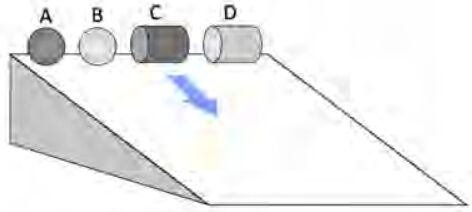 (A) A (B) B (C) C (D) D (E) AIl arrive at the end of the inclined plane at the same time.
  (E)
(E)
 (B)
(B) (C)
(C) (D)
(D)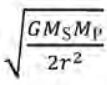 (E)
(E)
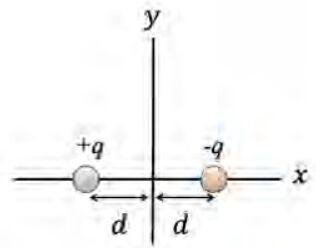 (A)
(A) (B)
(B) (C)
(C) (D)
(D) (E)0
(E)0 (B)
(B) (C)
(C) (D)
(D) (E)
(E)
 = (20.0 m/s)
 . What is the total energy loss of the system(the boy and the dodgeball)? (A) 16.7 J (B) 48.0 J (C) 98.3 J (D) 67.6 J (E) Not enough information
 (A)h=6cm (B)h=4cm (C)h=3cm (D)h=2 cm (E)h=1 cm
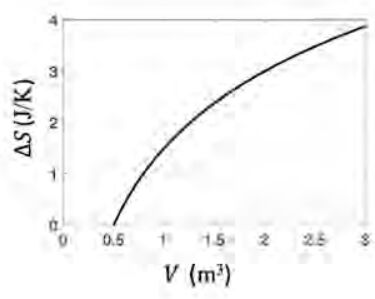 (A) 10 mol (B) 49.8 mol (C) 0.26 mol (D) 3.74 mol (E) 104.3 mol
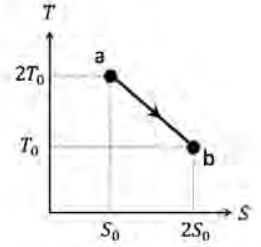 (A)T0S0 (B)T0S0/2 (C)4T0S0 (D)3T0S0/2 (E)0
 (B)
(B) (C)
(C) (D)
(D) (E)
(E)
 (A)+1,+1(B)+2,+2(C)+3,+3(D)+0.5.0.5(E)+1.5.+1.5
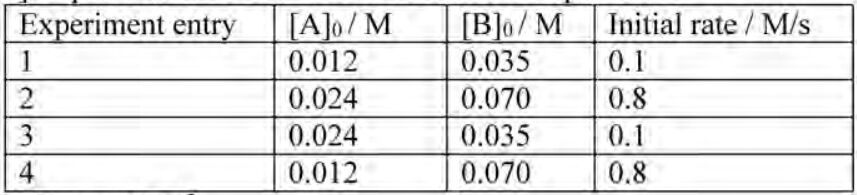 (A) Rate = k[A]3 (B) Rate = k[A]2[B]1 (C) Rate = k[A]1[B]2 (D) Rate = k[B]3 (E) None of the above