阿摩線上測驗
登入
首頁
>
學士後西醫-生物學
> 98年 - 學士後西醫普通生物學98普通生物學#39361
98年 - 學士後西醫普通生物學98普通生物學#39361
科目:
學士後西醫-生物學 |
年份:
98年 |
選擇題數:
75 |
申論題數:
0
試卷資訊
所屬科目:
學士後西醫-生物學
選擇題 (75)
1. As genetic technology makes testing for a wide variety of genotypes possible, which of the following is likely to be an increasingly troublesome issue? (A) using technology to identify genes that cause criminal behaviors. (B) discrimination against certain racial groups because of major genetic differences. (C) alteration of human phenotypes to prevent early disease. (D) the need to legislate for the protection of the privacy of genetic information. (E) use of genotype information to provide positive identification of criminals.
2. The fact that the outer membrane of the nuclear envelope has bound ribosomes allows one to most reliably conclude that (A) the nuclear envelope is physically continuous with the endoplasmic reticulum. (B) the nuclear envelope is not part of the endomembrane system. (C) at least some of the proteins that function in the nuclear envelope are made by the ribosomes on the nuclear envelope. (D) nuclear pore complexes contain proteins. (E) small vesicles from the Golgi fuse with the nuclear envelope.
3. Which of the following is one of the ways that the membranes of winter wheat are able to remain fluid when it is extremely cold? (A) by increasing the percentage of cholesterol molecules in the membrane. (B) by co-transport of glucose and hydrogen. (C) by decreasing the number of hydrophobic proteins in the membrane. (D) by increasing the percentage of saturated phospholipids in the membrane. (E) by increasing the percentage of unsaturated phospholipids in the membrane.
4. A patient has had a serious accident and lost a lot of blood. In an attempt to replenish body fluids, distilled water, equal to the volume of blood lost, is transferred directly into one of his veins. What will be the most probable result of this transfusion? (A) The patient's red blood cells will swell because the blood fluid is hypertonic compared to the cells. (B) The patient's red blood cells will swell because the blood fluid is hypotonic compared to the cells. (C) The patient's red blood cells will shrivel up because the blood fluid is hypertonic compared to the cells. (D) The patient's red blood cells will burst because the blood fluid is hypertonic compared to the cells. (E) It will have no unfavorable effect as long as the water is free of viruses and bacteria.
5. One successful form of gene therapy has involved delivery of an allele for the enzyme adenosine deaminase (ADA) to bone marrow cells of a child with SCID, and delivery of these engineered cells back to the bone marrow of the affected child. What is one major reason for the success of this procedure as opposed to many other efforts at gene therapy? (A) The ADA introduced allele causes all other ADA-negative cells to die. (B) The engineered cells, when reintroduced into the patient, find their way back to the bone marrow. (C) No vector is required to introduce the allele into ADA-negative cells. (D) The immune system fails to recognize cells with the variant gene. (E) The engineered bone marrow cells from this patient can be used for any other SCID patient.
6. If a person drinks a large amount of water in a short period of time, he or she may die from water toxicity. Antidiuretic hormone can help to prevent water retention through interaction with target cells in the (A) bladder. (B) urethra. (C) adrenal gland. (D) kidney. (E) anterior pituitary.
7. A researcher is using adult stem cells and comparing them to other adult cells from the same tissue. Which of the following is a likely finding? (A) The two kinds of cells have virtually identical gene expression patterns in microarrays. (B) The non-stem cells have fewer repressed genes. (C) The non-stem cells have lost the promoters for more genes. (D) The cells from the two sources exhibit different patterns of DNA methylation. (E) Adult stem cells have more DNA nucleotides than their counterparts.
8. Imagine a population of 1,000 small rodents. Of these, 250 are breeding females, 250 are breeding males, and 500 are nonbreeding juveniles. What is the effective population size? (A) 1,500 (B) 1,000 (C) 500 (D) 300 (E) 250
9. In E. coli, there is a mutation in a gene called dnaB that alters the helicase that normally acts at the origin. Which of the following would you expect as a result of this mutation? (A) Single-strand binding protein could not bind to the unwound parental strands. (B) Replication fork will be formed. (C) The DNA will supercoil. (D) Replication will occur via RNA polymerase alone. (E) Replication will require a DNA template from another source.
10. A geneticist introduces a transgene into human cells and isolates five independent cell lines in which the transgene has integrated into the human genome. In four of the lines, the transgene is expressed strongly, but in the fifth there is no expression at all. Which is a likely explanation for the lack of transgene expression in the fifth cell line? (A) The transgene was mutated during the process of integration into the host cell genome. (B) A transgene integrated into a euchromatic region of the genome. (C) A transgene integrated into a heterochromatic region of the genome. (D) The host cell lacks the enzymes necessary to express the transgene. (E) A transgene integrated into a region of the genome characterized by high histone acetylation.
11. A covalent chemical bond is one in which (A) electrons are removed from one atom and transferred to another atom so that the two atoms become oppositely charged. (B) protons and neutrons are shared by two atoms so as to satisfy the requirements of both atoms. (C) the inner-shell electrons of one atom are transferred to the outer shell of another atom. (D) outer-shell electrons of one atom are transferred to the inner electron shells of another atom. (E) outer-shell electrons of two atoms are shared so as to satisfactorily fill the outer electron shells of both atoms.
12. Melatonin is a hormone produced in the pineal gland. It can be used to treat symptoms of sleep disorders and seasonal affective disorder because (A) it decreases production of serotonin. (B) it increases production of serotonin. (C) it increases production of tryptophan. (D) it activates the brainstem. (E) its peak production is normally at night.
13. If the Sun were to suddenly stop providing energy to the Earth, most ecosystems would vanish. Which of the following ecosystems would likely survive the longest after this hypothetical disaster? (A) desert (B) tropical rainforest (C) tundra (D) benthic ocean (E) grassland
14. Which sequence of blood flow can be observed in either a reptile or a mammal? (A) left ventricle → aorta → lungs → systemic circulation (B) vena cava → right atrium → ventricle → pulmonary circuit (C) right ventricle → pulmonary vein → pulmocutaneous circulation (D) pulmonary vein → left atrium → ventricle → pulmonary circuit (E) right atrium → pulmonary artery → left atrium → ventricle
15. Black fur in mice (B) is dominant to brown fur (b). Short tails (T) are dominant to long tails (t). What fraction of the progeny of the cross BbTt × BBtt will have black fur and long tails? (A) 1/16 (B) 1/4 (C) 3/8 (D) 1/3 (E)1/2
16. Hormone X produces its effect in its target cells via the cAMP second messenger system. Which of the following will produce the greatest effect in the cell? (A) A molecule of cAMP applied to the extracellular fluid surrounding the cell. (B) A molecule of cAMP injected into the cytoplasm of the cell. (C) A molecule of hormone X applied to the extracellular fluid surrounding the cell. (D) A molecule of hormone X injected into the cytoplasm of the cell. (E) A molecule of activated, cAMP-dependent protein kinase injected into the cytoplasm of the cell.
17. How many molecules of water are needed to completely hydrolyze a polymer that is 10 monomers long? (A) 12 (B) 11 (C) 10 (D) 9 (E) 8
18. An interaction between individuals of different species that benefit both partners is called (A) commensalism. (B) predation. (C) exploitation. (D) mutualism. (E) ammensalism.
19. In 1997, Dolly the sheep was cloned. Which of the following processes was used? (A) use of mitochondrial DNA from adult female cells of another ewe. (B) fusion of an adult cell's nucleus with an enucleated sheep egg, followed by incubation in a surrogate. (C) separation of an early stage sheep blastula into separate cells, one of which was incubated in a surrogate ewe. (D) isolation of stem cells from a lamb embryo and production of a zygote equivalent. (E) replication and dedifferentiation of adult stem cells from sheep bone marrow.
20. Which of these statements about human evolution is CORRECT? (A) Different species of the genus Homo have coexisted at various times throughout hominin evolution. (B) Mitochondrial DNA analysis indicates that modern humans are genetically very similar to Neanderthals. (C) The evolution of upright posture and enlarged brain occurred simultaneously. (D) Human evolution has proceeded in an orderly fashion from an ancestral anthropoid to Homo sapiens. (E) The ancestors of Homo sapiens were chimpanzees.
21. Arthropods invaded land about 100 million years before vertebrates did so. This most clearly implies that (A) extant terrestrial arthropods are better adapted to terrestrial life than are extant terrestrial vertebrates. (B) arthropods evolved before vertebrates did. (C) vertebrates evolved from arthropods. (D) arthropods have had more time to co-evolve with land plants than have vertebrates. (E) ancestral arthropods must have been poorly adapted to aquatic life, thus experienced a selective pressure to invade land.
22. The number of MHC protein combinations possible in a given population is enormous. However, an individual in that population has only a couple of MHC possibilities. Why? (A) Once a B cell has matured in the bone marrow, it is limited to two MHC response categories. (B) Once a T cell has matured in the thymus, it can only respond to two MHC categories. (C) MHC proteins from one individual can only be of class I or class II. (D) The MHC proteins are made from several different gene regions that are capable of rearranging in a number of ways. (E) Each of the MHC genes has a large number of alleles, but each individual only inherits 2 for each gene.
23. Which of the following statements about the adrenal gland is CORRECT? (A) During stress, ACTH stimulates the adrenal cortex, and neurons of the sympathetic nervous system stimulate the adrenal medulla. (B) At all times, the anterior portion secretes ACTH, while the posterior portion secretes oxytocin. (C) At all times, the adrenal gland monitors calcium levels in the blood and regulates calcium by secreting the two antagonistic hormones, epinephrine and norepinephrine. (D) During stress, the alpha cells of islets secrete insulin and simultaneously the beta cells of the islets secrete glucagon. (E) During stress, TSH stimulates the adrenal cortex and medulla to secrete acetylcholine.
24. In humans, identical twins are possible because (A) of convergent extension. (B) of the heterogeneous distribution of cytoplasmic determinants in unfertilized eggs. (C) of interactions between extraembryonic cells and the zygote nucleus. (D) the gray crescent divides the dorsal-ventral axis into new cells. (E) early blastomeres can form a complete embryo if isolated.
25. DDT was once considered a "silver bullet" that would permanently eradicate insect pests. Today, instead, DDT is largely useless against many insects. Which of these would have been required for this pest eradication effort to be successful in the long run? (A) The frequency of DDT application should have been higher. (B) None of the individual insects should have possessed genomes that made them resistant to DDT. (C) DDT application should have been continual. (D) All habitats should have received applications of DDT at about the same time. (E) Larger doses of DDT should have been applied.
26. Assume that excessive consumption of ethanol increases the influx of negative chloride ions into "common sense" neurons whose action potentials are needed for you to act appropriately and not harm yourself or others. Thus, any resulting poor decisions associated with ethanol ingestion are likely due to (A) increased membrane depolarization of "common sense" neurons. (B) more action potentials in your "common sense" neurons. (C) decreased membrane depolarization of "common sense" neurons. (D) fewer IPSPs in your "common sense" neurons. (E) more EPSPs in your "common sense" neurons.
27. Which is one of the two laws of inheritance identified by Mendel? (A) The law of priority. (B) The law of independent assortment. (C) The law of neutralism. (D) The law of paternity. (E) The law of polarity.
28. In glycolysis, for each molecule of glucose oxidized to pyruvate (A) 4 molecules of ATP are used and 2 molecules of ATP and 4 molecules of NADH are produced. (B) 2 molecules of ATP are used and 4 molecules of ATP and 2 molecules of NAD are produced. (C) 2 molecules of ATP are used and 4 molecules of ATP and 2 molecules of NADH are produced. (D) 2 molecules of ATP are used and 4 molecules of ATP and 1 molecules of NADH are produced. (E) 2 molecules of ATP are used and 2 molecules of ATP and 2 molecules of NADH are produced.
29. In vertebrate animals, brown fat tissue's color is due to abundant mitochondria. White fat tissue, on the other hand, is specialized for fat storage and contains relatively few mitochondria. Brown fat cells have a specialized protein that dissipates the proton-motive force across the mitochondrial membranes. Which of the following might be the function of the brown fat tissue? (A) to allow other membranes of the cell to perform mitochondrial function. (B) to increase the rate of oxidative phosphorylation from its few mitochondria. (C) to allow the animals to regulate their metabolic rate when it is especially hot. (D) to regulate temperature by converting energy from NADH oxidation to heat. (E) to increase the production of ATP synthase.
30. Which of the following represents a difference between viruses and viroids? (A) Viruses contain introns; viroids have only exons. (B) Viruses infect many types of cells, whereas viroids infect only prokaryotic cells. (C) Viruses always have genomes composed of DNA, whereas viroids always have genomes composed of RNA. (D) Viruses have capsids composed of protein, whereas viroids have no capsids. (E) Viruses cannot pass through plasmodesmata; viroids can.
31. What may lead to alternations of chromosome number? (A) nondisjunction during meiosis. (B) hybridization. (C) chromosome breakage. (D) genetic recombination. (E) genetic exchange.
32. A genetic change that caused a certain Hox gene to be expressed along the tip of a vertebrate limb bud instead of farther back helped make possible the evolution of the tetrapod limb. This type of change is illustrative of (A) the influence of environment on development. (B) paedomorphosis. (C) a change in a developmental gene or in its regulation that altered the spatial organization of body parts. (D) heterochrony. (E) gene duplication.
33. The chain lengths in food webs are limited by (A) the amount of energy such as sunlight available in an ecosystem. (B) the efficiency of energy transfers that occur between trophic levels. (C) catastrophes. (D) all of the above. (E) A and B only.
34. _________ is the ability of a community or ecosystem to maintain structure in the face of potential disturbance. (A) Resilience (B) Elasticity (C) Resistance (D) Plasticity (E) Flexibility
35. Some bacteria are metabolically active in hot springs because (A) they are able to maintain a cooler internal temperature. (B) high temperatures make catalysis unnecessary. (C) their enzymes have high optimal temperatures. (D) their enzymes are completely insensitive to temperature. (E) they use molecules other than proteins or RNAs as their main catalysts.
36. The Shannon diversity index is a measure of (A) the number of different species in a community. (B) the abundance of a species in a community. (C) the types of species found in a typical climate. (D) the number of different species and their relative abundance in a community. (E) the distribution of members of a species in a community.
37. Divergence in morphology that is a result of competition between species is termed (A) competitive exclusion. (B) resource partitioning. (C) character displacement. (D) amensalism. (E) mutualism.
38. When each female in the population mates with several males, but each male mates with only one female, the mating system is referred to as (A) polygamy. (B) polyandry. (C) polygyny. (D) monogamy. (E) harem mating.
39. Which of the following cannot be determined using a fecundity schedule combined with a life table? (A) per capital rate of increase. (B) net reproductive rate. (C) mean generation time. (D) dispersal rates. (E) geometric rate of increase.
40. The __________ defines the physical conditions under which a species might live, in the absence of interaction with other species. (A) functional niche (B) realized niche (C) principle niche (D) fundamental niche (E) primary niche
41. A community is defined as (A) a group of organisms that all make their living in a similar way. (B) a group of individuals of a single species inhabiting a defined area. (C) the portion of a defined area that supports life. (D) a group of subpopulations living in separate locations with active exchange of individuals among subpopulations. (E) an association of interacting species inhabiting a defined area.
42. ________species are those that, despite low biomass, exert strong effects on community structure. (A) Keystone (B) Cornerstone (C) Dominant (D) Prominent (E) Foundational
43. The equilibrium model of island biogeography explains diversity on islands as a balance between (A) speciation and extinction. (B) immigration and extinction. (C) speciation and emigration. (D) immigration and emigration. (E) speciation and immigration.
44. The study of the relationship between climate and the timing of ecological events is called (A) ecology. (B) phenology. (C) succession. (D) climatology. (E) life history theory.
45. In general, reptiles are considered to be a/an . (A) poikilotherm (B) homeotherm (C) endotherm (D) heterotherm (E) A and D are correct
46. El Niño events (A) occur when the Southern Oscillation index is high. (B) occur when barometric pressure is lower in the western Pacific than in the eastern Pacific. (C) include the appearance of warm currents on the Pacific coast of South America. (D) are always accompanied by La Niña events at the same time. (E) are accompanied by westward movement of the location of storm generation in the Pacific.
47. Mycorrhizal fungi (directly) help their plant partners acquire (A) sugars. (B) sunlight. (C) seed dispersal. (D) soil nutrients. (E) pollination.
48. dN/dt = rmaxN [(K – N)/K] represents (A) annual growth rate. (B) geometric population growth. (C) exponential growth rate. (D) logistic growth. (E) none of the choices are correct.
49. Bony marine fish (A) drink sea water. (B) secrete Na+ into the surrounding water. (C) are hyperosmotic compared to the surrounding water. (D) both drink sea water and secrete Na+ into the surrounding water. (E) drink sea water, secrete Na+ into the surrounding water, and are hyperosmotic compared to the surrounding water.
50. Whether during mitosis or meiosis, sister chromatids are held together by proteins referred to as cohesions. Such molecules must have which of the following properties? (A) They must reattach to chromosomes during G1. (B) They must be removed before anaphase can occur. (C) They must be intact for nuclear envelope reformation. (D) They must be removed before meiosis can begin. (E) They must persist throughout the cell cycle.
51. Analysis of the Lotka-Volterra competition model implies that two competitors can coexist only when (A) interspecific competition is stronger than intraspecific competition. (B) intraspecific competition is stronger than interspecific competition. (C) intraspecific and interspecific competition are equally strong. (D) predation or parasitism is stronger than interspecific competition. (E) actually, the model implies that two competitors can never coexist.
52. Mouse mutations can affect an animal's appetite and eating habits. The ob gene produces a satiety factor (the hormone leptin). The db gene product is required to respond to the satiety factor (the leptin receptor). Most obese humans produce normal or increased levels of leptin without satiety. Which might provide an answer to at least some human obesity if a means to do so is found? (A) overexpression of the leptin receptor gene (B) activation of receptors for leptin (C) supplementary leptin (D) inactivation of leptin (E) mutation of the leptin receptor gene
53. The "immunotolerance" of a pregnant woman toward her unborn child is the result of (A) the complete physical separation from her cells and those of the unborn child. (B) the tenacity with which the unborn child's immune system counteracts the woman's immune system. (C) the unborn child having enough of the woman's identity so as to escape detection as foreign. (D) modern medical intervention during every pregnancy. (E) the relative quiescence of a pregnant woman's immune system compared to when she was not pregnant.
54. A mutation that inactivates the regulatory gene of a repressible operon in an E. coli cell would result in (A) complete inhibition of transcription of the structural gene controlled by that regulator. (B) continuous transcription of the structural gene controlled by that regulator. (C) irreversible binding of the repressor to the operator. (D) inactivation of RNA polymerase by alteration of its active site. (E) continuous translation of the mRNA because of alteration of its structure.
55. The alternative pathways of photosynthesis using the C4 or CAM systems are said to be compromises. What is the reason? (A) CAM plants allow more water loss, while C4 plants allow less CO2 into the plant. (B) C4 plants allow less water loss but CAM plants allow more water loss. (C) C4 and CAM plants both minimize photorespiration and optimizes the Calvin cycle. (D) C4 and CAM plants minimize both water loss and rate of photosynthesis. (E) C4 plants compromises on water loss and CAM compromises on photorespiration.
56. The role of a metabolite that controls a repressible operon is to (A) increase the production of inactive repressor proteins. (B) bind to the repressor protein and activate it. (C) bind to the repressor protein and inactivate it. (D) bind to the operator region and block the attachment of RNA polymerase to the promoter. (E) bind to the promoter region and decrease the affinity of RNA polymerase for the promoter.
57
In a series of mapping experiments, the recombination frequencies for four different linked genes of Drosophila were determined as shown in the figure. What is the order of these genes on a chromosome map? (A) cn-rb-b-vg (B) b-rb-cn-vg (C) rb-cn-vg-b (D) vg-b-rb-cn (E) vg-cn-b-rb
58. The steps below refer to various stages in transmission at a chemical synapse: 1. The synaptic vesicles release neurotransmitter into the synaptic cleft. 2. The ligand-gated ion channels open. 3. An action potential depolarizes the membrane of the axon terminal. 4. Calcium ions rush into neuron's cytoplasm. 5. Neurotransmitter binds with receptors associated with the postsynaptic membrane. Which sequence of events is CORRECT? (A) 1 → 2 → 3 → 4 → 5 (B) 3 → 4 → 1 → 5 → 2 (C) 3 → 1 → 5 → 4 → 2 (D) 4 → 3 → 1 → 2 → 5 (E) 5 → 1 → 2 → 4 → 3
59. Eukaryotic telomeres replicate differently than the rest of the chromosome. Which of the following is the cause? (A) DNA polymerase that cannot replicate the leading strand template to its 5' end. (B) The evolution of telomerase enzyme. (C) Gaps left at the 3' end of the lagging strand because of the need for a 5' onto which nucleotides can attach. (D) Gaps left at the 3' end of the lagging strand because of the need for a primer. (E) Gaps left at the 5' end of the lagging strand because of the need for a 3' onto which nucleotides can attach.
60. The same gene that causes various coat patterns in wild and domesticated cats also causes the cross-eyed condition in these cats, the cross-eyed condition being slightly maladaptive. In a hypothetical environment, the coat pattern that is associated with crossed eyes is highly adaptive, with the result that both the coat pattern and the cross-eyed condition increase in a feline population over time. Which statement is supported by these observations? (A) Natural selection reduces the frequency of maladaptive genes in populations over the course of time. (B) Polygenic inheritance is generally maladaptive, and should become less common in future generations. (C) Phenotype is often the result of compromise. (D) In all environments, coat pattern is a more important survival factor than is eye-muscle tone. (E) Evolution is progressive and tends toward a more perfect population.
61. What is thought to be the correct sequence of these events, from earliest to most recent, in the evolution of life on Earth? 1. origin of mitochondria. 2. origin of chloroplasts. 3. origin of multicellular eukaryotes. 4. origin of cyanobacteria. 5. origin of fungal-plant symbioses. (A) 4, 3, 2, 1, 5 (B) 4, 2, 1, 3, 5 (C) 4, 2, 3, 1, 5 (D) 4, 1, 2, 3, 5 (E) 4, 1, 3, 2, 5
62. Fossil evidence indicates that several kinds of flightless dinosaurs possessed feathers. If some of these feather-bearing dinosaurs incubated clutches of eggs in carefully constructed nests, this might be evidence supporting the claim that (A) the earliest reptiles could fly, and the feathers of flightless dinosaurs were vestigial flight surfaces. (B) all fossils with feathers are actually some kind of bird. (C) the feathers were plucked from the bodies of other adults to provide nest-building materials. (D) their feathers originally served as insulation, and only later became flight surfaces. (E) dinosaurs were as fully endothermal (warm-blooded) as modern birds and mammals.
63. Typically as cells grow, their increase in volume outpaces their increase in surface area, and continued survival requires undergoing asexual reproduction to reestablish a healthy surface area to volume ratio. Thus, which of these is LEAST likely to contribute to the ability of a single-celled foraminiferan to grow to a diameter of several centimeters? (A) Its calcium carbonate test contributes extra mass. (B) Its symbiotic algae provide glucose to the cytoplasm. (C) Its symbiotic algae absorb metabolic waste products from the cytoplasm. (D) Its symbiotic algae provide oxygen to the cytoplasm. (E) Its threadlike pseudopods dramatically increase its surface area to volume ratio.
64. Beginning with the germination of a moss spore, what is the sequence of structures that develop after germination? 1. embryo 2. sporophyte 3. gametes 4. protonema 5. gametophore (A) 4 → 3 → 5 → 2 → 1 (B) 4 →1 → 3 → 5 → 2 (C) 4 → 5 → 2 → 1 → 3 (D) 4→ 5 → 3 → 1 → 2 (E) 4 → 5 → 1 → 2 → 3
65. Arrange the following structures, which can be found on male pine trees, from the largest structure to the smallest structure (or from most inclusive to least inclusive). 1. sporophyte 2. microsporangia 3. microspores 4. pollen cone 5. pollen nuclei (A) 1, 4, 3, 2, 5 (B) 1, 4, 2, 3, 5 (C) 1, 2, 3, 5, 4 (D) 4, 3, 2, 1, 5 (E) 1, 4, 2, 5, 3
66. How does the fass mutation in Arabidopsis result in a stubby plant rather than a normal elongated one? (A) Meristem identity genes produce defective transcription factors, resulting in a stubby shoot. (B) Juvenile nodes retain their juvenile status and elongated cells do not develop. (C) The cell's pattern of migration in the apical meristem is disrupted. (D) Lack of formation of the preprophase band results in random planes of cell division. (E) Cellulose microfibrils in the cell wall do not form, resulting in a shorter plant.
67. Mitochondrial DNA is primarily involved in coding for proteins needed for electron transport. Therefore in which body systems would you expect most mitochondrial gene mutations to be exhibited? (A) Circulation. (B) The skin and senses. (C) Nervous and muscular systems. (D) Excretory and respiratory systems. (E) The immune system and the blood.
68. Blood carbon dioxide levels determine the pH of other body fluids as well as blood, including the pH of cerebrospinal fluid. How does this enable the organism to control breathing? (A) The brain alters the pH of the cerebrospinal fluid to force the animal to retain more or less carbon dioxide. (B) The medulla is able to control the concentration of bicarbonate ions in the blood. (C) The brain directly measures and monitors carbon dioxide and causes breathing changes accordingly. (D) Stretch receptors in the lungs cause the medulla to speed up or slow breathing. (E) The medulla, which is in contact with cerebrospinal fluid, monitors pH and uses this measure to control breathing
69. How do ADH and RAAS work together in maintaining osmoregulatory homeostasis? (A) ADH monitors appropriate osmolarity by reabsorption of water, and RAAS maintains osmolarity by stimulating K+ reabsorption. (B) ADH monitors appropriate osmolarity by reabsorption of water, and RAAS maintains osmolarity by stimulating Cl- reabsorption. (C) Only when they are together in the receptor sites of proximal tubule cells, will reabsorption of essential nutrients back into the blood take place. (D) ADH monitors appropriate osmolarity by reabsorption of water, and RAAS maintains osmolarity by stimulating Na+ reabsorption. (E) ADH and RAAS work antagonistically; ADH stimulates water reabsorption during dehydration and RAAS removes water when it is in excess in body fluids.
70. From earliest to latest, the overall sequence of early development proceeds as follows: (A) first cell division → synthesis of embryo's DNA begins → acrosomal reaction → cortical reaction. (B) first cell division → cortical reaction → acrosomal reaction → synthesis of embryo's DNA begins. (C) acrosomal reaction → cortical reaction → synthesis of embryo's DNA begins → first cell division. (D) cortical reaction → synthesis of embryo's DNA begins → acrosomal reaction → first cell division. (E) cortical reaction → acrosomal reaction → first cell division → synthesis of embryo's DNA begins.
71. Which of the following is the CORRECT sequence that occurs during the excitation and contraction of a muscle cell? 1. Calcium is released and binds to the troponin complex. 2. Tropomyosin shifts and unblocks the cross-bridge binding sites. 3. Transverse tubules depolarize the sarcoplasmic reticulum. 4. The thin filaments are ratcheted across the thick filaments by the heads of the myosin molecules using energy from ATP. 5. An action potential in a motor neuron causes the axon to release acetylcholine, which depolarizes the muscle cell membrane. (A) 2, 1, 3, 5, 4 (B) 2, 1, 3, 4, 5 (C) 5, 3, 2, 4, 1 (D) 5, 3, 1, 2, 4 (E) 5, 3, 2, 1, 4
72. If a Drosophila female has a homozygous mutation for a maternal effect gene, (A) only her male offspring will show the mutant phenotype. (B) her offspring will show the mutant phenotype only if they are also homozygous for the mutation. (C) all of her offspring will show the mutant phenotype, regardless of their genotype. (D) only her female offspring will show the mutant phenotype. (E) she will not develop past the early embryonic stage.
73. Which of the following poses the greatest potential threat to biodiversity? (A) replanting after a clear cut, a monoculture of Douglas fir trees on land that consisted of old growth Douglas fir, western cedar, and western hemlock. (B) trapping and relocating large predators, such as mountain lions, that pose a threat as they move into areas of relatively dense human populations. (C) importing an Asian insect into the United States to control a weed that competes with staple crops. (D) allowing previously used farmland go fallow and begin to fill in with weeds and then shrubs and saplings. (E) releasing sterilized rainbow trout to boost the sport fishing of a river system that contains native brook trout.
74. "Primary" succession is succession that (A) involves establishment of primary producers. (B) leads to establishment of a climax community dominated by primary producers. (C) occurs on newly exposed geologic substrates, not organic soil. (D) occurs where organic soils have been exposed but not destroyed by disturbance. (E) occurs after fire or agricultural abandonment.
75. The data were obtained from a study of the length of time spent in each phase of the cell cycle by cells of three eukaryotic organisms designated beta, delta, and gamma.
Of the following, the best conclusion concerning the difference between the S phases for beta and gamma is that (A) gamma contains 48 times more DNA than beta. (B) beta and gamma contain the same amount of DNA. (C) beta contains more RNA than gamma. (D) beta is a plant cell and gamma is an animal cell. (E) gamma contains more DNA than beta
申論題 (0)
相關試卷
108年 - 108 學士後西醫:生物學#79182
108年 · #79182
105年 - 105 高雄醫學大學_學士後西醫:普通生物學#78613
105年 · #78613
104年 - 104 學士後西醫:普通生物學#27035
104年 · #27035
103年 - 103 學士後西醫:普通生物學#27047
103年 · #27047
102年 - 102 學士後西醫:普通生物學#27058
102年 · #27058
101年 - 101 高雄醫學大學_學士後西醫學系招生考試試題:普通生物學#27447
101年 · #27447
100年 - 100 學士後西醫:生物學#27448
100年 · #27448
99年 - 學士後西醫生物學99生物#39211
99年 · #39211
97年 - 97 高雄醫學大學_學士後西醫:普通生物學#78694
97年 · #78694
96年 - 96學士後西醫生物#39066
96年 · #39066
 阿摩線上測驗
登入
阿摩線上測驗
登入
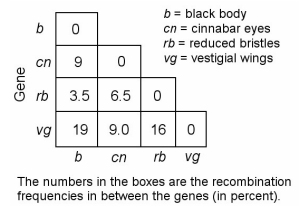 In a series of mapping experiments, the recombination frequencies for four different linked genes of Drosophila were determined as shown in the figure. What is the order of these genes on a chromosome map? (A) cn-rb-b-vg (B) b-rb-cn-vg (C) rb-cn-vg-b (D) vg-b-rb-cn (E) vg-cn-b-rb
  Of the following, the best conclusion concerning the difference between the S phases for beta and gamma is that (A) gamma contains 48 times more DNA than beta. (B) beta and gamma contain the same amount of DNA. (C) beta contains more RNA than gamma. (D) beta is a plant cell and gamma is an animal cell. (E) gamma contains more DNA than beta