阿摩線上測驗
19.有關應用RNR(risk-need-responsivity)概念至矯治處遇的原則,下列敘述何者錯誤?
(A)治療的目標在於減少或消除當事人產生犯罪行為需求(criminogenic needs)
(B)不論當事人再犯風險程度差異,皆應合併密集心理治療與司法監督,以降低再犯率
(C)依據當事人的風險決定治療的頻率與長度
(D)治療的計畫須考量犯罪者的能力和學習風格
答案:登入後查看
統計: A(61), B(732), C(12), D(34), E(0) #2968933
統計: A(61), B(732), C(12), D(34), E(0) #2968933
詳解 (共 1 筆)

CHH
#5889943
The basic criteria of RNR (Risk-Need-Responsivity) are: (Andrews, Bonta and Hodge, 1990)
- Risk principle: the greater the offender’s risk of reoffending, the greater should be the services to try to prevent this. (C)
- Need principle: the individual’s needs which contributed to their criminal behaviour should be assessed and then targeted during treatment. (A)
- Responsivity principle: consideration should be given to ways in which the offender’s learning from an intervention or treatment is maximised. These considerations include learning style, motivation and strengths and abilities of each offender as well as issues to do with the way in which treatment is delivered. (D)
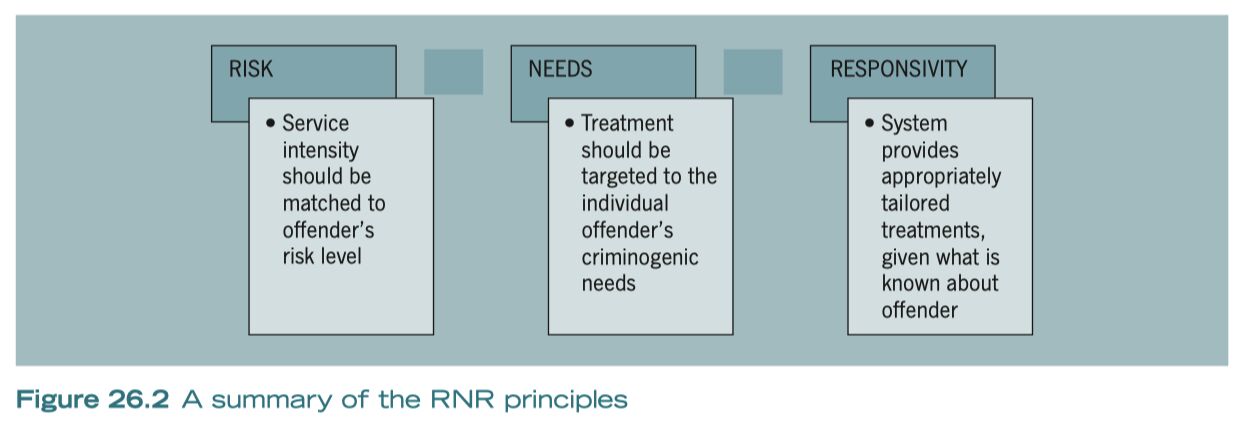
Howitt (2022) Introduction to Forensic and Criminal Psychology (7th ed.) p.558, 568
2
0