阿摩線上測驗
35. John is attempting to knock over a heavy wooden target that is hinged at its base. He is given two balls of equal mass. Ball A is made of sticky clay, and Ball B is made of highly elastic rubber. He throws both balls toward the target with the same initial speed v. Ball A: Strikes the target and sticks to it (does not bounce). Ball B: Strikes the target and rebounds with approximately the same speed v. Assuming the collision times are approximately equal, which ball is more likely to knock the target over, and why?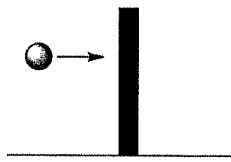
(A) Ball A, because it transfers all its kinetic energy to the target.
(B) Ball B, because it undergoes a larger change in momentum.
(C) Both are equally likely because they have the same mass and initial velocity.
(D) Ball A, because the collision time is shorter.
(E) Ball B, but only if the target is made of metal.
統計: A(0), B(2), C(1), D(0), E(0) #3847811