阿摩線上測驗
登入
首頁
>
研究所、轉學考(插大)◆有機化學及無機化學
>
113年 - 113 國立中山大學_碩士班暨碩士在職專班招生考試試題_化學系碩士班:有機化學及無機化學#119266
> 試題詳解
9.Which of the following pair of structures represent an identical compound?
(A)
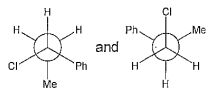
(B)
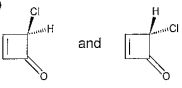
(C)
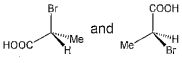
(D)
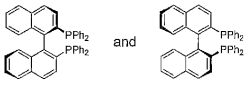
(E)
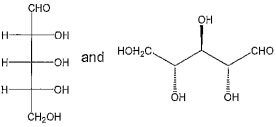
答案:
登入後查看
統計:
A(1), B(0), C(2), D(0), E(0) #3222733

詳解 (共 1 筆)
MoAI - 您的AI助手
B1 · 2025/10/26
#6969124
當我們面對這個考試題目時,我們需要在給定...
(共 762 字,隱藏中)
前往觀看
0
0
其他試題
5. Which of the following reaction will NOT give the product as shown? (A)(B)(C)(D)(E)
#3222729
6. Consider a system in which an ester is hydrolyzed in a base catalyzed hydrolysis using potassium hydroxide as the base. After the reaction, what will happen theoretically concerning the acidity of the reaction mixture when compared to the beginning of the reaction? (A) The mixture will become more basic compared to the beginning. (B) The mixture will become more acidic compared to the beginning. (C) The acidity of the reaction mixture will not change. (D) The concept of acidity cannot be applied to organic system. (E) The exact situations depend on the actual structure of the ester.
#3222730
7. Which of the following position is the most reactive towards electrophilic aromatic substitution? (A)A(B)B(C)C(D)D(E)E
#3222731
8. Describe the number of signals and their splitting in the 1H NMR of the following compound: (A) 7 signals: 1 singlet, 2 doublets, 1 triplet, 3 quartet (B) 6 signals: 1 singlet, 3 doublets, 1 triplet, 1 quartet (C) 7 signals: 4 doublets, 2 triplet, 1 quartet (D) 7 signals: 1 singlet, 4 doublets, 1 triplet, 1 quartet (E) 8 signals: 2 singlet, 4 doublets, 1 triplet, 1 quartet
#3222732
10. Which of the following solvent is the most soluble in water? (A) hexanoic acid (B) dichloromethane (C) dimethylformamide (D) 1-butanol (E) ethyl acetate
#3222734
11. Which of the following compound is the most reactive in an SN1 reaction? (A)(B)(C)(D)(E)
#3222735
12. Which of the following reaction conditions will give the desire product as shown? Reaction conditions: (1)O3 (2) (3) Excess HBr, then excess KOH (4) BuLi, then H2O (A) (1) and (2) only (B) (2) and (3) only (C) (2), (3) and (4) only (D) All of the above (E) None of the above
#3222736
13. Which of the following amine CANNOT be synthesized by reductive amination? (A)(B)(C)(D)(E)
#3222737
14. Which of the following acetal will react the fastest in acid-catalyzed hydrolysis? (A)(B)(C)(D)(E)
#3222738
15. Which of the following compounds is the oxidant in the reaction below? (A)(B)(C)KOH(D)oxygen in air(E)
#3222739