阿摩線上測驗
登入
首頁
>
研究所、轉學考(插大)-普通生物學
> 112年 - 112 亞洲大學_學士後獸醫學系招生考試_學士後獸醫學系:生物學(含植物學) #117433
112年 - 112 亞洲大學_學士後獸醫學系招生考試_學士後獸醫學系:生物學(含植物學) #117433
科目:
研究所、轉學考(插大)-普通生物學 |
年份:
112年 |
選擇題數:
80 |
申論題數:
0
試卷資訊
所屬科目:
研究所、轉學考(插大)-普通生物學
選擇題 (80)
1. Glucose molecule is a(an)__? (A) triglyceride ; (B) disaccharide ; (C) polymer ; (D) carbohydrate.
2. In our diets, glucose is often covalently bonded with others in the polymer form of __ (A) a polysaccharide;(B) a fatty acid chain;(C) a triglyceride;(D) a simple sugar.
3. In living cells, a process by which cells break polymers down into monomers by breaking covalent bonds is called? (A) hydrolysis;(B) dehydration synthesis;(C) reproduction;(D) All of the choices are correct.
4. Which statement regarding the DNA and RNA is false? (A) DNA has a main function of storing our genetic code, while RNA is used in units to build specific proteins in a cell;(B) DNA is a long two-sided molecule while RNA is a shorter single-sided molecule;(C) DNA is a molecule that stores and regulates our genetics, while RNA is used for cellular energy storage and release for biological functions;(D)DNA and RNA share all nucleotides, except that RNA has Uracil instead of Thymine.
5. The original three tenets of the cell theory are__? (A) all organisms have DNA, all organisms are made of cells, and all cells produce proteins;(B) all organisms are made of one or more cells, the cell is the fundamental unit of life, and all cells come from preexisting cells;(C) all organisms are made of one or more cells, all cells contain DNA, and all cells come from preexisting cells;(D) all organisms have DNA, DNA is the fundamental unit of life, and all cells come from preexisting cells.
6. Which one is false about a cell membrane? (A) a rigid structure;(B) a bilayered structure;(C) composed of phospholipid molecules;(D) a fluid structure.
7. Which statement about the eukaryotic cell is correct? (A) does not have membrane-bounded organelles;(B) has a cell wall with peptidoglycan;(C) is usually smaller than a prokaryotic cell;(D) has membrane-bounded organelles.
8. Penicillin suppresses bacterial infections by__? (A) stimulating a person's immune system;(B) interfering with the construction of the cell wall;(C) by causing the DNA of a bacterium to mutate;(D) damaging the cell membrane.
9. Which one is the function of the nucleolus? (A) protein synthesis;(B) transport of material into and out of the nucleus;(C) assembly of mRNA;(D) assembly of components of ribosomes.
10. Which of the following organelles are also cellular digestion centers? (A) lysosomes and Golgi apparatus;(B) peroxisomes and ribosomes;(C) lysosomes and peroxisomes;(D) chloroplasts and ribosomes.
11. Which statement about the cytoskeleton is NOT correct? (A) a system of tracks used for intracellular transport;(B) composed of microtubules, microfilaments, and intermediate filaments;(C) a structure that aids in the process of cell division;(D) found in the cytoplasm of prokaryotic cells.
12. Oxidation means__? (A) the loss of electrons from a molecule;(B) the loss of oxygen by a cell; (C) the gain of electrons by a molecule;(D) the gain of oxygen by a cell.
13. Coupled reactions are reactions in which a__? (A) exergonic reaction drives an endergonic reaction;(B) exergonic reaction drives a spontaneous reaction;(C) endergonic reaction drives an exergonic reaction;(D) endergonic reaction drives a spontaneous reaction.
14. Enzymes speed chemical reactions by__? (A) supplying energy to the reaction process;(B) raising the temperature of the surroundings;(C) lowering the amount of reactants that are needed;(D) lowering the energy required to start a chemical reaction.
15. Competitive inhibition of enzymes occurs__? (A) when a substance binds to an enzyme at a site away from the active site;(B) when the product, instead of the reactant of a reaction binds to the active site;(C) when a substance other than the substrate binds at the active site of an enzyme;(D) by blocking the production of an enzyme.
16. Which statement about simple diffusion is correct? (A) does not require energy;(B) utilizes proteins to move molecules across a membrane;(C) cannot occur without a membrane present;(D) moves molecules against a concentration gradient.
17. If an animal cell has a greater concentration of solute than its environment, the cell__? (A) will not experience a net gain or loss of water;(B) is hypertonic to the environment;(C) is isotonic to the environment;(D) is hypotonic to the environment.
18. The molecular reactants for photosynthesis are__? (A) glucose and carbon dioxide;(B) glucose and sunlight;(C) glucose and water;(D) water and carbon dioxide.
19. Your liver produces 90% of the cholesterol found in your body. When cholesterol levels get too high, the first enzyme in the pathway of cholesterol synthesis is inhibited. This is an example of__? (A) positive feedback;(B) denaturation;(C) negative feedback;(D) equilibrium.
20. Which of the following is NOT a net product or reactant of photosynthesis? (A) oxygen;(B) glucose;(C) carbon dioxide;(D) ATP
21. The main reason that cellular aerobic respiration needs to occur step by step instead of a single, big reaction is__? (A) cells produce the enzymes needed for cellular respiration very slowly; (B) too much energy would be released as heat, and destroy the cell;(C) cells don't store enough oxygen to absorb all the energy in one release;(D) cells don't have enough mitochondria to catalyze the larger, single reaction.
22. During glycolysis molecules of glucose are__? (A) broken down in oxidation, liberating the carbon atoms as CO2;(B) bonded in a reduction to form three molecules of pyruvate;(C) bonded covalently to form two molecules of pyruvate;(D) broken down by enzymes to form two molecules of pyruvate.
23. The Krebs cycle runs__? (A) six times for each glucose, because each carbon pulled from the original molecule will power the Krebs cycle;(B) 12 times for each glucose, because all of these processes are associated with the Krebs cycle;(C) three times for each glucose, to power the electron transport proteins in hydrogen transport;(D) twice for each glucose, acting on the two-carbon molecule fragments from glycolysis, carried as acetyl CoA.
24. Fermentation is most common in__? (A) fungi, decomposing dead plants;(B) human muscle cells;(C) both human muscle cells, and intestinal bacteria;(D) bacteria, in mammal intestines.
25. Glycolysis does not require__? (A) oxygen;(B) ATP;(C) NAD+;(D) glucose.
26. Muscle cells use lactic acid fermentation to__? (A) allow an animal to survive for long periods of time in the absence of oxygen;(B) generate NAD+ so that glycolysis can continue in the absence of oxygen;(C) produce less CO2;(D) produce ATP in the presence of oxygen.
27. The first steps in glycolysis involve__? (A) reducing glucose;(B) both the addition of two phosphates to glucose, and then splitting glucose;(C) adding two phosphates from ATP to glucose;(D) splitting glucose into two three-carbon molecules.
28. The net ATP production in glycolysis is only two because__? (A) two ATPs are used to "activate" glucose, while 4 ATPs are produced in remaining glycolysis steps;(B) two ATPs are used to donate electrons, in order to move NADH into the mitochondria;(C) None of the answer choices are correct, because six ATPs are the net yield from glycolysis;(D) that is the needed number of ATPs to power the reactions of the Krebs cycle.
29. The "Central Dogma" refers to__? (A) passage of genetic information from RNA to specific proteins by transcription;(B) inheritance of DNA genetically controlled traits from parents to offspring in every organism;(C) the similarity of the energy molecule ATP to the nucleotides in DNA;(D) the flow of genetic information in cells, from DNA genes to specific proteins.
30. The statement that does not correctly associate an RNA type, and its function, is__? (A) complementary RNA reorders the amino acids to insure their correct sequence;(B) messenger RNA is the gene, carrying coding to control the building of proteins;(C) transfer RNA functions to carry amino acids to the ribosome;(D) ribosomal RNA functions as a catalyst to bind amino acids into proteins.
31. A DNA sequence that signals a gene's start is a(n)__? (A) amino acid attachment site;(B) promoter;(C) codon;(D) anticodon.
32. A three-base sequence (loop) in tRNA that is complementary to a sequence of three bases in mRNA is a(n)__? (A) amino acid attachment site;(B) promoter;(C) codon;(D) anticodon.
33. In the Lac operon, the protein that binds to the operator to prevent transcription is__? (A) the promoter;(B) RNA polymerase;(C) the repressor;(D) DNA polymerase.
34. Which proteins initiate transcription in eukaryotes by recognizing sequences within the promoter region of a gene and attracting RNA polymerase? (A) TATA boxes;(B) transcription factors;(C) inducers;(D) repressors.
35. In a "silent" mutation the__? (A) codon that mutates causes a change in the amino acid specified;(B) codon that mutates does not cause a change in the amino acid specified;(C) mutation does not occur in a codon;(D) codon that mutates causes a stop codon to occur instead of the placement of an amino acid.
36. Transposable elements__? (A) result from damage to the chromosomes by things like radiation;(B) are DNA sequences that can "jump" within the genome;(C) are another name for translocations;(D) are segments of RNA found in chromosomes.
37. Using the genetic code shown here, predict what type of mutation has occurred in the hemoglobin sickle cell anemia allele.
Normal allele 5'–GGAAUGAAACAGGAACCC–3'
Mutant allele 5'–GGAAUGAAACAGGUACCC–3'
(A) a point mutation, Glu to Val (B) a point mutation, Val to Glu (C) a frameshift mutation (D) addition of a new stop codon
38. What type of mutation has occurred in the following?
Normal allele 5'–GGAAUGAAACAGGAACCC–3'
Mutant allele 5'–GGAAUGAAACAGGUACCC–3' (A) deletion of one base;(B) substitution;(C) deletion of two bases;(D) insertion of two bases.
39. What type of mutation has occurred in the following?
Normal allele 5'–GGAAUGAAACAGGAACCC–3'
Mutant allele 5'–GGAAUGAAACAGGUACCC–3' (A) nonsense mutation;(B) missense mutation;(C) silent mutation;(D) insertion mutation.
40. Sister chromatids are__? (A) genetically identical and attached to each other at the centromere;(B) genetically different and attached to each other at the centromere;(C) genetically identical;(D) genetically different.
41. The two main stages of the eukaryote cell cycle, in which the cell spends most of its time and metabolic energy, are__ (A) interphase and cytokinesis;(B) interphase and binary fission;(C) mitosis and meiosis;(D) interphase and mitosis.
42. The structure that organizes the protein subunits of the mitotic spindle is the__? (A) centrosome;(B) centromere;(C) microfilaments;(D) kinetochore.
43. How does the space between our fingers arise? (A) Mitosis of the cells is blocked;(B) The cells die by apoptosis;(C) The cells become part of the fingers;(D) Meiosis of the cells is blocked.
44. In order for a cell to become cancerous, oncogenes must be ___, or tumor suppressors are ___. (A) activated; activated;(B) activated; inactivated;(C) inactivated; inactivated;(D) inactivated; activated.
45. Diploid means having__? (A) the somatic cells have all chromosomes except the sex chromosomes;(B) two complete sets of homologous chromosomes;(C) one complete set of chromosomes in each gamete;(D) both the allele and the autosome form of chromosomes.
46. In a cell dividing by meiosis, DNA is replicated__? (A) between meiosis I and again before meiosis II;(B) during prophase I;(C) before meiosis I;(D) during prophase II.
47. In meiosis, homologous chromosomes align next to one another during__? (A) prophase I;(B) prophase II;(C) metaphase I;(D) metaphase II.
48. If the heterozygous phenotype is intermediate between those of the two different homozygotes, this is called__? (A) incomplete dominance;(B) independent assortment;(C) polygenic;(D) codominance.
49. Linked genes, by definition, are genes that__? (A) have no alleles;(B) have more alleles than usual;(C) are alleles that are found in different daughter cells;(D) are found on the same chromosome.
50. A single chromosome has__? (A) a single gene with multiple alleles;(B) a single gene with a single allele;(C) multiple genes, each with multiple alleles;(D) multiple genes, each with a single allele.
51. The method used to produce the cloned sheep, Dolly, was__? (A) embryonic stem cell transplantation;(B) polymerase chain reaction;(C) short tandem repeats;(D) somatic cell nuclear transfer.
52. Darwin concluded from his observations of nature and readings that__? (A) population growth is unlimited, leading to the large numbers of organisms;(B) individuals compete with one another for limited resources and only the fittest survive;(C) an individual's likelihood of survival and reproduction are mostly due to chance and changes in the environment;(D) individuals compete with one another for limited resources and only the fittest reproduce.
53. Natural selection acts on__? (A) genotypes;(B) populations;(C) individuals;(D) communities.
54. If similarities between two structures in different organisms reflect independent evolution, these structures are__? (A) heterologous;(B) homeotic;(C) homologous;(D) analogous.
55. The observation that most aquatic vertebrates (e.g. fish, penguins, and whales) have streamlined bodies and fins or flippers for steering are a result of__? (A) analogous selection;(B) convergent evolution;(C) sexual selection;(D) vestigial selection.
56. The enzyme that HIV uses to copy its RNA into DNA is__? (A) Reverse transcriptase;(B) RNA polymerase;(C) RNA integrase;(D) DNA polymerase.
57. A vaccine against the influenza virus would result in production of antibodies against which of the following? (A) proteins in the envelope;(B) lipids in the envelope;(C) viral DNA;(D) viral RNA.
58. Viruses always lack which of the following? (A)an envelope;(B) organelles;(C) genetic material;(D) a protein coat.
59. A microbiologist Gram stains a bacterium and finds the bacterium to be pink to red in color, this identifies the__? (A) species of bacterium;(B) bacterium as a bacterium that causes human disease;(C) bacterium as gram-negative;(D) bacterium as gram-positive.
60. Escherichia coli and Salmonella can live in our intestines in the presence or absence of oxygen. They are considered which of the following? (A) facultative anaerobes;(B) autotrophs;(C) aerobic;(D) obligate anaerobes.
61. A gaseous hormone produced by plants that helps control fruit ripening is__? (A) dextrose;(B) carbon dioxide;(C) chlorophyll;(D) ethylene.
62. If a plant exhibits determinate growth, the plant__? (A) produces auxiliary roots to help stabilize the plant;(B) produces seeds only at one time during its life;(C) continues to grow until the environment determines that it cannot;(D) stops growing when the plant reaches its mature size.
63. The _____ transports water and dissolved minerals from the roots of the plant to the shoots of the plant. (A) stomata;(B) epidermis;(C) guard cells;(D) xylem.
64. The _____ and _____ of a plant's leaf help conserve water in a plant. (A) root hairs; stomata; (B) Casparian strip; cuticle;(C) Casparian strip; endodermis;(D) stomata; cuticle.
65. If water is abundant, a plant's guard cells will____ and the stomata will_____. (A) swell; close;(B) collapse; open;(C) swell; open;(D) collapse; close.
66. The whorl of a flower that consists of all the sepals is the__? (A) stamen;(B) calyx;(C) carpel;(D) corolla.
67. The plant hormone that stimulates cell division in seeds and fruits is__? (A) auxin;(B) cytokinin;(C) abscisic acid;(D) ethylene.
68. In biology lab, your teacher places petri dishes on the lab table. Upon examination, you observe that there are lumps of plant tissue, and you are told that they have been grown artificially and can produce new plants. Each lump is a(n)__ (A) tetraploid zygote;(B) stigma;(C) amnion; (D) callus.
69. Which phrase defines smooth muscle? (A) used for slow, involuntary movements;(B) used to move bones;(C) beats the heart;(D) shows striations.
70. The systems that coordinate communication are__? (A) skeletal and muscular;(B) circulatory and respiratory;(C) nervous and endocrine;(D) digestive and circulatory.
71. Which of the following best describes how a neuron fires? (A) Na+ ions cross the plasma membrane, initiating a wave that travels down the axon;(B) Vesicles carry neurotransmitters from the nucleus to the other end of the neuron;(C) Na+ ions enter one end of the neuron and diffuse to the other end, down the axon;(D) Neurotransmitters enter one end of the neuron and diffuse to the other end, down the axon.
72. If you had a friend who was unable to see color, you would expect that your friend's eyes had defective__? (A) cone cells;(B) rod cells;(C) cornea;(D) iris.
73. Observing a patient who has been given an experimental drug, you notice that it constricts blood vessels and slows digestion, making its effects similar to those of__? (A) calcitonin;(B) epinephrine;(C) insulin;(D) glucagon.
74. A fast-twitch muscle fiber__? (A) uses ATP quickly in short, fast contractions;(B) has many capillaries;(C) is rich in myoglobin;(D) works aerobically.
75. Systolic pressure reflects the__? (A) contraction of the atria;(B) relaxation of the atria;(C) contraction of the ventricles;(D) relaxation of the ventricles.
76. People are often noted to pick up and "adopt" a baby wild animal, which then leads to a set of dependent behaviors that the young animal learns very rapidly. The dependent behaviors will be retained through life, endangering the survivability of the animal around people or in the wild. This behavior is learned by__?(A) taxis;(B) imprinting;(C) habituation;(D) observation.
77. An ecosystem is defined as__? (A) all of the individuals of the same species living in an area; (B) the physical place and environmental surroundings in which individual organisms live;(C) the set of environmental resources that each organism requires for survival, growth, reproduction, etc;(D) the sum of living organisms and nonliving environmental components in an area.
78. Which of the following is not a type of symbiosis? (A) predation;(B) mutualism;(C) commensalism;(D) parasitism.
79. Why do populations that fragment in response to climate changes face a higher risk of extinction? (A) Population fragmentation leads to loss of genetic diversity;(B) Populations which have moved are subject to new predators;(C) Moving populations cannot breed as effectively;(D) The number of young decreases for several generations in new habitat.
80. How does damming or altering the path of a river destroy wetlands? (A) Fish can no longer migrate up and down the river;(B) Wetlands can no longer obtain nutrients from annual floods;(C) Wetlands can no longer obtain oxygen from the flowing water of the river;(D) Birds can no longer get to the wetlands.
申論題 (0)
相關試卷
115年 - [無官方正解]國立臺灣大學107學年度碩士班招生考試試題 普通生物學(A)#139913
115年 · #139913
115年 - [無官方正解]115 國立中山大學_碩士班考試入學招生考試試題_生科系碩士班:普通生物學#138393
115年 · #138393
115年 - [無官方正解]115 國立臺灣大學_ 碩士班招生考試試題:普通生物學(A)#137686
115年 · #137686
115年 - 115 國立臺灣大學_ 碩士班招生考試試題:普通生物學(B)#137620
115年 · #137620
114年 - [無官方正解]114 臺灣綜合大學系統_學士班轉學生考試試題:普通生物學#138156
114年 · #138156
114年 - [無官方正解]114 台灣聯合大學系統_學士班轉學生考試試題:普通生物學#137763
114年 · #137763
114年 - 114 中國醫藥大學_學士班寒假轉學招生考試試題:普通生物學#136681
114年 · #136681
114年 - 114 高雄醫學大學_學生轉系考試試題:普通生物學#129767
114年 · #129767
114年 - [無官方正解]114 臺灣綜合大學系統_學士班轉學生聯合招生考試試題:普通生物學#129348
114年 · #129348
114年 - [無官方正解]114 國立臺灣大學_轉學生招生考試﹕普通生物學(B)#128203
114年 · #128203
 阿摩線上測驗
登入
阿摩線上測驗
登入
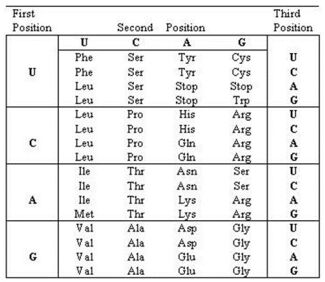 (A) a point mutation, Glu to Val (B) a point mutation, Val to Glu (C) a frameshift mutation (D) addition of a new stop codon