所屬科目:研究所、轉學考(插大)◆普通物理學
1. During a short interval of time the speed v in m/s of an automobile is given by v = at² + bt³, where the time t is in seconds. The units of a and b are respectively: (A) m-s²; m-s³ (B) m-s³; m-s⁴ (C) s³/m; s⁴/m (D) m/s²; m/s³ (E) m/s³; m/s².
2. You stand on a spring scale on the floor of an elevator. Of the following, the scale shows the highest reading when the elevator: (A) moves downward with decreasing speed (B) moves downward with increasing speed (C) moves upward with decreasing speed (D) moves upward at constant speed (E) remains stationary.
3. A 0.50-kg object moves in a horizontal circular track with a radius of 2.0 m. An external force of 3.0 N, always tangent to the track, causes the object to speed up as it goes around. If it starts from rest its speed at the end of one revolution is: (A) 9.8 m/s (B) 12.2 m/s (C) 15.8 m/s (D) 17.5 m/s (E) 21.0 m/s.
4. The potential energy of a body of mass m is given by U = -Ax + Bx². The corresponding conservative force is: (A) A-2Bx (B) –A+ 2Bx (C) Ax²/2 -Bx³/3 (D) -Ax²/2 + Bx³/3 (E) It's not a consevative force.
5. A 2-kg cart, traveling on a horizontal air track with a speed of 3 m/s, collides with a stationary 4-kg cart. The carts stick together. The impulse exerted by one cart on the other has a magnitude of: (A) 0 N·s (B)2 N·s (C) 4 N·s (D) 6 N·s (E) 12 N·s.
6. A and B are two solid cylinders made of aluminum. Their dimensions are shown. The ratio of the rotational inertia of B to that of A about the common axis X-X' is: (A) 2 (B) 4 (C) 8 (D) 16 (E) 32.
7. A disk rolls without sliding along the floor. The ratio of its translational kinetic energy to its rotational kinetic energy (about an axis through its center of mass) is: (A) 1 (B) 1/2 (C) 1/3 (D) 2 (E) 3.
8. The displacement of an object oscillating on a spring is given by x(t) = cos(wt + φ). If the initial displacement is zero and the initial velocity is in the positive x direction, then the phase constant φ is: (A)0 (B) π/2 (C) π (D) 3π/2 (E) none of above.
9. The mass of an oxygen molecule is 16 times that of a hydrogen molecule. At room temperature, the ratio of the rms speed of an oxygen molecule to that of a hydrogen molecule is: (A) 1/16 (B) 1/4 (C) 1 (D) 4 (E) 16.
10. Consider all possible isothermal contractions of an ideal gas. The change in entropy of the gas: (A) is zero for all of them (B) increases for all of them (C) decreases for all of them (D) does not decrease for any of them (E) none of above (the provided information is not enough).
11. We have three identical conducting spheres. Their initial charges are A, +8e; В, +13e; C, -2e. We touch A and C and then move them apart. Then we touch B and C and then move them apart. What then is the final charge on B? (A) +3e (B) -e (C) 0 (D) +8e (E) +e.
12. The figure shows a thin non-conducting rod that is uniformly charged with +Q in the top half and -Q in the bottom half. Which of the integrals best gives the magnitude of the net electric field at point P on the perpendicular bisector? (A) (B) (C) (D)(E)
13. The following figure shows two parallel plates. The graph indicates the potential at points between the two plates, with V2 = 20 V at x2 = 0.40 m and V₁ = 15 V at x1 = 0.30 m. An electron is released from rest at x1, and that release point and the plate locations are aligned with the graph. What is the magnitude of the electric force (N) on the electron? (A)(B) (C) (D) (E)
14. In the figure, the switch is closed at time t = 0 on a capacitor with capacitance C = 5.00 μF. The resistors are R1 = 2.00 Ω and R2 = 4.00 Ω and the circuit has a 50.0 V ideal battery. At what time (s) is the charge on the capacitor equal to 0.250 of the final (equilibrium) charge? (A) (B) (C) (D) (E)
15. An alpha particle (q = +2e, m = 6.644× kg) travels in a circular path of radius 9.00 cm in a uniform magnetic field with B = 1.20 T. Through what potential difference (volts) was it accelerated (from rest) to have the kinetic energy required for this path? (A) 7.9×10³, (B) 5.3×10⁴, (C) 2.8×10⁵, (D) 6.7×10⁶, (E)3.1×10⁷.
16. The figure gives the magnitude of the magnetic field inside and outside a wire with a uniformly distributed current: T. What is the current (mA)? (A) 5.5, (B) 10.0, (C) 50.2, (D) 30.0, (Ε) 75.0. B Bmax0 r (mm) 5.00
17. The figure shows the direction of the current through three inductors. Here are the currents as a function of time t: i1 = 5t; i2 = 5t; i3 = 5/t. In which inductor is the induced emf upward in the figure? (A) 2 and 3, (B) 1 and 3, (C) 3 only, (D) all three, (E) none.
18. The figure shows a thin film (in the middle) with different materials on either side: n₁ = 1.40, n₂ = 1.50, and n₃ = 1.60. We send in a ray of light that is perpendicular to the two parallel surfaces. In air, that light has a wavelength of 800 nm. For some values of thickness L, the reflections to the left undergo fully destructive interference. What is the second smallest value of L that gives that result? Answer in nanometers. (A) 1200, (B) 180, (C) 400, (D) 75, (E) 533.
19. If the momentum of an electron is 4.00 MeV/c, what is the electron's kinetic energy (MeV)? Electron's rest energy = 0.511 MeV. (A) 1.86, (B) 0.67, (C) 1.09, (D) 3.52, (E) 2.34.
20. Light of wavelength 100 nm shines on a metal with a work function of 3.00 eV. What is the stopping voltage (V)? (A) 9.40, (B) 0.145, (C) 6.02, (D) 7.15, (E) 1.33.
 阿摩線上測驗
登入
 (A) 2 (B) 4 (C) 8 (D) 16 (E) 32.
 cos(wt + φ). If the initial displacement is zero and the initial velocity is in the positive x direction, then the phase constant φ is: (A)0 (B) π/2 (C) π (D) 3π/2 (E) none of above.
 (A)
 (B)
 (C)
 (D)
 (E)

 (A)
 (B)
 (C)
 (D)
 (E)

 (A)
 (B)
 (C)
 (D)
 (E)

 kg) travels in a circular path of radius 9.00 cm in a uniform magnetic field with B = 1.20 T. Through what potential difference (volts) was it accelerated (from rest) to have the kinetic energy required for this path? (A) 7.9×10³, (B) 5.3×10⁴, (C) 2.8×10⁵, (D) 6.7×10⁶, (E)3.1×10⁷.
 T. What is the current (mA)?
 (A) 5.5, (B) 10.0, (C) 50.2, (D) 30.0, (Ε) 75.0. B Bmax0 r (mm) 5.00
 (A) 2 and 3, (B) 1 and 3, (C) 3 only, (D) all three, (E) none.
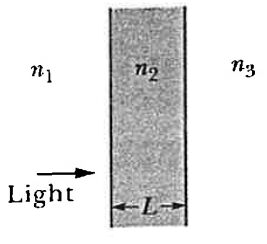 (A) 1200, (B) 180, (C) 400, (D) 75, (E) 533.