所屬科目:研究所、轉學考(插大)◆普通物理學
1. The permeability of free space is denoted as to, and the permittivity of free space is denoted as ∈0. What is the unit of μ0/∈0? (A) W2/Amp4 (B) Amp²/Volt² (C) W/Amp (D) Volt/Amp
2. The unit of angular momentum is (A) Joule/sec. (B) Joule/sec². (C) Joule sec² (D) Joule sec.
3. The unit of the electric field E is Volt/m and the unit of the magnetic field B is N/Amp m. What is the unit of E/B? (A) W (B) W/m² (C) m/sec (D) Joule/m²
4.Assume a 70 (Hz) electromagnetic wave is sinusoidal wave propagating in the z-direction with electric field E pointing in x-direction with amplitude Eo-6.00 (Volt/m). What is the amplitude of the magnetic field B0? (A) (Tesla) (B) (Tesla) (C) (Tesla) (D) (Tesla)
5.Calculate the wavelength of a 95×106 (Hz) radio wave with amplitude E0=5.42.00 (Volt/m). (A) 4.24 (m) (B) 3.16 (m) (C) 5.12 (m) (D) 2.55 (m)
6.Calculate the self-inductance of a 0.7(m) long air-filled solenoid 3.5(cm) in diameter containing 6300 loops. (A)J 0.068 (H) (B) 0.043 (H) (C) 0.077 (H) (D) 0.054 (H)
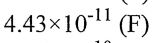
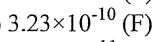
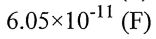
7.Calculate the capacitance of a parallel plate capacitor whose plate are 370 (cm²) and are separated by a 2.3(mm) air gap. (A)(F) (B) (F) (C) (F) (D) (F)
8. An electron travels at the speed 4×10⁷(m/sec) in a plane perpendicular to a uniform magnetic field. If the resulting radius of circular motion is r=7.3×(m), find the magnitude of the magnetic field B. (A) 0.024 (Tesla) (B) 0.043 (Tesla) (C) 0.031 (Tesla) (D) 0.052 (Tesla)
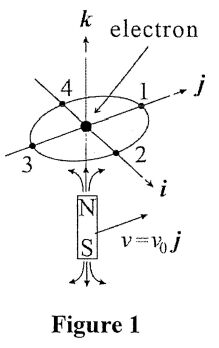
9. A magnet moves at high speed relative to an observer and passes by an electron that is stationary relative to the same observer. At the instant the north pole of the magnet passes directly beneath the electron (as shown in Figure1), in which direction will the force acting on the electron point?
(A) (B) 2 (C) 3 (D) 4
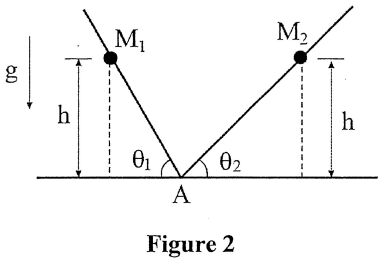
10. There are two inclined planes, with angles θ1=60° and θ2=45° relative to the horizontal. Two objects with masses M₁=2(kg) and M2=1(kg) (both are initially at rest) slide down the inclined planes from the same height h as shown in Figure 2. Assuming the time taken to reach the bottom (point A in the figure) are t1 and t2 respectively, what is the ratio?
(A) t1/t2=0.816 (B) t1/t2= 1.224 (C) t1/t2=1.150g (D) t1/t2=0.707
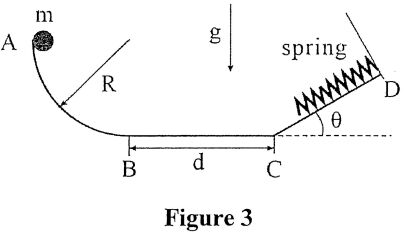
11. Consider the track shown in Figure 3. The track AB is one quarter of a circle of radius R=3.0(m) and is frictionless. The horizontal track from B to Chas a length of d=4.0(m) and a coefficient of kinetic
friction =0.23. The track CD under the spring is frictionless. The track CD forms an angle θ=30° with the horizontal plane. A block with a mass of m=2.2(kg) is released from rest at point A. After sliding m along the track, it compresses the spring by 0.35 (m) and comes to rest at a distance 0.8 (m) from C. Determine the stiffness constant k for the spring.
spring.
(A) 610 (N/m)
(B) 591 (N/m)
(C) 554 (N/m)
(D) 732 (N/m)
12.Consider a planet moving in an elliptical orbit around the Sun, with an aphelion distance of 2.49×10⁸ (km) and a perihelion distance of 2.06×10⁸ (km). Assuming the mass of the planet is 4.20× (kg) and the mass of the Sun is 1.99× (kg), what is the orbital period of the planet around the Sun? use 1Earth year=31536000 (sec)] [we (A) 2.15 Earth year (B) 1.87 Earth year (C) 1.62 Earth year (D) 1.28 Earth year
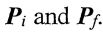
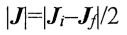
13. Consider the collision of two objects with masses m1 and m2. The initial (before collision) and final (after collision) momenta are denoted as . The momentum difference before the collision is recorded as , and the momentum difference after the collision is recorded as . What is the magnitude of the impulse J experienced by each object during the collision? (A) (B)(C) (D)
14. Consider a uniform tubes open at both end, which is called the open tube. Suppose an open tube A with a length L has a fundamental frequency f0. If one-third of A's length is cut off, resulting in open tube B, what is the fundamental frequency ? If the open tube B is then connected to another open pipe with one-third of B's length, forming open pipe C, what is the fundamental frequency ? (A) (B) (C)(D)
15. A sound source emits a frequency f=72 (Hz) when stationary. Suppose the sound source and the observer are moving toward each other as shown in Figure 4, each at a speed equal to half the speed of sound, i.e., /2 and . What is the frequency fobserved by the observer?
(A) f= 144 (Hz) (B) f= 108 (Hz) (C) f=157 (Hz) (D) f=216 (Hz)
16. Suppose there are two tuning forks (音叉) with vibration frequencies of 240 Hz and 242 Hz. If both tuning forks are sounded together, what frequency does the ear perceive, and how many times per second will the ear hear a loud sound? (A) 482 (Hz); 2 times each second (B) 482 (Hz); 4 times each second (C) 241 (Hz); 2 times each second (D) 241 (Hz); 4 times each second
17. At a pressure of 1.00 (atm), a sample consisting of 3.00 (mol) of nitrogen gas (N2) is heated from a temperature of 298(K) to a temperature of 343(K). Assume that the gas can be modeled as the rigiddumbbell model that can rotate about two axes. Furthermore, suppose that the nitrogen gas can be modeled as an ideal gas. What amount of heat transfer into the sample is required if the pressure is kept constant? (A) 2.80×10³ (Joule) (B) 3.93×10³ (Joule) (C) 1.77×10³ (Joule) (D) 2.33×10³ (Joule)
18. A 1.7×(F) capacitor is fully charged by a 450 (Volt) dc power supply. At time t-0, it is disconnected from the power supply and is connected to a 8.5×(H) inductor. Calculate the maximum current I0 and the total energy U oscillating in the system. (A) (B) (C) (D)
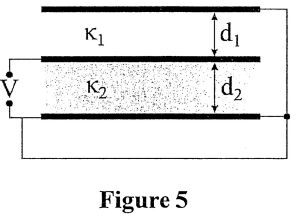
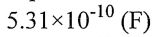
19. Three conducting plates (each has area A) are connected as shown in Figure 5, where d₁-2.00(mm) and d2 =3.00(mm), and A=250(cm²). The symbol V represents the potential difference. The gaps between the three conductors are filled with materials having dielectric constants к1=3.4 and к2=2.1, respectively. Determine the capacitance. Assume that d1 and d2 are much less that the dimensions of the plates.
(A) (B) (C) (D)
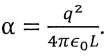
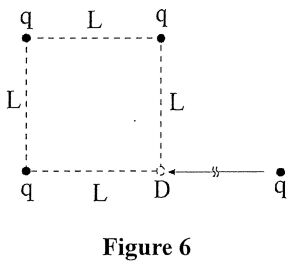
20. Four identical positive point charges (each having the same charge q) are initially at rest and infinitely separated. An amount of work is required to move these point charges to the four corners of a square with edge length L. Suppose there are three charges already positioned as shown in Figure 6. Calculate the work needed to bring.the fourth charge to point D. We define
(A) (4+√2)a (B) (C) (D) (2+√2)α
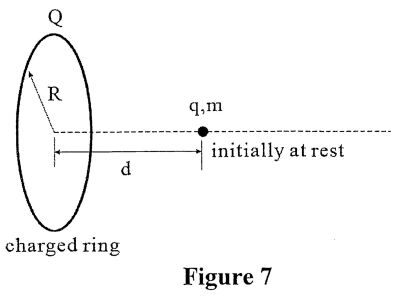
21. As shown in Figure 7, a ring of radius R=0.03 (m) lies in a plane with its center at the origin. The ring has a uniformly distributed positive charge Q = 9.0×(Coul). A small charged particle with mass m = 3.8×(kg) and positive charge q = 7.0×(Coul) is placed at a distance d = 0.05 (m) from the axis of the ring and released. Find the speed v of the Q particle when it is at an infinite distance from the ring. Assume the effects of gravity are negligible.
(A) 2.26 (m/sec) (B) 2.33 (m/sec) (C) 2.57 (m/sec) (D) 3.21 (m/sec)
22. Consider a hydrogen-like atom, assuming the electron orbits the nucleus of effective charge 3.7e in a simple planar circular motion, as described by the Bohr model. If the radius of the circular motion is r=2.2r0 where r0=0.529×(m). What is the magnetic moment of this hydrogen-like atom? [1/4π∈0 =8.99×10⁹(N m²/Coul²)] (A)(B) (C) (D)
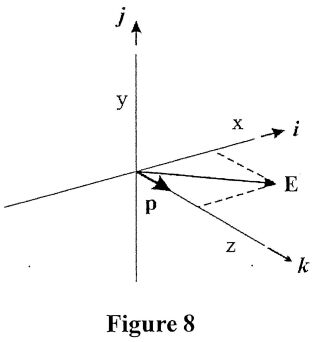
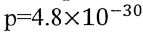
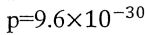
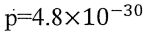
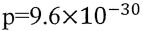
23. The electric dipole moment p=pk of a molecular is formed by two equal charges of opposite sign +q and -q, separated by a distance d = 2.4 x (m) and given q=2.0× (Coul). The electric dipole is placed in a uniform electric field E=3.5×10⁵i+4.2×10⁵k (N/Coul) as shown in Figure 8. Find the magnitudes of the electric dipole moment of this molecular and the torque |т| exerted on the electric dipole.
(A) (Coulm), and (N.m)
(B) (Coul·m), and (N.m)
(C) (Coul·m), and (N.m)
(D) (Coul-m), and (N.m)
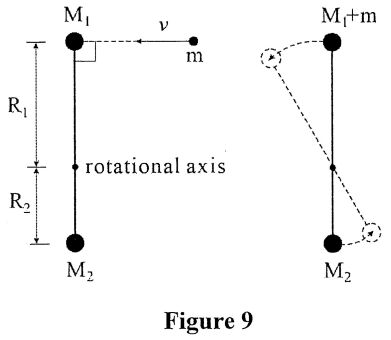
24. On a plane, a massless long rod connects two point masses M1=2.2 (kg) and M2=3.1 (kg) at its ends, with a fixed axis of rotation as shown in Figure 9, where R1=0.37(m) and R2=0.24(m). The axis is perpendicular to the plane of the page. A bullet of mass m=0.2(kg) traveling at a velocity v=15(m/s) perpendicularly strikes M1 and embeds itself in M1, causing the rod to rotate about the axis. Calculate the angular velocity. M V m R rotational axis R
(A) ω=2.31 (rad/sec) (B) ω=2.19 (rad/sec) (C) ω=2.77 (rad/sec) (D) ω=2.01 (rad/sec)
25. In a double-slit interference experiment, the slit separation is 0.48(mm), and the distance to the screen is 1.3(m). Within a range 15(mm) on the screen, 12 bright fringes are observed. Determine the wavelength of the light source used. (A) 434.1 (nm) (B) 613.0 (nm) (C) 722.1 (nm) (D) 503.5 (nm)
 阿摩線上測驗
登入
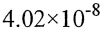 (Tesla) (B)
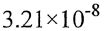 (Tesla) (C)
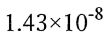 (Tesla) (D)
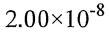 (Tesla)
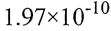 (F) (B)
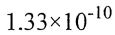 (F) (C)
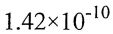 (F) (D)
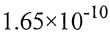 (F)
 (m), find the magnitude of the magnetic field B. (A) 0.024 (Tesla) (B) 0.043 (Tesla) (C) 0.031 (Tesla) (D) 0.052 (Tesla)
 (A) (B) 2 (C) 3 (D) 4
 (A) t1/t2=0.816 (B) t1/t2= 1.224 (C) t1/t2=1.150g (D) t1/t2=0.707
 =0.23. The track CD under the spring is frictionless. The track CD forms an angle θ=30° with the horizontal plane. A block with a mass of m=2.2(kg) is released from rest at point A. After sliding m along the track, it compresses the spring by 0.35 (m) and comes to rest at a distance 0.8 (m) from C. Determine the stiffness constant k for the spring.
 (kg) and the mass of the Sun is 1.99×
 (kg), what is the orbital period of the planet around the Sun? use 1Earth year=31536000 (sec)] [we (A) 2.15 Earth year (B) 1.87 Earth year (C) 1.62 Earth year (D) 1.28 Earth year
 . The momentum difference before the collision is recorded as
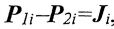 , and the momentum difference after the collision is recorded as
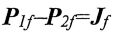 . What is the magnitude of the impulse J experienced by each object during the collision? (A)
 (B)
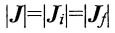 (C)
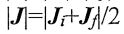 (D)
 ? If the open tube B is then connected to another open pipe with one-third of B's length, forming open pipe C, what is the fundamental frequency
 ? (A)
 (B)
 (C)
 (D)

 /2 and
 . What is the frequency fobserved by the observer?
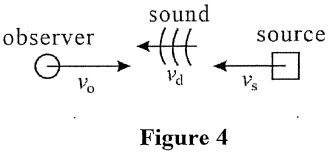 (A) f= 144 (Hz) (B) f= 108 (Hz) (C) f=157 (Hz) (D) f=216 (Hz)
 (F) capacitor is fully charged by a 450 (Volt) dc power supply. At time t-0, it is disconnected from the power supply and is connected to a 8.5×
 (H) inductor. Calculate the maximum current I0 and the total energy U oscillating in the system. (A)
 (B)
 (C)
 (D)

 (A)
 (B)
 (C)
 (D)
 (A) (4+√2)a (B)
 (C)
 (D) (2+√2)α
 (Coul). A small charged particle with mass m = 3.8×
 (kg) and positive charge q = 7.0×
 (Coul) is placed at a distance d = 0.05 (m) from the axis of the ring and released. Find the speed v of the Q particle when it is at an infinite distance from the ring. Assume the effects of gravity are negligible.
 (A) 2.26 (m/sec) (B) 2.33 (m/sec) (C) 2.57 (m/sec) (D) 3.21 (m/sec)
 (m). What is the magnetic moment of this hydrogen-like atom? [1/4π∈0 =8.99×10⁹(N m²/Coul²)] (A)
 (B)
 (C)
 (D)

 (m) and given q=2.0×
 (Coul). The electric dipole is placed in a uniform electric field E=3.5×10⁵i+4.2×10⁵k (N/Coul) as shown in Figure 8. Find the magnitudes of the electric dipole moment of this molecular and the torque |т| exerted on the electric dipole.
 (Coulm), and
 (N.m)
 (Coul·m), and
 (N.m)
 (Coul·m), and
 (N.m)
 (Coul-m), and
 (N.m)
 (A) ω=2.31 (rad/sec) (B) ω=2.19 (rad/sec) (C) ω=2.77 (rad/sec) (D) ω=2.01 (rad/sec)