阿摩線上測驗
登入
首頁
>
駕照◆汽車法規(英文)
> 115年 - 汽車駕照筆試_英文 1001-1050(2026/05 更新)#145231
115年 - 汽車駕照筆試_英文 1001-1050(2026/05 更新)#145231
科目:
駕照◆汽車法規(英文) |
年份:
115年 |
選擇題數:
50 |
申論題數:
0
試卷資訊
所屬科目:
駕照◆汽車法規(英文)
選擇題 (50)
1001.Regarding the engine coolant temperature gauge on the dashboard, which of the following is correct? (A)The temperature gauge does not change due to outside air temperature or driving conditions. (B) Thetemperature gauge is affected by outside air temperature and driving conditions. (C) The temperaturegauge only changes when the engine is turned off.
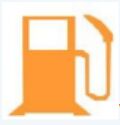
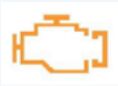
1002.What does the warning light shown in the image represent? (A) Low engine oil pressurewarning light. (B) Low fuel level warning light. (C) Engine malfunction warning light.
1003.When driving a car down a long steep slope, how should the driver operate the vehicle to ensure drivingsafety and reduce the load on the braking system? (A) Appropriately use engine braking (shift to a lowergear). (B) Continuously lightly press the brake to maintain vehicle speed. (C) Turn off the engine andcoast down to save fuel.
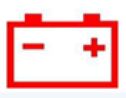
1004. What is the icon for the charging warning light displayed on the car's instrument panel? (A)(B) (C)
1005.If the battery fluid is found to be insufficient during inspection, what should be added? (A) Mineral water.(B) Sulfuric acid. (C) Distilled water.
1006.The 'engine tachometer' on the instrument panel indicates the number of revolutions per minute (RPM) ofthe engine. When the needle points to the '1' mark, what is the engine speed? (A) 100 RPM. (B) 1,000RPM. (C) 10,000 RPM.
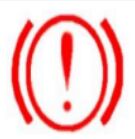
1007.What is this warning light? (A) ABS brake warning light. (B) Brake system warning light. (C) Low fuelwarning light.
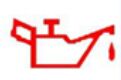
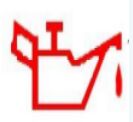
1008.What is this warning light? (A) Low engine oil pressure warning light. (B) Low fuel pressure warning light.(C) Low coolant level warning light.
1009.When a warning light on the dashboard illuminates while driving, the driver should identify thecorresponding vehicle system. Which of the following pairings is correct? (A) Charging warning lightcorresponds to the engine combustion system; engine malfunction light corresponds to the batterycharging system; brake warning light corresponds to the braking system. (B) Charging warning lightcorresponds to the alternator and battery charging system; engine malfunction light corresponds toengine operation-related systems; brake warning light corresponds to the braking system. (C) All threewarning lights are uniformly controlled by the onboard computer, indicating only a general vehicleabnormality, and there is no need to distinguish individual systems.
1010.For large heavy motorcycles with a total cylinder displacement of 550 cc or more traveling on freewaysand expressways, the vehicle must be properly inspected. Which of the following tire tread depthconditions is not permitted during travel? (A) Any point less than 1 mm. (B) Any point less than 1.5 mm.(C) Any point less than 1.6 mm.
1011.The 'charging warning light' on the dashboard remains continuously lit while driving. Which of thefollowing descriptions of its meaning and response is correct? (A) It indicates that electronic devicesinside the vehicle are consuming too much power; turning off the air conditioning and audio system willclear the warning, and the vehicle can continue to be driven normally. (B) It indicates that the alternator orNo. Ans Questioncharging system may be malfunctioning and the battery cannot be charged normally; the vehicle shouldbe safely stopped for inspection as soon as possible. (C) It indicates that the battery is fully charged andthe system has automatically stopped charging, which is a normal condition requiring no action.
1012.Before each on-road driving practice session, regarding the confirmation of the vehicle’ssafety condition, which of the following practices by the learner driver is most correct? (A)Although an instructor accompanies the practice and the driving school regularlymaintains the vehicle, the learner should still proactively learn and perform pre-tripvehicle inspections to develop the habit of self-responsibility for future independentdriving. (B) Since the learner has not yet obtained an official driver’s license, all vehiclesafety responsibilities rest with the driving school and instructor; the learner should focussolely on driving techniques. (C) The driving school’s vehicle is regularly maintained andthe instructor supervises onboard, so there is no need to repeat inspections before eachsession, in order to maximize training time efficiency.
1013.Regarding a water-cooled engine operating without coolant, which of the following is correct? (A) Theengine can be started for short-distance travel. (B) The engine must not be started to avoid overheatingand damage. (C) Reducing vehicle speed and continuing to drive can prevent engine overheating.
1014.What is the main function of ABS (Anti-lock Braking System) in a car? (A) To increase braking forceduring emergency braking so the vehicle stops faster. (B) To prevent wheel lockup during emergencybraking so the driver can maintain steering and braking control. (C) To automatically reduce vehiclespeed during braking to prevent skidding.
1015.Regarding pre-drive vehicle inspection by a car driver, which of the following is correct? (A) Since thevehicle has undergone periodic inspection according to schedule, there is no need to inspect thecomponents before driving. (B) It is sufficient to check whether the dashboard shows any abnormality todetermine the vehicle's condition. (C) Important vehicle components should be checked to ensure drivingsafety.
1016.When tire pressure is too high, which of the following correctly describes the possible effects on driving?(A) It can improve tire grip, making braking more stable. (B) It may reduce the tire contact area with theground, affecting braking performance and handling. (C) It has no significant impact on driving safety.
1017.When a driver notices the red battery warning light on the dashboard while driving, which of the followingis the most correct action? (A) This indicates an abnormality in the vehicle's charging system; the drivershould find a safe place to stop as soon as possible and contact roadside assistance or a repair shop, toavoid losing power mid-journey. (B) This light indicates the battery is charging; the driver can continuedriving safely and the light will turn off automatically when charging is complete. (C) This light indicateslow battery fluid; the driver should open the hood to check and add distilled water before continuing todrive.
1018.When the red battery warning light on the dashboard illuminates while driving, which ofthe following statements is most correct? (A) It indicates that the vehicle’s chargingsystem may have malfunctioned; the vehicle will continue to operate on the remainingbattery charge. The driver should find a safe place to stop as soon as possible andcontact a repair shop. (B) It indicates that the battery is currently being charged, which isa normal operational indicator light that will turn off automatically once charging iscomplete. (C) It indicates that the battery fluid level is low; the driver should maintain ahigher speed while driving to keep the alternator supplying power, and there is no need tostop.
1019.Which of the following is incorrect regarding how to check engine oil level in a car? (A) Checking engineoil has nothing to do with the ground surface, so it can be measured on a slope. (B) The engine should beturned off during the check. (C) The check should be performed on a flat surface.
1020.Which of the following is the correct way to check the engine oil level? (A) Turn off the engine and checkimmediately to get the most accurate reading. (B) After turning off the engine, wait a moment for the oil todrain back before checking. (C) Check while the engine is running.
1021.When driving a car at night on urban roads with adequate lighting, which type of lights should be used?(A) Low-beam headlights. (B) High-beam headlights. (C) Fog lights.No. Ans Question
1022.When the brake warning light on the dashboard illuminates while driving, what should the driver do? (A)As long as the brakes still feel acceptable, slow down and continue to the destination before addressingit. (B) Safely reduce speed and pull over as soon as possible to inspect; if the issue cannot be resolvedimmediately, do not continue driving. (C) This only indicates a burned-out brake light bulb and does notaffect driving safety.
1023.When adding engine oil, if too much oil is added, what effect might it cause? (A) Better engine coolingand lubrication, less likely to overheat. (B) It can cause carbon buildup on spark plugs, increased fuelconsumption, and reduced horsepower. (C) It can cause excessive hydraulic pressure in the brakingsystem, creating a risk of brake failure.
1024.Regarding brake system maintenance and brake operation, which statement is correct? (A) Filling brakefluid above the upper limit can increase braking force. (B) In an emergency, pressing the brake pedal allthe way down to lock the wheels provides the shortest braking distance. (C) Brake fluid should be keptbetween the upper and lower limits; the anti-lock braking system (ABS) prevents wheel lockup underhard braking and maintains vehicle steering ability.
1025.Regarding the maintenance of a vehicle's windshield and wipers, if the washer fluid reservoir is empty,which of the following actions is correct? (A) You can still use the washer directly; it will not damage anyparts. (B) You should avoid activating the washer motor to prevent dry running and burnout, and refill withdedicated washer fluid or clean water as soon as possible. (C) An empty reservoir means the brake fluidis insufficient, and the vehicle should be taken to a shop for inspection.
1026.What is the function of the 'Total Odometer (ODO)' on a car's instrument panel? (A) It records the totalmileage the car has traveled since it left the factory. (B) It only records the one-way mileage of the mostrecent trip. (C) It displays the estimated remaining mileage based on the current fuel level.
1027.After refueling a car at a gas station, which of the following is the correct way to handle the fuel cap? (A)Simply placing it on loosely is sufficient; there is no need to confirm whether it is properly closed. (B) Thefuel cap should be securely closed according to the vehicle's original design to prevent fuel vaporleakage or the cap from coming loose. (C) The cap must always be tightened counterclockwise to thefullest extent until it can no longer turn.
1028.When driving an automatic transmission vehicle in motion (moving forward), how should the gear selectorbe operated? (A) You can shift into 'P (Park)' at any time to achieve an emergency braking effect. (B) It isstrictly forbidden to shift into 'P (Park)' or 'R (Reverse)' before the vehicle comes to a complete stop, toavoid serious damage to the transmission. (C) You can shift into 'R (Reverse)' at any time to help slowdown.
1029.If a vehicle owner wishes to change the exterior color of their vehicle, what administrative proceduresmust be followed? (A) Changing the vehicle color is purely a personal freedom and does not need to bereported to any authority. (B) Having the work done at a qualified and registered paint shop is sufficientfor the vehicle to be legally driven on the road. (C) A vehicle may have its color changed, but after thechange, the owner must apply for a change of registration with the highway regulatory authority andapply for a temporary inspection in accordance with regulations.No. Ans Question
1030.A small passenger vehicle is defined as a passenger vehicle with seats for: (A) 10 or fewer. (B) 9 orfewer. (C) 11 or fewer.
1031.Before driving, the steering wheel, brakes, and other mechanisms should be: (A) Inspected thoroughly.(B) No inspection needed. (C) Inspection has no effect on driving safety.
1032.Vehicle tools should be: (A) Carried in the vehicle at all times. (B) Not required to carry. (C) Stored in thegarage.
1033.After a vehicle sustains major damage in an accident and is repaired, it should undergo: (A) Periodicinspection. (B) Ad hoc inspection. (C) License application inspection.
1034.Which vehicles must carry a fire extinguisher that meets regulations? (A) Small vehicles. (B) Motorcycles.(C) Large buses, heavy trucks, tractors, child transport vehicles, and enclosed trailers attached to smallvehicles.
1035.Which vehicles must be equipped with anti-intrusion (wheel guard) devices? (A) Trucks under 3.5 tons.(B) Large buses. (C) Trailers and heavy trucks.No. Ans Question
1036.For vehicles over 8 metric tons that fail to install a tachograph and driving visual assistance system asrequired, the vehicle owner shall be subject to: (A) A fine. (B) Suspension of the vehicle license. (C)Revocation of the driver's license.
1037.Installing a high-volume horn or other noise-producing device: the vehicle owner shall be fined and: (A)The vehicle shall be confiscated. (B) The high-volume horn or noise device shall be confiscated. (C) Thelicense plate shall be revoked.
1038.Before driving on a freeway or expressway, you should pay special attention to pre-trip maintenance andinspection: (A) Only check 'oil.' (B) Only check 'oil' and 'electrical.' (C) 'Oil,' 'water,' and 'electrical' must allbe checked.
1039.Which of the following pre-trip checks is incorrect? (A) The driver, front-seat passengers, and rear-seatpassengers of small vehicles should all wear seatbelts. (B) Children should sit in the front seat of a smallpassenger vehicle. (C) Display the turn signal before starting.
1040.When driving a motor vehicle, the driver should: (A) Inspect the vehicle at least once before driving eachday. (B) Inspect once a week. (C) No inspection is needed because vehicles undergo regular scheduledmaintenance.
1041.Which of the following is NOT included in pre-trip vehicle inspection items? (A) Fuel level. (B) Odometerreading. (C) Tire pressure.
1042.Engine oil, in addition to regular checks: (A) Should be changed periodically. (B) Does not need to bechanged. (C) Depends on the oil brand.
1043.When adding engine oil, it should be poured through: (A) The dipstick hole. (B) The oil filler cap on theengine. (C) The radiator cap.
1044.Replacing the oil filter: (A) Depends on the oil brand. (B) No replacement needed. (C) Follow the vehicleowner's manual schedule.
1045.When adding brake fluid: (A) It must be the same brand and same specification. (B) Any brand andspecification will do. (C) Engine oil may be used as a substitute if brake fluid is unavailable.
1046. When the battery water level is low, add: (A) Diluted sulfuric acid. (B) Distilled water. (C) Electrolyte.
1047.When checking and topping up battery electrolyte levels: (A) Only check one cell. (B) Only check twocells. (C) Every cell must be checked and topped up.
1048.When checking battery fluid in a dark area at night, which lighting tool must NOT be used? (A) Flashlight.(B) Lighter. (C) Vehicle's built-in work light.
1049.Applying what substance to battery terminals can prevent corrosion and ensure good conductivity? (A)Paint. (B) Grease. (C) Tar.
1050.When jump-starting a disabled vehicle, the jumper cables used should be: (A) Thin. (B) Thick. (C) Regularcopper wire. for good conductivity.
申論題 (0)
相關試卷
115年 - 汽車駕照筆試_英文 1051-1090(2026/05 更新)#145232
115年 · #145232
115年 - 汽車駕照筆試_英文 951-1000(2026/05 更新)#145230
115年 · #145230
115年 - 汽車駕照筆試_英文 901-950(2026/05 更新)#145229
115年 · #145229
115年 - 汽車駕照筆試_英文 851-900(2026/05 更新)#145228
115年 · #145228
115年 - 汽車駕照筆試_英文 801-850(2026/05 更新)#145227
115年 · #145227
115年 - 汽車駕照筆試_英文 751-800(2026/05 更新)#145226
115年 · #145226
115年 - 汽車駕照筆試_英文 701-750(2026/05 更新)#145225
115年 · #145225
115年 - 汽車駕照筆試_英文 651-700(2026/05 更新)#145224
115年 · #145224
115年 - 汽車駕照筆試_英文 601-650(2026/05 更新)#145223
115年 · #145223
115年 - 汽車駕照筆試_英文 551-600(2026/05 更新)#145222
115年 · #145222