阿摩線上測驗
登入
首頁
>
駕照◆汽車法規(英文)
> 115年 - 汽車駕照筆試_英文 851-900(2026/05 更新)#145228
115年 - 汽車駕照筆試_英文 851-900(2026/05 更新)#145228
科目:
駕照◆汽車法規(英文) |
年份:
115年 |
選擇題數:
50 |
申論題數:
0
試卷資訊
所屬科目:
駕照◆汽車法規(英文)
選擇題 (50)
851.While driving, if a vehicle in an adjacent lane has its turn signal on and intends to change lanes, youshould: (A) Speed up to block it. (B) Moderately slow down and yield. (C) Drive alongside competitively.
852.When driving at night in an urban area or when meeting or following a vehicle within 100 meters, forsafety: (A) Wear tinted glasses. (B) Use high beams. (C) Use low beams.
853.When meeting a vehicle at night that uses strong headlights or high beams, you should: (A) Retaliate withhigh beams. (B) Drive close to the center line. (C) Keep to the right, slow down, and watch thesurrounding road conditions.
854.If the headlight beam suddenly extends further into the distance, it indicates you may be on a downhillslope. To be safe: (A) Slow down. (B) Speed up. (C) Turn off headlights.▸ Cargo Loading (Preventing Falls or Leaks)No. Ans Question
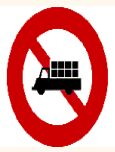
855.(A) No heavy trucks or articulated vehicles allowed. (B) No heavy trucks allowed. (C) No motor vehiclesallowed.
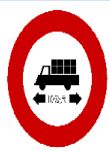
856.[(A) Vehicle length restriction. (B) Vehicle width restriction. (C) No heavy trucks allowed.No. Ans Question
857.Regarding truck loading, which of the following is incorrect? (A) Cargo must not extend forward beyondthe front of the vehicle. (B) Box-type trucks may load cargo extending beyond the cargo compartment. (C)Non-compliant dump trucks are not permitted to carry sand, gravel, or earthen materials.
858.When driving a vehicle loaded with cargo, which of the following driving behaviors is most appropriate?(A) Occupy the inner lane and drive slowly. (B) Increase following distance, monitor the vehicle ahead,No. Ans Questionand brake early. (C) Speed up and overtake other vehicles at will.
859.Regarding the penalty for a vehicle carrying cargo exceeding the approved gross weight, which of thefollowing statements is correct? (A) A flat fine of NT$10,000 is imposed regardless of the degree ofoverloading. (B) Progressive fines are imposed in tiers based on the degree of overloading. (C) The cargoloaded on a repeat-offending vehicle is confiscated.
860.Regarding the regulations on cargo loading for trucks, which of the following is correct? (A) The width ofthe loaded cargo may exceed the vehicle body by half a meter. (B) Loading is at the driver's discretionwith no special regulations. (C) The width of the loaded cargo must not exceed the vehicle body.
861.When a vehicle carrying cargo travels within 5 kilometers of a weigh station, if the driver fails to proceedto the weigh station as indicated by signs, markings, or signals, how much shall the driver be fined, andmay be compelled to weigh the vehicle? (A) NT$30,000. (B) NT$60,000. (C) NT$90,000.
862.Regarding the loading of cargo in a box truck (van-type truck), which of the following is correct? (A) Cargomay slightly protrude beyond the cargo compartment but must be secured. (B) Neither the length nor thewidth of the cargo may exceed the cargo compartment. (C) Cargo may protrude as long as it does notaffect driving safety.
863.When a heavy freight truck passes through a weigh station on a freeway or expressway, if the loadedcargo exceeds the approved gross weight or gross combination weight by more than 20% and cannot beunloaded and repacked on the spot, and after being cited the driver still refuses to comply with thecorrection order and continues driving, how shall the law deal with this? (A) The vehicle may only be citedonce, and repeated fines are not permitted for the remainder of the journey. (B) Continuous citations andpenalties may be issued. (C) The driver's license shall be immediately revoked and the vehicleconfiscated.
864.When a small truck (not a van-type cargo vehicle) is loaded with goods, what is the maximum loadingheight from ground level permitted by law? (A) 2 meters. (B) 2.5 meters. (C) 2.85 meters.
865.Regarding regulations on the length of cargo loaded on a truck, which of the following statements iscorrect? (A) Cargo of any length may be loaded as long as it is securely tied. (B) The length must notextend beyond the front of the cab. (C) The length may extend up to 2 meters beyond the front of the cab.No. Ans Question
866.May vehicles carrying dangerous goods enter the Baguashan or Xueshan Tunnel? (A) Yes. (B) No. (C)No specific regulation.
867.The width of cargo loaded on a truck: (A) May extend half a meter beyond the vehicle body. (B) Mayextend 1 meter beyond. (C) Must not extend beyond the vehicle body.
868.When parking a vehicle carrying dangerous goods: (A) Indoor parking garage. (B) Open-air, spacious,shaded area. (C) Area with many vehicles and few people.
869.When a vehicle carrying dangerous goods is found to be leaking: (A) Speed up to the destinationimmediately. (B) Stop and handle properly. (C) No regulation.
870.Vehicles transporting dangerous goods: (A) Must hang a red triangular cloth flag at the front and rear ofthe vehicle as a warning. (B) Same as regular transport. (C) No regulation.
871.For trucks carrying items too long for the cargo box, the rearward extension must not exceed whatpercentage of the total vehicle length? (A) 20%. (B) 25%. (C) 30%.
872.Which vehicles must have the license plate number painted on the rear of the vehicle? (A) Largepassenger vehicles. (B) Private small passenger vehicles. (C) Large trucks and small trucks.
873.When loading cargo on the same truck, heavy items should be placed: (A) At the rear of the vehicle. (B)At the front of the vehicle. (C) Evenly distributed on the truck bed.
874.When transporting oversized, overwide, overtall, or overweight items: (A) Drive during daytime whenvisibility is good. (B) A temporary transit permit is required, with hazard markers displayed at the front andrear. (C) People must guard both ends of the cargo.
875.Unless approved by the highway supervision authority: (A) Vehicles may attach trailers at will. (B)Vehicles may not attach trailers without approval. (C) Only one trailer may be attached.No. Ans Question
876.Vehicles carrying dangerous goods are strictly prohibited from parking within how many meters ofbridges, tunnels, or fire scenes? (A) 100 meters. (B) 200 meters. (C) 300 meters.
877.If a truck is not overloaded but exceeds the load limit of the bridge it is traveling on, and is cited on thespot, a fine shall be imposed and 2 demerit points recorded against: (A) The vehicle owner. (B) Theconsignor. (C) The driver.
878.If a motor vehicle transports dangerous goods without following regulations and is cited on the spot, inaddition to a fine, the penalty shall also include: (A) Recording of demerit points. (B) Suspension of thevehicle license plate. (C) Suspension of the driver's license.
879.A driver transporting dangerous goods: (A) Must hold the appropriate vehicle class license and havecompleted professional training with a certificate. (B) Only needs a professional driver's license. (C) Onlyneeds an articulated vehicle license.
880.Vehicles on a freeway or expressway, except at designated locations: (A) May stop to pick up/drop offpassengers or load/unload cargo at any time. (B) May only drop off passengers, not pick up. (C) Must notstop to pick up/drop off passengers or load/unload cargo.
881.Vehicles transporting dangerous goods on a freeway or expressway should drive in: (A) The inner lane.(B) The outer lane. (C) Either lane. And lane changing is prohibited.
882.When a vehicle is traveling at high speed, the lower the cargo's center of gravity, its stability is: (A) Better.(B) Worse. (C) Unaffected.
883.Regarding vehicle loading regulations, which is correct? (A) Passengers may be carried outside thevehicle cabin. (B) A trailer attached to a small vehicle may carry any item. (C) The front cab of a truck orthe front seat of a small vehicle must not carry more passengers than the approved number.▸ Accident Prevention & Handling (Secondary Highway Accidents, First Aid)No. Ans Question
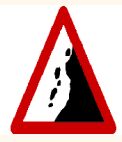
884.[(A) Dangerous road surface. (B) Watch for falling rocks on the left. (C) Watch for falling rocks on the right.
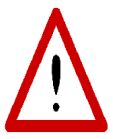
885.[(A) Narrow bridge. (B) Danger. (C) Slow down.
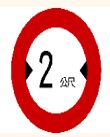
886.[(A) Vehicle width restriction. (B) One-way road. (C) Vehicle height restriction.
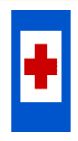
887.(A) Prescribed direction. (B) First-aid station. (C) Fork road.No. Ans Question
888.When a vehicle breaks down or encounters another emergency on a national freeway and cannotcontinue driving, if the vehicle cannot coast off the lane, in addition to activating the hazard warninglights, how many meters behind the vehicle should a breakdown warning sign be placed to preventNo. Ans Questionsecondary accidents? (A) 30 to 50 meters. (B) 50 to 100 meters. (C) 100 meters or more.
889.When a minor collision (no casualties) occurs on a national freeway, which of the following actions by theparties involved is correct? (A) To allow investigation personnel to gather evidence, the scene should bepreserved until police arrive before anything is moved. (B) After taking photos and videos, the vehicleshould be moved to a safe location as soon as possible. (C) Place a breakdown warning sign in the laneand wait for police to arrive and handle the situation.
890.When a road traffic accident occurs, a breakdown warning sign or other clearly visible warning devicemust be placed behind the vehicle as required. Which of the following distances is correct? (A) On anexpressway, 70 meters behind the accident site. (B) On a freeway, 100 meters behind the accident site.(C) On a road section with a maximum speed limit of 50 km/h or below, 20 meters behind the accidentsite.
891.While driving on a national freeway, your vehicle suddenly breaks down and stops in the lane. Afterturning on the hazard lights and securing the vehicle, approximately how many meters behind the vehicleshould you place a breakdown warning sign (triangle) to comply with regulations and effectively alertfollowing vehicles? (A) 30 to 50 meters. (B) 500 meters or more. (C) 100 meters or more.
892.When a motor vehicle driver is driving a passenger car on the main lanes of a freeway and wishes tochange lanes to overtake, which of the following practices best reflects the principles of 'safety guidelines'and 'defensive driving'? (A) As long as you see that the vehicle behind still has some distance, even if itflashes its lights as a warning, you should accelerate and cut in to complete the overtake. (B) Aftercompleting the overtake, you should immediately cut back to the original lane without deliberatelymaintaining a safe distance from the overtaken vehicle. (C) Before changing lanes, pay attention to thetraffic conditions in the target lane, confirm a safe distance before merging; if the vehicle behind flashesits lights as a warning, you should temporarily hold off on changing lanes.
893.Regarding 'shoulder use' and 'breakdown response' on highways, which of the following situations ishandled correctly and can effectively prevent secondary accidents? (A) To save time, if the main laneahead is congested, you may temporarily drive on the shoulder to keep traffic flowing. (B) If a vehiclebreaks down while driving, you should slowly move to the shoulder and stop, place a breakdown warningsign 50~100 meters behind the vehicle, and personnel should wait outside the guardrail for rescue. (C)After an accident, to protect the vehicle and property, all passengers should remain inside the vehiclewith the doors locked until the tow truck arrives.
894.After a traffic accident, what is the main purpose of placing a 'vehicle breakdown warning sign'? (A) Towarn vehicles coming from behind and prevent the police from issuing a ticket (B) To warn vehiclescoming from behind and prevent a secondary rear-end collision (C) To serve as a reference point forcalculating vehicle damage during an insurance claim
895.Regarding correct habits for nighttime driving and waiting at intersections, which of the following practicescan effectively improve safety and prevent accidents? (A) When passing through a tunnel, since there islighting inside, it is not necessarily required to turn on headlights. (B) When waiting at a red light at anintersection at night, as long as you are not the first vehicle, you may turn off your headlights to savepower. (C) When waiting at a red light at night, you should keep your headlights on and pay attention tothe movements of surrounding pedestrians and vehicles at all times.
896.If a driver is involved in a traffic accident with no casualties and the vehicle is still drivable, how shouldthe driver initially handle the situation to prevent secondary accidents? (A) The vehicle's position andpoint of impact should first be marked or photographed/recorded, and then the vehicle should be movedto the roadside. (B) Stay at the scene and wait for the police to arrive; the vehicle must not be moved. (C)Leave the scene directly and report to the police afterward.
897.After a vehicle is involved in an accident, to prevent secondary accidents, what measure should be takenfirst? (A) Move the vehicle immediately. (B) Turn on hazard warning lights and set up warning signs. (C)Turn off all lights.
898.A car driver wants to take a long trip. Before departure, to implement a self-inspection for 'accidentprevention and handling,' which of the following practices best reflects the safety concept of 'prevention isbetter than cure'? (A) As long as the tires don't look flat, the tire pressure is fine; tread depth or cracks donot significantly affect driving safety. (B) After taking medication while ill, if you feel mentally acceptable,you should insist on driving to keep to the schedule, and just drink more coffee along the way to stayalert. (C) Inspect the vehicle condition (including the five fluids (fuel, engine oil, power steering fluid,transmission fluid, brake fluid), three waters (coolant, battery fluid, washer fluid), six lights (headlights,parking lights, turn signals, fog lights, brake lights, reverse lights), tread depth and tire pressure), and ifNo. Ans Questionyou did not sleep enough the night before, rest first or ask someone else to drive.
899.When driving inside a tunnel on a freeway or expressway and you cannot continue driving due to anemergency, you should first stop and wait for assistance. At how many meters behind the broken-downvehicle should you place the vehicle breakdown warning sign? (A) 10 meters. (B) 50 meters. (C) 100meters.
900.When a driver is traveling on a freeway or expressway and cannot continue driving due to vehiclebreakdown or other emergency, which of the following responses is INCORRECT? (A) The vehicleshould be coasted off the main lane and parked on the shoulder to wait for rescue. (B) While waiting forrescue, hazard warning lights should be turned on and a breakdown warning sign should be placedbehind the vehicle. (C) A broken-down vehicle parked on the shoulder must not remain there for morethan 4 hours.
申論題 (0)
相關試卷
115年 - 汽車駕照筆試_英文 1051-1090(2026/05 更新)#145232
115年 · #145232
115年 - 汽車駕照筆試_英文 1001-1050(2026/05 更新)#145231
115年 · #145231
115年 - 汽車駕照筆試_英文 951-1000(2026/05 更新)#145230
115年 · #145230
115年 - 汽車駕照筆試_英文 901-950(2026/05 更新)#145229
115年 · #145229
115年 - 汽車駕照筆試_英文 801-850(2026/05 更新)#145227
115年 · #145227
115年 - 汽車駕照筆試_英文 751-800(2026/05 更新)#145226
115年 · #145226
115年 - 汽車駕照筆試_英文 701-750(2026/05 更新)#145225
115年 · #145225
115年 - 汽車駕照筆試_英文 651-700(2026/05 更新)#145224
115年 · #145224
115年 - 汽車駕照筆試_英文 601-650(2026/05 更新)#145223
115年 · #145223
115年 - 汽車駕照筆試_英文 551-600(2026/05 更新)#145222
115年 · #145222