阿摩線上測驗
登入
首頁
>
駕照◆汽車法規(英文)
> 115年 - 汽車駕照筆試_英文 701-750(2026/05 更新)#145225
115年 - 汽車駕照筆試_英文 701-750(2026/05 更新)#145225
科目:
駕照◆汽車法規(英文) |
年份:
115年 |
選擇題數:
50 |
申論題數:
0
試卷資訊
所屬科目:
駕照◆汽車法規(英文)
選擇題 (50)
701.While driving, which of the following types of vehicles must be given the right of way? (A) Driving schooltraining vehicles. (B) Vehicles exclusively for young children. (C) All of the above.
702.When driving and encountering an ambulance, fire truck, police vehicle, or other emergency vehicles onduty, how should you yield? (A) Apply the brakes immediately and stop in place. (B) Move to the left orright side (such as pulling toward the roadside) to clear the middle lane for their passage. (C) Followbehind the ambulance to pass intersections quickly.
703.If the tire pressure monitoring warning light remains continuously illuminated while driving, it indicates: (A)The tire pressure monitoring system (TPMS) is malfunctioning or has a communication error. (B) One ormore tires are flat or have insufficient pressure; proceed to a safe location as soon as possible to checkthe tire pressure of all four tires. (C) After recent maintenance or tire replacement, the system reset orsensor pairing has not been performed.
704.Vehicles of 8 metric tons or above that fail to install tachographs and driving-view assistance systems asrequired shall result in the vehicle owner being: (A) Fined. (B) Having the vehicle registration suspended.(C) Having the driver’s license revoked.
705.A taxi driver who begins operating without completing the occupational (practice) registration andobtaining the registration certificate as required shall: (A) Have his/her driver's license suspended. (B)Have his/her driver's license revoked. (C) Be fined.
706.Which of the following best describes the correct driving behavior to prevent hydroplaning? (A)Hydroplaning is mainly related to the depth of standing water on the road; as long as the water does notexceed the height of the tire tread, it is safe to drive at normal speed. (B) Before passing through aflooded section on a rainy day, slow down in advance, because the higher the speed, the less effectivethe tire's drainage ability, and the risk of hydroplaning increases significantly with speed; also ensuresufficient tread depth to maintain drainage function. (C) Modern vehicles are generally equipped with ABSanti-lock braking systems, which can effectively prevent hydroplaning; drivers only need to drive normallyand apply full braking force when necessary, and the system will handle it automatically.
707.When driving at night on a rural road with no lighting, and there are no oncoming vehicles or vehiclesahead, which type of lights should be used? (A) Turn on the fog lights. (B) Use the high beams asappropriate to increase visibility. (C) Use the low beams to avoid draining the battery.
708.If the engine coolant temperature warning light turns red on the dashboard while driving, indicating thatthe engine is overheating, how should you handle it? (A) Accelerate to reach the nearest gas station asquickly as possible. (B) Find a safe place to stop and turn off the engine as soon as possible, wait for theengine to cool down before inspecting it, and never open the radiator cap immediately. (C) Ignore it; aslong as the vehicle can still move, it means nothing is wrong.No. Ans Question
709.The lane located between the main lane and the ramp, designated for vehicles to decelerate beforeexiting the main lane onto the ramp, is called? (A) Acceleration lane. (B) Deceleration lane. (C) Shoulderramp lane.
710.Regarding driving speed, which must comply with speed limit signs or markings, what is the maximumspeed limit for driving in the 'slow lane' on a road with a fast/slow lane dividing line, where no sign ormarking is present? (A) Speed must not exceed 30 km/h. (B) Speed must not exceed 40 km/h. (C) Speedmust not exceed 50 km/h.
711.Regarding the legal definitional differences between 'traffic direction line' and 'direction restriction line,'which of the following is correct? (A) The traffic direction line is a yellow dashed line that permitsovertaking; the direction restriction line is a double solid yellow line that prohibits crossing. (B) Both aresolid white lines used only to separate fast and slow lanes. (C) Traffic direction lines are only installed onnational freeways; ordinary roads only have direction restriction lines.
712.Regarding the yellow dashed line 'traffic direction line' marked on the road surface, what is its primarylegal function? (A) To separate opposing lanes of traffic and prohibit lane changes. (B) To separateopposing lanes of traffic and permit overtaking under safe conditions. (C) To mark roadside parking areasand prohibit temporary stopping.
713.When a large vehicle is traveling on a freeway and wishes to overtake the vehicle ahead, which of thefollowing statements is correct? (A) It may use the inner overtaking lane to overtake. (B) It maytemporarily use the lane immediately adjacent to the outer lane to overtake. (C) As long as traffic is notblocked, it may overtake using the road shoulder.
714.On acceleration lanes, deceleration lanes, or single-lane ramps of freeways or expressways, which of thefollowing statements is correct? (A) Overtaking the vehicle ahead is not permitted. (B) When the vehicleahead is moving slowly and blocking the road, you may overtake on the acceleration lane. (C) As long asa safe following distance is maintained, you may overtake on the deceleration lane.
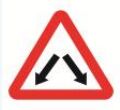
715.The sign in the figure is? (A) Roundabout direction of travel. (B) Divided road. (C) Two-way road.
716.Regarding the definition and location of the 'deceleration lane' on freeways or expressways, which of thefollowing is correct? (A) A lane set between the main carriageway and a ramp, for vehicles to acceleratebefore merging onto the main carriageway. (B) A lane set between the main carriageway and a ramp, forvehicles to decelerate before leaving the main carriageway and entering the ramp. (C) A lane set at theexit of the main carriageway, for vehicles to merge onto the main carriageway.
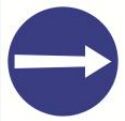
717.The sign in the figure is? (A) One-way road. (B) Direction of travel. (C) Indication of detour direction.
718.Which of the following statements about interchanges is incorrect? (A) It refers to the section wherefreeways and expressways interconnect with each other, or where a freeway or expressway connectswith other roads, forming a grade-separated intersection constructed with ramps. (B) The speed limit isgenerally 40–60 km/h. (C) It refers to a lane set at the far right of the main carriageway entrance, forvehicles to accelerate before merging onto the main carriageway.
719.A 'No Entry for Any Vehicle' sign is posted at a road entrance. Which of the following vehicles may enterin compliance with regulations? (A) Motorcycles are small in size and may enter the road section byslowing down. (B) No vehicle may enter, but fire trucks, ambulances, and other emergency vehicles onurgent duty are not restricted. (C) This sign only prohibits automobiles from entering; bicycles andmotorcycles are not subject to the restriction.
720.Regarding the function of a 'road width transition line,' which of the following descriptions is correct? (A)Drawn with yellow dashed lines to warn that the road ahead is under construction and to slow down. (B)Drawn with white solid or dashed lines at locations where the road width changes, to guide vehicles tosafely follow the change in road width and adjust direction. (C) Drawn with double white solid lines atlocations where lanes merge, prohibiting vehicles from crossing over to change lanes.
721. When a vehicle drives into a multi-lane roundabout, which of the following is correct? (A) Vehicles in theNo. Ans Questionouter lane should be given the right of way first. (B) Vehicles in the inner lane should be given the right ofway first. (C) Vehicles that have not yet entered the roundabout should be given the right of way first.
722.Regarding the correct driving behavior for large vehicles on freeways or expressways, which option iscorrect? (A) They should drive in the outer lane. (B) They may temporarily use the lane immediatelyadjacent to the outer lane to overtake the vehicle ahead. (C) All of the above.
723.Which of the following is the sign for a one-way street? (A) (2 ) (C)
724.Regarding the maximum speed limit on national freeways, which of the following statements is correct?(A) 120 kilometers per hour. (B) As indicated by speed limit signs. (C) 110 kilometers per hour.
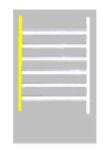
725.When a driver encounters the transverse road markings shown in the figure on the road, how should theyrespond? (A) Slow down. (B) Speed up and pass through. (C) Check the tires.
726.When a vehicle intends to enter the main lane of a freeway from an interchange, service area, or restarea, how should it travel in the acceleration lane? (A) Accelerate and enter immediately. (B) Graduallyaccelerate to the end of the lane, stop and wait, then enter. (C) Gradually accelerate, assess trafficconditions, confirm a safe gap, then enter.
727.Regarding the difference between a 'lane line' and a 'directional dividing line,' which of the following iscorrect? (A) A 'lane line' divides lanes in the same direction for vehicles traveling in the same direction; a'directional dividing line' divides opposing traffic flows and separates vehicles traveling in oppositedirections. (B) A 'lane line' divides opposing traffic flows and prohibits vehicles from crossing into theopposing lane; a 'directional dividing line' divides lanes in the same direction. (C) Both are used to dividelanes in the same direction; the only difference is the speed limit of the road section where they areinstalled.
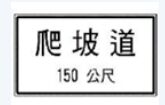
728.The sign in the figure indicates: (A) The leftmost lane 150 meters ahead is a dedicated climbing lane forslow vehicles. (B) The rightmost lane 150 meters ahead is a dedicated climbing lane for slow vehicles. (C)The rightmost lane 150 meters ahead is a dedicated climbing lane for fast vehicles.
729.On freeway sections with a speed limit of 90 km/h or above, where should small vehicles traveling below80 km/h drive? (A) The inner lane. (B) The outer lane. (C) Either of the above.
730.Which of the following statements about acceleration lanes on highways or expressways is incorrect? (A)They are exclusively for vehicles to accelerate before merging from a ramp onto the main lane. (B) Theyare located between the ramp and the main lane. (C) They are for vehicles to accelerate when exiting themain lane.
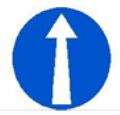
731.Which of the following is NOT indicated by the sign shown in the image? (A) Direction of travel to follow.(B) Straight ahead only. (C) One-way road.
732.A driver traveling on a narrow road section sees a 'No Passing' sign posted, but an oncoming vehicle hasalready entered that section. What should the driver do? (A) Accelerate to pass first and avoid the twovehicles traveling side by side on the narrow section. (B) Stop and wait for the oncoming vehicle to passthrough first, then enter that section. (C) Both vehicles slow down simultaneously and carefully pass eachother slowly.
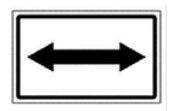
733.The sign in the image is: (A) No passing. (B) Two-way road. (C) Left and right turn directions.No. Ans Question
734.A driver sees an orange-background 'Detour Direction' sign ahead while driving. Which of the followingstatements is correct? (A) It is a permanently installed compliance sign indicating the road haspermanently changed its traffic direction. (B) It is a temporary construction sign indicating roadconstruction ahead; drivers must detour in the direction of the arrow. (C) It is an advisory sign; driversmay decide for themselves whether to detour.
735.When a small vehicle is traveling on a freeway or expressway and does not impede traffic flow, it maytravel at the maximum speed limit of that road section in the overtaking lane. Which of the following is theovertaking lane on a freeway or expressway? (A) The innermost lane. (B) The outermost lane. (C) Themiddle lane.
736.For motor vehicles with four or more wheels, except when starting, preparing to turn, preparing to stop, ormaking a temporary stop, which of the following statements about driving in the slow lane is correct? (A)It may be driven on roads with a median island separating fast and slow lanes. (B) It may be driven onroads with a marked dividing line separating fast and slow lanes. (C) Both of the above are permitted.
737.When attempting to overtake the vehicle ahead in the same lane, how should you proceed? (A) As longas there is sufficient safe distance, you may directly accelerate to overtake. (B) First sound the horn twicein single beeps or flash the headlights once, and only overtake after the vehicle ahead slows down andmoves to the side or signals with a hand gesture to allow passing. (C) You only need to approach thevehicle ahead and flash the high beams to notify it; you may overtake without waiting for a response.
738.When a motor vehicle is traveling on a two-way two-lane road without a designated slow lane, on astraight section marked with a centerline, which of the following statements about overtaking is correct?(A) Overtaking is prohibited, and crossing the centerline is also not permitted. (B) When overtaking, thecenterline may be crossed, but parallel racing is not allowed. (C) When overtaking, the centerline may becrossed, and parallel racing is also permitted.
739.A road has a 'Vehicle Gross Weight Limit' sign indicating a limit of 10 metric tons. Which of the followingstatements correctly defines 'gross weight'? (A) 'Gross weight' refers to the weight of the cargo loadedonto the vehicle, excluding the weight of the vehicle body itself. (B) 'Gross weight' refers to the total of thevehicle's own unladen weight plus the weight of passengers, cargo, and other loaded items. (C) 'Grossweight' refers to the unladen weight of the vehicle as it left the factory, excluding any loaded items.
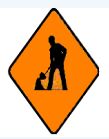
740.When driving and seeing the sign shown on the left, what does it inform the driver? (A) Vehicles shouldchange lanes. (B) The road ahead is closed. (C) There is construction ahead.
741.According to speed limit signs or road markings, where there are no signs or markings, the driving speedmust not exceed how many kilometers per hour? (A) 70 km/h. (B) 60 km/h. (C) 50 km/h.
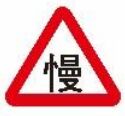
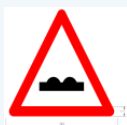
742.When a vehicle encounters the sign shown on the left while driving, which of the following is correct? (A)Vehicles should slow down. (B) Pedestrians should pass slowly. (C) Both vehicles and pedestrians mustpass slowly.
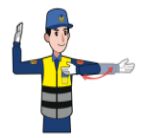
743. Traffic control personnel may use hand signals to direct moving vehicles. What does the hand signalshown in the figure indicate?(A) Vehicles approaching from the left should turn left.(B) Vehicles approaching from the left should turn right.(C) All vehicles must stop..
744.No. Ans QuestionWhen a vehicle encounters the sign shown on the left while driving, which of the following is safer? (A)Drive according to the speed limit. (B) Slow down. (C) Accelerate and pass.
745.When starting to drive, how should the driver adjust their visual distance to comply with safe drivingprinciples? (A) The visual distance should be kept very short and does not need to change with speed.(B) Keeping the visual distance fixed is sufficient. (C) The visual distance should increase as speedincreases.
746.When reversing a vehicle, how should the driver warn other vehicles or pedestrians? (A) Sound the horn3 long blasts. (B) Display the reverse lights, or the driver should extend the left arm horizontally with thepalm facing backward and swing it back and forth. (C) Sound the horn continuously.
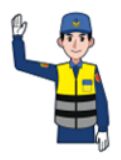
747.What does this gesture indicate? (A) All vehicles stop. (B) Vehicles coming from both front and rear stop.(C) Vehicles coming from the front stop.
748.Reaction distance plus braking distance equals? (A) Meeting interval distance. (B) Travel distance. (C)Stopping distance.
749.Under normal weather conditions, when a small car is traveling on a freeway or expressway at 90 km/h,what is the minimum safe following distance that should be maintained between two consecutivevehicles? (A) 30 meters or more. (B) 45 meters or more. (C) 60 meters or more.
750.When driving on a freeway or expressway, may a vehicle overtake the vehicle ahead in an accelerationlane, deceleration lane, or single-lane ramp? (A) Yes, vehicles may overtake freely in these lanes. (B)Yes, but only when the speed is very slow. (C) No, these lanes may not be used for overtaking.
申論題 (0)
相關試卷
115年 - 汽車駕照筆試_英文 1051-1090(2026/05 更新)#145232
115年 · #145232
115年 - 汽車駕照筆試_英文 1001-1050(2026/05 更新)#145231
115年 · #145231
115年 - 汽車駕照筆試_英文 951-1000(2026/05 更新)#145230
115年 · #145230
115年 - 汽車駕照筆試_英文 901-950(2026/05 更新)#145229
115年 · #145229
115年 - 汽車駕照筆試_英文 851-900(2026/05 更新)#145228
115年 · #145228
115年 - 汽車駕照筆試_英文 801-850(2026/05 更新)#145227
115年 · #145227
115年 - 汽車駕照筆試_英文 751-800(2026/05 更新)#145226
115年 · #145226
115年 - 汽車駕照筆試_英文 651-700(2026/05 更新)#145224
115年 · #145224
115年 - 汽車駕照筆試_英文 601-650(2026/05 更新)#145223
115年 · #145223
115年 - 汽車駕照筆試_英文 551-600(2026/05 更新)#145222
115年 · #145222