 阿摩線上測驗
36When a lawyer studies the precise wording of a legal document, this style of reading is known as .
(A) receptive reading
(B) extensive reading
(C) skim reading
(D) intensive reading
統計: A(62), B(45), C(58), D(421), E(0) #1797539
詳解 (共 4 筆)
Types of reading skills
(1) Extensive Reading
Extensive reading is used to obtain a general understanding of a subject and includes reading longer texts for pleasure, as well as business books.
Do not worry if you understand each word.
Examples:
-- A novel you read before you go to bed
-- Magazine articles that interest you
(2) Intensive Reading
Intensive reading is uesd on shorter texts in order to extract specific information. It includes very close accurate reading for details.
Use intensive reading skills to grasp the details of a specific situation.
It is important that you understand each word, number or fact.
Examples:
-- a ocntract
-- a bookkeeping report
(3) Skimming
Skimming is used when you want to get the gist (要旨) of something.
You read quickly to get the main points, and skip over the detail.
Examples:
-- trying to decide if the book in the library is right for you
-- the newspaper (quickly to get the general news of the day)
(4) Scanning
Scanning is used to find a particular piece of information that you need.
Examples:
-- finding answers from the article after reading knowing the questions
-- reading a train/airplane schedule
【其他】
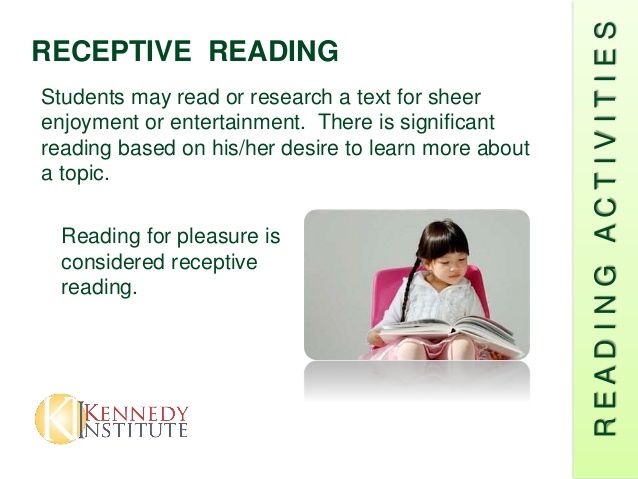

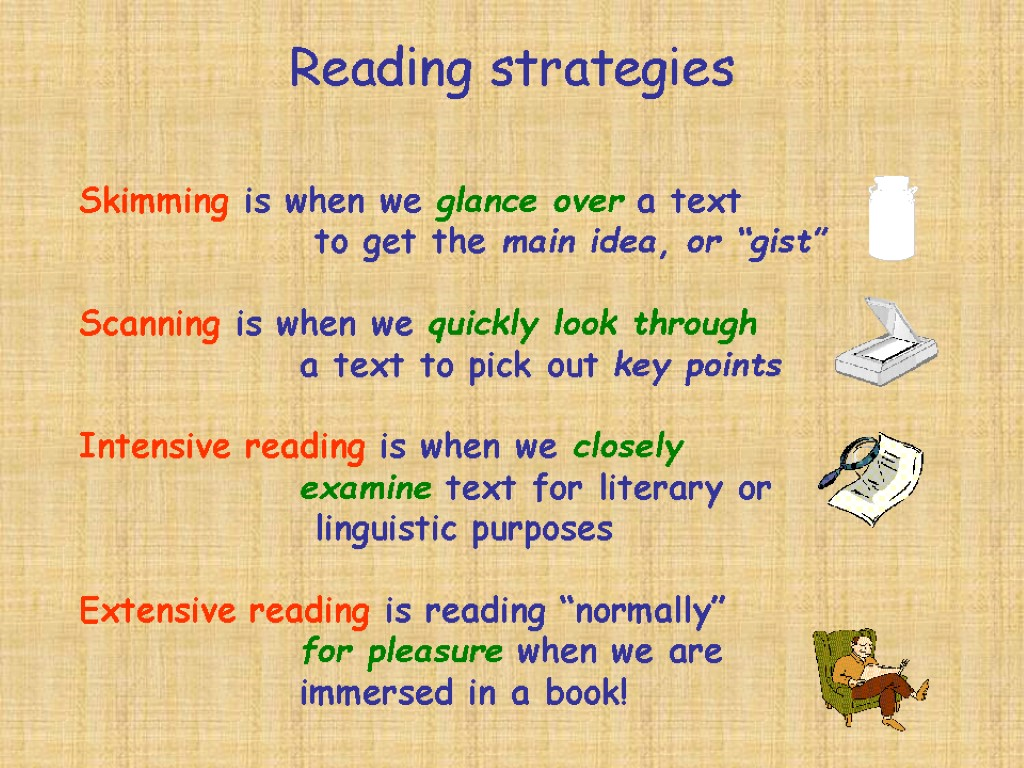
(A) receptive reading: reading as entertainment or enjoyment 閱讀是興趣
(B) extensive reading: to read for pleasure 廣泛閱讀 (大量閱讀、了解大意即可)
(C) skim reading: to get the main idea, to get the gist 找要旨、主旨
(D) intensive reading: to closely examine text, to grasp the detail 細看、了解每個字
* scanning reading: to quick look through a text to find a piece of particular information 找特定知識內容(如閱讀測驗)
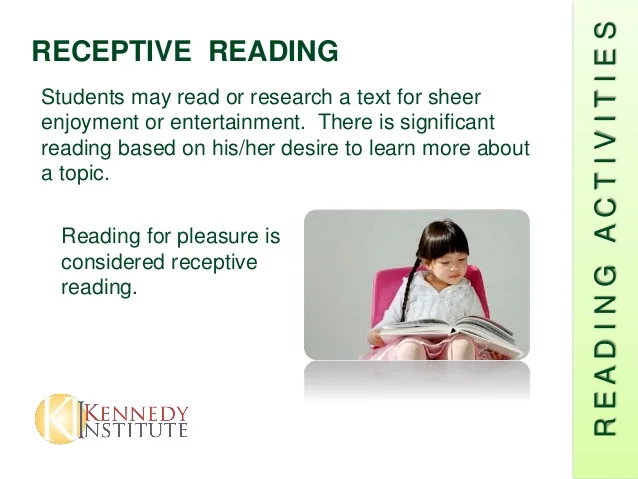


(A) receptive reading 只為興趣 求知慾而讀
(B) extensive reading general
(C) skim reading只想看內容喜不喜歡 粗淺的看
(D) intensive reading details