阿摩線上測驗
37Due to the fact that many children memorize spelling, approaches stress that learners practice reading by drawing
pictures next to words, by coloring pictures, and even putting words in puzzles.
(A) whole-language
(B) interactive
(C) phonic
(D) whole-word
統計: A(332), B(102), C(14), D(136), E(0) #1797540
詳解 (共 4 筆)

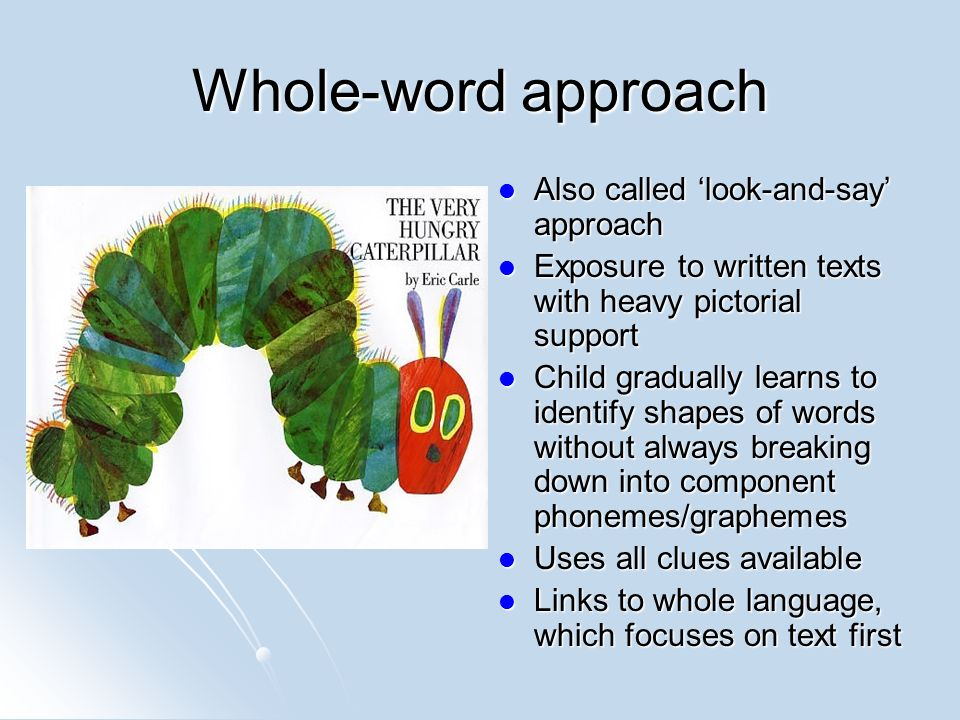
whole-language & whole-word差別在於:
whole language主要先focus在text文本句子中!之後在畫圖...
whole word主要是look & say!也就是注重shape圖形圖片等...
(若有誤請指正^^)
認真覺得詳解有看跟沒看一樣...就...貼上題目..然後放上答案而已!!!(不要去解鎖...)
早知道自己找不要花金幣買...((小抱怨
Whole-language: In the whole language approach reading should not be taught, but rather acquired through trail and error.
Children are encouraged to guess unfamiliar words using picture or context clues.
Children are also encouraged to use invented spelling to write their own stories.
Whole-word: Whole word, it is claimed, can teach children to read 500 sight-words in first grade.And it requires you to memorize words as SHAPES, one by one, as you would remember faces, houses or logos.
資料來源:http://www.improve-education.org/id58.html
http://www.childrens-books-and-reading.com/whole-language.html