所屬科目:研究所、轉學考(插大)◆分子生物學
1. Which one of the following organisms is the major source of restriction enzymes? (A) stem cells (B) leukocytes or white blood cells (C) yeast (D) bacteria (E) plant cells
2. Which one of the following about restriction fragment length polymorphism (RFLP) is false? (A) RFLP can be used for genetic mapping. (B) RFLP denotes a difference in restriction maps between two individuals. (C) RFLP can be used as a genetic marker in exactly the same way as any other marker. (D) RFLPs are useful for establishing parent-progeny relationships. (E) RFLP can be used to locate the 5'- or 3'-ends of DNAs.
3. Which of the following eukaryotic initiation factors is involved in binding A Met to the ribosome? (A) eIF2 (B) eIF2B (C) eIF3 (D) eIF4F (E) eIF5
4. Which of the following about DNA polymerase I (pol I) is incorrect? (A) Pol I is the polymerase responsible for replicating the bacterial genome. (B) Pol I has three activities: DNA polymerase, 5'→ 3' exonuclease, and 3' → 5' exonuclease. (C) The Klenow fragment does not have 5'→ 3' exonuclease activity. (D) Pol I plays a dominant role in repair of DNA damage. (E) pol I can be cleaved by mild proteolytic treatment into to a large fragment and a small fragment.
5. Transformation (A) is the direct transfer of DNA from one bacterium to another. (B) occurs when a bacterium acquires DNA from the surrounding environment. (C) is the result of gene recombination. (D) is the result of gene mutation. (E) occurs when a phage transfers DNA from one bacterium to another.
6. Which of the following statements about the genetic code is incorrect? (A) The genetic code is a set of three-base code words, or codons, in mRNA. (B) The codons instruct the ribosome to incorporate specific amino acids into a polypeptide. (C) The code is nonoverlapping: that is, each base is part of only one codon. (D) There are total of 63 codons. Three are stop signals, and the rest code for amino acids. (E) The same aminoacyl-tRNA is allowed to pair with more than one codon.
7. The approach to gene cloning which uses a mixture of fragments from the entire genome of an organism is called a ______ approach. (A) "gene targeting" (B) "gene mapping" (C) "shotgun" (D) "Ti" (E) "transgenic"
8. Helicase is an enzyme that (A) degrades the RNA strand of an RNA-DNA hybrid. (B) unwinds a nucleic acid double helix. (C) degrades the DNA strand of an RNA-DNA hybrid. (D) introduces transient single-stranded breaks into substrate DNAs. (E) joins two double-stranded DNAs end to end.
9. Which of the following statements is false? (A) A replicon is any molecule of DNA or RNA that contains an origin of replication and can self-replicate. (B) Eukaryotic chromosomes have numerous replication origins scattered along each chromosome. (C) Prokaryotic DNA replication starts at a unique "origin of replication" and proceeds in one direction along the chromosome. (D) Eukaryotic DNA replication is bi-directional and replication bubbles occur at the sites of replication. (E) The origin of replication binds the pre-replication complex that recognizes, unwinds, and begins to copy DNA.
10. Which of the following is not a second messenger? (A) nitric oxide (B) (C) diacylglycerol (D) cAMP (E) inositol-1,3,5-triphosphate
11. The deletion of a non-coding region from the chromosome can be detected by _____(A) Northern blot (B) Southern blot (C) Western blot (D) South-Western blot (E) RT-PCR
12. DNA replication normally occurs at the _____ phase of cell cycle. (A) S (B) G1 (C) G2 (D) M (E) G0
13. Primosome at the replication fork is formed by _____(A) DNA polymerase and its clamp (B) helicase and DNA primase (C) helicase and DNA polymerase (D) topoisomerase and ligase (E) topoisomerase and DNA pirmase
14. Replicative senescence of eukaryotic cells can be prevented by expression of _____(A) DNA polymerase (B) helicase (C) telomerase (D) topoisomerase (E) DNA glycosylase
15. The one recombinase employed in the bacteria homologous recombination is _____(A) RecA (B) CRE recombinase (C) Flippase (D) Spoll (E) Mre11
16. Alu element and the _____ element use the same mechanism for their transposition. (A) P-element (B) L1- (C) Tyl- (D) Tn3- (E) Tn5-
17. Mismatch repair of newly replicated DNA can be facilitated by _____(A) nicking of the parental strand in bacteria (B) nicking of the nascent strand in prokaryotes (C) methylation of the GATC in parental strand in eukaryotes (D) methylation of the GATC in parental strand in prokaryotes (E) methylation of the GATC in nascent strand in prokaryotes
18. Holiday junction can be found at _____(A) replication forks (B) chromosome bivalents during meiosis (C) sister chromosomes during mitosis (D) integrating retrovirus (E) infectious adenovirus
19. The initial double strand cut of homologous recombination is catalyzed by _____(A) Rec A (B) Rec B, C, & D (C) SSB (D) Ruv A &B (E) Spoll
20. The synthesized Okazaki fragments in the lagging strand can be connected by the _____ enzyme to form nascent continuous DNA strand. (A) ligase (B) DNA polymerase III (C) RecA (D) telomere (E) topoisomerase I
21. Prokaryotic and Eukaryotic RNA's differ in that: (A) rRNA molecules are only subunits of the prokaryotic ribosome. (B) Eukaryotes have a pre-mRNA that requires splicing to create the functional transcript (C) Prokaryotes have non-coding sequences that are removed during RNA-transcript processing (D) Eukaryotes have simpler ribosomes, consisting of fewer subunits. (E) None of these.
22. Which of the following is a way in which RNA synthesis does not differ from DNA synthesis? (A) Precursors are ribonucleoside triphosphates. (B) Only one strand of DNA is used as a template for the synthesis of a complementary RNA chain in any given reaction. (C) The nucleotide sequence of the mRNA is identical to the nontemplate strand of DNA except that U substitutes for T. (D) RNA chains can be initiated de novo. (E) None of these
23. A bacterial (prokaryotic) ribosome is composed of _____ subunits. (A) 20S & 40S (B) 30S & 50S (C) 40S & 60S (D) 20S & 60S (E) 50S & 70S
24. Nonsense codons are (A) codons that code for multiple amino acids. (B) codons that code for no amino acids. (C) codons that code for the same amino acids. (D) codons that can be read forward or backward. (E) codons that code for start codons.
25. All of the amino acids, except Proline, contain: (A) A free amine group (B) A free carboxyl group (C) A free R group (D) A free amine group and A free carboxyl group (E) A free carboxyl group and A free R group
26. A single DNA unit that enables the simultaneous regulation of more than one gene in response to environmental changes is called (A) promoter. (B) operator. (C) regulator. (D) inducer. (E) operon.
27. Which of the following would most likely be controlled by a repressible gene? (A) Tryptophan synthesis (B) Lactose catabolism (C) Arabinose catabolism (D) Tryptophan synthesis and Lactose catabolism (E) Lactose catabolism and Arabinose catabolism
28. Most decisions controlling the amount of gene product synthesized are made during (A) termination of replication. (B) transport of mRNA to the cytoplasm. (C) initiation of transcription. (D) alternative splicing. (E) regulation of translation.
29. Which of the following statements is true regarding dosage compensation? (A) In Drosophila, one of the two X-chromosomes is randomly inactivated in females (B) In mammals, the genes on the single X-chromosome in a male are transcribed at a higher level (C) The X-inactive specific transcript is a functional RNA molecule that results in X-inactivation in Drosophila (D) In C. elegans, dosage compensation results from partial repression of X-linked genes in hermaphrodites (E) The gene product of the gene maleless is responsible for X-inactivation in mammals.
30. Whenever the RNA within the RISC pairs imperfectly with its target sequence, the mRNA is usually not cleaved; instead, translation of the mRNA is inhibited. RISC-associated RNAs that have this effect are usually termed: (A) siRNAs (B) miRNAs (C) SNRPS (D) mtDNAs (E) STRS
31. Damage to DNA that takes place during DNA replication results in arrest of normal cells at the _____ checkpoint. (A) GO-to-G1 (B) G1-to-S (C) S-to-G2 (D) G2-to-M (E) M-to-G1
32. The human papilloma virus (HPV) carries a gene that functions as an oncogene by inactivating the p53 protein. The fact that the loss of p53 function is oncogenic suggests that (A) p53 normally functions to prevent uncontrolled cell division. (B) The HPV protein is encoded by a tumor suppressor gene. (C) p53 gene expression is upregulated by the HPV protein. (D) The HPV protein functions at origins of replication on DNA. (E) p53 is a proto-oncogene.
(a) Okazaki fragment
(b) microRNA (miRNA)
(c) Holliday junction
(d) V(D)J recombination of immunoglobulin heavy chain gene
2. Please describe the organization of DNA and proteins in the nucleosomes of an interphase cell.
3. Please list the factors/enzymes working in a bacteria DNA replication fork.
4. What is "Glioblastoma multiforme"?
5. Each eukaryotic class II gene contains two kinds of essential DNA sequences. What are they?
6. What are the two roles glucose plays in lac gene transcription?
7. Given the following partial DNA fragment, whose promoter is on the right hand side, what is the base sequence for its messenger RNA?
3'-TACAATGGTTTCCCTCG-5'
5'-ATGTTACCAAAGGGAGC-3'
 阿摩線上測驗
登入
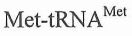 A Met to the ribosome? (A) eIF2 (B) eIF2B (C) eIF3 (D) eIF4F (E) eIF5
 (C) diacylglycerol (D) cAMP (E) inositol-1,3,5-triphosphate