所屬科目:研究所、轉學考(插大)◆分子生物學
1. Which of the following components or events are involved in transcriptional gene regulation? (A) RNA Polymerase II (B) Transcription factors (C) Enhancer region (D) Splicing (E) Polyadenylation
2. Which of the following components or events are involved in post- transcriptional gene regulation? (A) Trans-regulatory elements (B) Cis-regulatory elements (C) Terminator (D) Capping (E) RNA editing
3. Which of the following components or events are involved in post-translational gene regulation? (A) Histone acetylation and methylation (B) DNA methylation (C) Ubiquitin-mediated proteasomal degradation (D) Protein lipidation (E) MicroRNA-mediated gene downregulation
4. Which of the following statements about T-DNA are correct? (A) The T-DNA is the transferred DNA of the tumor-inducing (Ti) plasmid. (B) The T-DNA is bordered by 2K base-pair repeats on each end (C) Transfer is initiated at the right border and terminated at the left border and requires the vir genes of the Ti plasmid. (D) Agrobacterium vir genes expression results in generation of a mobile double- stranded T-DNA to be incorporated into the plant genome. (E) Although T-DNA integration does appear to be random, proteins involved in chromatin modification likely play some role in integration.
5. Which of the following statements about transposon are correct? (A) Transposon is a DNA sequence that can irreversibly change its position within a genome. (B) Transposition often results in duplication of the same genetic material. (C) The reverse transcription step of retrotransposon is catalyzed by a reverse transcriptase, which is often encoded by the transposon itself. (D) Dissociation elements (Ds) is an example of an autonomous transposon, and activator element (Ac) is an example of a non-autonomous transposon. Without Ds, Ac is not able to transpose. (E) Transposition of Ds was sometimes accompanied by major chromosomal rearrangements including deletions, duplications, inversions, reciprocal translocations.
6. Which of the following methods are biochemical technologies for testing protein-protein interactions? (A) Proximity ligation assay (B) Coimmunoprecipitation (C) Pulldown assay (D) Cross-linking (E) Isothermal titration calorimetry
7. Which of the following methods are genetic technologies for testing protein- protein interactions? (A) Phage display (B) Yeast two-hybrid (C) Yeast split-ubiquitin assay (D) Chromatin immunoprecipitation (E) Split-luciferase assay
8. Which of the following methods are used for detecting nucleic acids-protein interactions? (A) Fluorescence resonance energy transfer (B) Chromatin immunoprecipitation (C) Yeast two-hybrid (D) The electrophoresis mobility shift assay (EMSA) (E) Nuclear magnetic resonance (NMR)
9. You discover that the underlying cause of a specific type of cancer is an oncoprotein that is less stable than the non-oncogenic version of the protein. This change is most likely to be due to _____. (A) a mutation within the intron of a gene (B) a mutation within the exon of a gene (C) a mutation within the promoter region of a gene (D) gene duplication (E) gene deletion
10. You find that the number of total protein species in humans (and other organisms) can vastly exceed the number of coding genes. This is largely due to _____. (A) protein degradation (B) alternative splicing (C) homologous genes (D) mutation (E) horizontal transfer
11. Changes in DNA sequence from one generation to the other generation may result in offspring that are better adopted to the environment than their parents. The process of change and selection over the course of many generations is the basis of _____. (A) mutation (B) reproduction (C) heredity (D) evolution (E) adaptation
12. DNA double strands can be separated from each other when the temperature exceeds 95 degree Celsius. What is the principal force that holds these two strands together? (A) electrostatic attractions (B) hydrogen bonds (C) hydrophobic interactions (D) Van der Waals attractions (E) covalent bonds
13. We know that RNA is composed of 4 different monomer building blocks that can be used to assemble RNA polymers. Imaging a cell that has 5 different monomer building blocks that can be used to assemble RNA polymers, the number of possible sequence combinations that can be created for an RNA molecule made of 10 nucleotides will be _____. (A) (B) 105 (C) 5 × 10 (D) 10/5 (E)
14. What type of chemical group is circled on the nucleotide shown in the figure to the right? (A) pyrophosphate (B) carbonyl (C) phosphoryl (D) carboxyl (E) hydroxyl
15. Which of the following RNA may block translation of targeted proteins? (A) dsRNA (B) mRNA (C) siRNA (D) Inc RNA (E) miRNA
16. A ______ mutation has no effect on phenotype. (A) frameshift (B) deletion (C) silent (D) nonsense (E) site-directed
17. Minicells result from mutations that: (A) prevent growth of the cell. (B) prevent septum formation. (C) prevent DNA replication. (D) prevent chromosome partitioning. (E) cause septa to be formed in the wrong place or to be formed too frequently.
18. Single-copy replication control means that: (A) there can be only one origin of replication in the entire genome. (B) only one DNA molecule can be present in a cell at a time. (C) only one DNA molecule can be replicated in a cell at a time. (D) there can be only one origin of replication on each DNA molecule. (E) a DNA molecule can only be replicated once during the cell cycle.
19. The ORC in S. cerevisiae: (A) stands for "origin replicon complex." (B) is associated with ARS elements throughout the cell cycle. (C) is a complex of eight proteins. (D) is similar to RNA-binding complexes in multicellular eukaryotes. (E) All of these are correct.
20. E. coli DNA polymerases IV and V are: (A) RNA-dependent DNA polymerases. (B) for restarting replication. (C) for priming replication. (D) error-prone polymerases. (E) All of these are correct.
21. Although E. coli DNA polymerase I is not a replicase, it participates in DNA replication. What is its function? (A) It synthesizes Okazaki fragments. (B) It synthesizes an RNA primer. (C) It unwinds the double helix. (D) It uses nick translation to replace the RNA primer with DNA. (E) It connects the 3' end of one Okazaki fragment with the 5' end of another.
22. Which proteins function in the resolution of Holliday junctions? (A) The Ruv complex (B) RecA (C) Zip proteins (D) The RecBCD complex (E) DNA polymerase I
23. The human disease xeroderma pigmentosum results from mutations in genes involved with: (A) nucleotide excision repair. (B) photoreactivation. (C) base excision repair. (D) mismatch repair. (E) recombination-repair.
24. Which of the following is not true concerning immunoglobulin gene recombination signal sequences? (A) There are conserved heptamers. (B) There are conserved nonamers. (C) Recombination occurs between a 12 bp signal and a 23 bp signal. (D) The conserved sequences are separated by a non-conserved sequence of either a12 bp or a 23 bp sequence. (E) Recombination only occurs between two heptamers.
25. All of the following are proteins within the core nucleosome particle EXCEPT: (A) H1 (B) H2A (C) H2B (D) H3 (E) H4
26. Which ones of the following descriptions about RNA editing are correct? (A) trypanosome kinetoplast RNA editing occurs in both 3' 5'and 5'3' directions (B) mRNA must be edited before being translated (C) Both ADAR and CDAR could mediate nucleotide deamination (D) All 4 ribonucleotides (A, U, C, G) in RNA could be edited (E) one or more gRNAs to hybridize the edited region.
27. Which of the following splicing factors base-pair with pre-mRNA? (A) U6 (B) U5 (C) U4 (D) U2 (E) U1
28. The synthesis of mRNA's that encode the proteins of eukaryotic RNA polymerase occurs in the: (A) cytoplasm (B) nuclear envelope (C) nucleolus (D) euchromatin (E) heterochromatin
29. Which of the following description of RNA processing events is correct? (A) Cap is a modified 7-methylguanosine that 5'-3' links to the 5'terminus of RNA. (B) RNA polyadenylation only happens in nucleus. (C) RNA cap can be labeled with [B,y-32P]ATP but not with [y-32P]ΑΤΡ. (D) RNA polymerase II transcription of a gene usually stops at the polyadenylation site. (E) Once an mRNA loses its poly(A) tail, it is imported back into the nucleus for replenishing poly(A)tail.
30. Which of the following snRNP is mismatched with its function? (A) U1: base pairs with 5' splice site of mRNA. (B) U2: base pairs with the conserved sequence at splicing branch point. (C) U4: base pairs with 3' splice site of mRNA. (D) U5: associates with last nucleotide in one exon and the first nucleotide in the next exon. (E) U6: base pairs with 5' end of the intron.
31. The functions of the mRNA cap include: (A) protects the mRNA from degradation (B) enhances the translatability of the mRNA (C) enhances transport of the mRNA to the cytoplasm (D) enhances splicing out the first intron of the mRNA (E) aids transcription termination
32. Which of the following is NOT the possible action for miRNA? (A) translation initiation blockade (B) translation elongation blockade (C) mRNA degradation (D) stimulate translation (E) targets viral DNAs
33. Which of the following sequence is responsible for the protein translation initiation in most eukaryotic mRNA transcripts? (A) Kozak sequence (B) Shine-Dalgarno sequence (C) TATA Box sequence (D) Internal Ribosome Entry sequence (E) PolyA sequence
34. Which of the following sequence is responsible for the eukaryotic transcription initiation? (A) Kozak sequence (B) Shine-Dalgarno sequence (C) TATA Box sequence (D) Internal Ribosome Entry sequence (E) PolyA sequence
35. Which of the following factor is NOT a GTP binding protein involved in protein translation? (A) IF-2 (B) IF-3 (C) EF-Tu (D) EF-G (E) RF3
36. Which of the following factor is necessary for the translocation step in protein translation in cells? (A) IF-2 (B) IF-3 (C) EF-Tu (D) EF-G (E) RF3
37. Following the above description, if this mixture is applied to a column of DEAE- Sephadex at pH 7.0, which proteins will bind to the column? (A) All (B) 3, 4 (C) 1, 4 (D) 1, 3 (E) 1, 2
38. Following the above description, if this mixture is applied to a column of DEAE- Sephadex at pH 8.0, which proteins will bind to the column? (A) All (B) 3, 4 (C) 1, 4 (D) 1, 3 (E) 1, 2
39. Following the above description, if you first use Sephadex G-100 gel filtration column to do the purification, what is the elution order for the four proteins (>, begin with the faster one; =, equal)? (A) 3 = 4 > 1 = 2 (B) 2 = 3 > 1 = 4 (C) 2 = 4 > 1 = 3 (D) 1 = 4 > 2 = 3 (E) 1 = 2 > 3 = 4
40. Quantitative real-time PCR (qPCR) can be used to quantify mRNA levels of genes in different samples. The cycle numbers for the measurement of mRNA expression of gene X in sample A and B are 25 and 30, respectively, and those of GAPDH (a house keeping gene) in sample A and B are 12 and 13, respectively. What is the fold-difference in gene X expression between sample A and B? The PCR efficiencies for gene X and GAPDH are closed to 100%. (A) A is 4-folds higher than B. (B) A is 16-folds higher than B. (C) B is 4-folds higher than A. (D) B is 16-folds higher than A. (E) None of the above
(1) specificity,
(2) thermostability,
(3) fidelity and
(4) processivity.
42. New Delhi metallo-beta-lactamase 1 (NDM-1) is an enzyme that makes bacteria resistant to a broad range of beta-lactam antibiotics. NDM-1 gene was first detected in a Klebsiella pneumoniae (a type of bacteria). Later scientists found that the gene can spread from one strain of bacteria to another, such as Escherichia coli, by a mechanism known as "horizontal gene transfer". Notably, gene delivery can be seen as an artificial horizontal gene transfer, and is a form of genetic engineering. Please give an example of artificial gene delivery and explain how the gene is transferred from one to another organism.
43. About the role of transposable P elements in hybrid dysgenesis, please describe the mechanism of P elements transposition can result in dysgenesis and why P male × M female crosses are infertile in Drosophila?
44. Please briefly describe two major roles of the eukaryotic RNA Polymerase II Carboxyl-terminal domain (CTD) in gene expression.
(a) What is this sequence?
(b) What are "Compatible Cohesive Ends" used in the DNA cloning?
 阿摩線上測驗
登入
 (B) 105 (C) 5 × 10 (D) 10/5 (E)

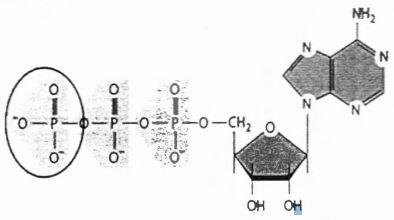 (A) pyrophosphate (B) carbonyl (C) phosphoryl (D) carboxyl (E) hydroxyl