 阿摩線上測驗
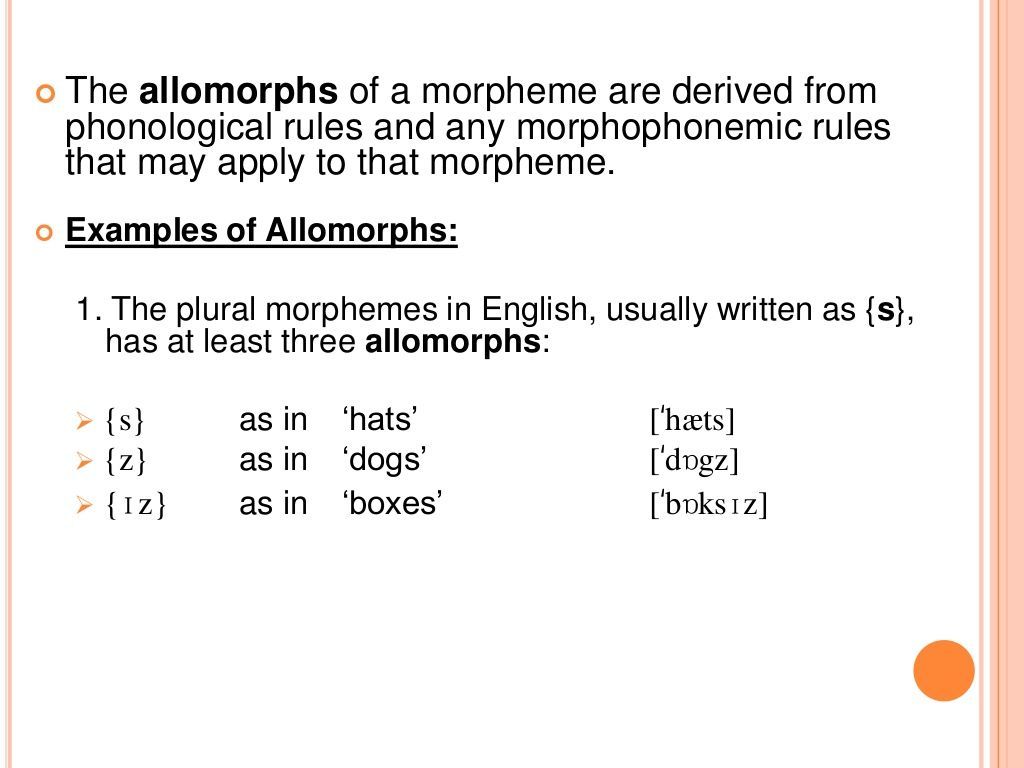
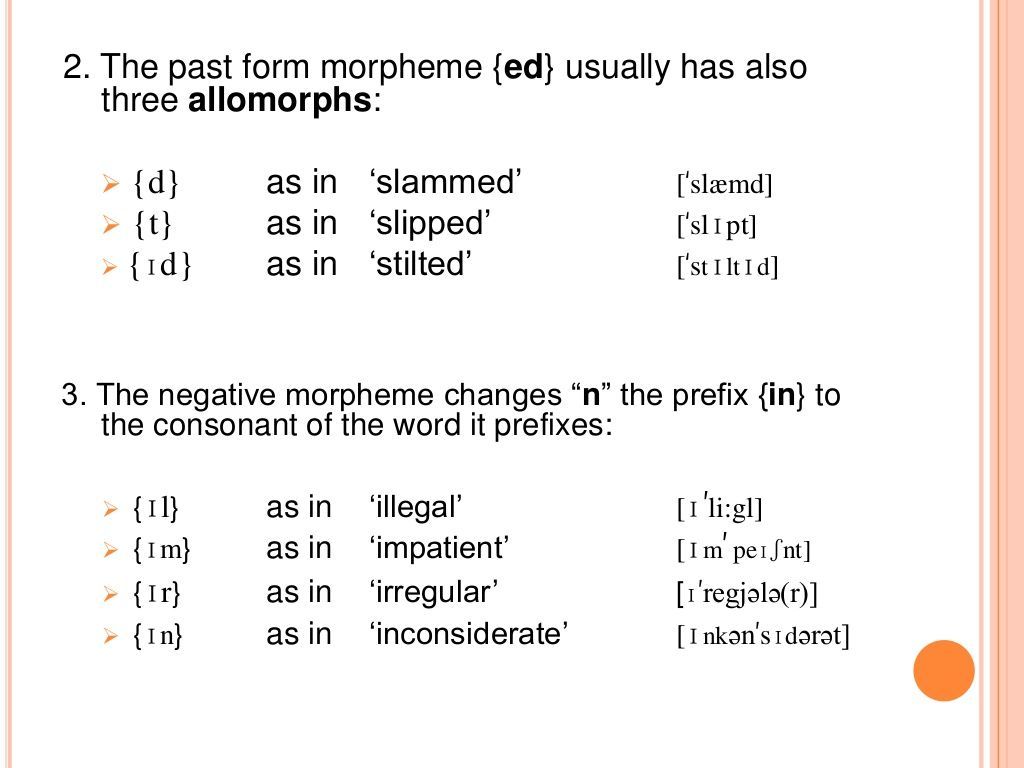
24.Which of the following exemplifies phonologically-conditioned allomorphic alternation?
(A) The variants of /t/ as in tie, stay, smart
(B) The variants of /d/ as in walked, played, started
(C) The variants of the lateral sound as in light and tell
(D) The alternation between /f/ and /v/ as in wife–wives, leaf–leaves
統計: A(55), B(345), C(43), D(135), E(0) #2708589
詳解 (共 6 筆)

The variants of the lateral sound邊音 as in light and tell




|
Condition Type |
Definition |
Examples |
|
Phonological Conditioning |
The choice of an allomorph is determined by the sound structure and can be described by a phonological rule. |
1. English plural affixes: The choice of the plural morph depends on the final stem consonant, such as cats (following a voiceless consonant), dogs (following a voiced consonant), and horses (following an alveolar fricative). 2. English indefinite article: The variants include an (used before vowels), a stressed a (for emphasis), and an unstressed a (used elsewhere). 3. Vowel harmony: In Hungarian, the locative morpheme ben is used if the final stem vowel is a front vowel (e.g., leben), while ban is chosen if it is a back vowel (e.g., falban). Turkish also exhibits a similar situation. |
|
Morphological Conditioning |
The choice of a particular allomorph is determined by the morphological context. |
1. English word wife: Its genitive form(所有格 wife’s ) is phonologically conditioned, whereas its plural form (wives) represents a special morphological context that determines the choice of the allomorph. 2. Latin first-person singular: The choice of the form is dependent on the tense, using -o for the present tense base form (laudo), -m for the simple past (laudabam), and another variant for the present perfect. |
|
Lexical Conditioning |
The choice of an allomorph depends on a particular lexeme, semantic properties of the base, or cannot be derived by any rule at all and has to be learned. |
1. English past tense: The choice depends on the specific lexeme, such as buy becoming bought, while cry becomes cried (and not crot). 2. Persian plural marking: The choice depends on semantic properties (human vs. non-human). The word for man (merd, +human) takes the suffix -an (merdan), while the word for cat (gorbe, -human) takes the suffix -ha (gorbeha). 3. English past participle suffix -en: Speakers have to learn which specific verbs take this suffix, such as taken, seen, and given. |