所屬科目:學士後西醫-化學
1. The most widely used mobile phase for supercritical-fluid chromatography is(A) helium (B) nitrogen (C) argon (D) carbon dioxide (E) air
2. What is the color change of the end point in the iodometry using starch as an indicator?(A) colorless to blue (B) colorless to violet (C) blue to red (D) blue to colorless (E) brown to blue
3. Which one can be used as a spectroscopic source in the UV region ?(A) D2 lamp (B) Tungsten lamp (C) Nernst glower (D) Globar (E) Nichrome wire
4. Which of the following detectors for gas chromatography has the lowest detection limit?(A) flame ionization (B) thermionic (C) electron capture (D) mass spectrometer (E) photoionization
5. Which of the following detector has the lowest detection limit for liquid chromatography?(A) absorbance (B) fluorescence (C) electrochemical (D) refractive index (E) mass spectrometry
6. The end point in the Volhard Method is when(A) the solution turns red (B) the red precipitate forms (C) the precipitate turns red(D) the solution turns blue (E) the white precipitate forms
7. Dimethylglyoxime is a specific precipitating reagent for(A) Ni2+ (B) Pb2+ (C) Cu2+ (D) Cd2+ (E) Mg2+
8. Karl Fischer titration method is based on a/an ( ) reaction that is relatively specific for water.(A) neutralization (B) precipitation (C) oxidation-reduction (D) complexation (E) substitution
9. The property of fluorescence of following compounds: A, fluorobenzene; B, chlorobenzene; C, bromobenzene; and D,iodobenzene.(A) A > B > C > D (B) D > C > B > A (C) B > C > D > A (D) D > B > C > A (E) A = B = C = D
10. What is the unit of absorptivity in Beer’s law when the path length is given in cm and the concentration is expressed in parts per million? (A) ppm-1 L cm-1 (B) ppm-1 cm -1 (C) cm ppm-1 (D) ppm cm-1 (E) cm ppm
11. The difference between spectrophotometer and photometer is in the(A) source (B) wavelength selector (C) sample container (D) detector (E) signal processor and readout
12. How many moles of Br2 will be produced when 1 mole of potassium bromate is used as a source of bromine?(A) 1 (B) 1.5 (C) 2 (D) 2.5 (E) 3
13. Which of the following methods is applicable to nonvolatile and thermally unstable compounds that contain nochromophoric functional groups?(A) capillary electrophoresis (B) supercritical-fluid chromatography (C) gas chromatography(D) thin-layer chromatography (E) high-performance liquid chromatography
14. The order of the end point sharpness for titration of 50-mL of I- , BrO3 - , Br- and Cl- with AgNO3 in the same concentration is (A) I- > BrO3 - > Br- > Cl- (B) I- > Br- > BrO3 - > Cl- (C) I- > Br- > Cl- > BrO3 - (D) BrO3 - > I- > Br- > Cl- (E) BrO3 - > Cl-> I- > Br-
15. Which one is not correct about standard electrode potential, E0 ? (A) E0 is a relative reduction potential (B) The reactants and products are at unit activity (C) E0 is dependent of the number of moles of reactant and product shown in the balanced half-reaction (D) A positive electrode potential indicates that the half-reaction is spontaneous with respect to the standard hydrogen electrode half-reaction (E) E0 is temperature dependent
16. Calculate the volume of 0.0500 M EDTA needed to titrate the Ca in 0.2000 g of CaCO3 (100.1 g/mol)(A) 20 mL (B) 25 mL (C) 30 mL (D) 35 mL (E) 40 mL
17. What is the maximum Ksp of AgX needed for quantitative titration of X- with AgNO3 at 0.1 M level sample? (A) 10-7 (B) 10-8 (C) 10-9 (D) 10-10 (E) 10-11
18. Select a suitable acid/base pair to prepare a buffer with a pH of 3.5.(A) NH4Cl/NH3 (Ka = 5.7 × 10⁻¹⁰) (B) Malic acid/Na hydrogen malate (Ka = 3.48 × 10⁻⁴)(C) Salicylic acid /Na salicylate (Ka = 1.06 × 10⁻³) (D) HAc/NaAc (Ka = 1.75 × 10⁻⁵)(E) Benzoic acid/ Na benzoate (Ka = 6.28 × 10⁻⁵)
19. Select the correct expression.(A) 1 pg = 10-15 g (B) 1 fg = 10-18 g (C) 1 ag = 10-12 g (D) 1 ng = 10-6 mg (E) 1 mg = 10-4 g
20. What is the ionic strength of a 0.1 M Na3PO4 solution?(A) 0.1 M (B) 0.2 M (C) 0.3 M (D) 0.4 M (E) 0.6 M
21. Calculate the Rf values for C on the following TLC plate:(A) 0.35 (B) 0.60 (C) 0.67 (D) 0.8 (E) 0.87
22. Choose the structure consistent with the1H NMR spectrum shown below.(A) (B) (C) (D) (E)
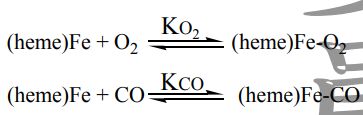
23. Carbon monoxide is toxic because it binds much more strongly to the iron in hemoglobin than O2 does. The equilibrium constant for the binding of CO is about 200 times that for the binding of O2. That is, for the reactionsKCO/KO2 = 2.1 ×10². Calculate the difference in ΔG0for the binding of CO and O2 to hemoglobin at 25℃. (A) –6.5 kJ/mol (B) –13 kJ/mol (C) –19.5 kJ/mol (D) –26 kJ/mol (E) –39 kJ/mol
24. Caffeine consists of carbon, hydrogen, oxygen, and nitrogen. When 0.1920 g of caffeine is burned in an excess of oxygen, 0.3482 g of carbon dioxide and 0.0891 g water are formed. Caffeine is 28.84% nitrogen by mass. Its molar mass is between 190 and 200 g/mol. What is the formula for caffeine? (A) C4H5N2O (B) C3H2N2O2 (C) C6H4N4O4 (D) C8H10N4O2 (E) none of these
25. When C4H8 is treated with water, H2SO4 a tertiary alcohol is produced. Which of the following structures could represent C4H8 in the reaction?(A) CH3CH=CHCH3 (B) CH3CH2CH=CH2 (C)(D) CH3CH2CH2CH3 (E) none of these
26. Choose the structure J produced in the following reaction sequence.(A) (B) (C) (D) (E)
27. Choose the structure consistent with the following data.C4H8O : 1H NMR spectrum, δ 1.05 (t, 3H), 2.13 (s, 3H), 2.47 (q, 2H)IR spectrum (strong peak near 1720 cm-1)(A) (B) (C) (D) (E)
28. Choose the correct order of molecular structures with respect to their ease for passing into the lipid bi-layer of a cell membrane. (the most difficult one is on the right) (A) A>B>C (B) B>A>C (C) B>C>A (D) C>B>A (E) C>A>B
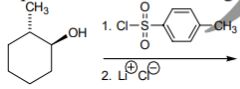
29. Choose the product of the following reaction.(A) (B) (C) (D) (E)
30. Choose those reactants and reagents that would produce 2-methyl-2-butanol as the major product.(A) (a) + (b) + (c) (B) (a) + (b) (C) (a) + (c) (D) (a) (E) (c)
31. Choose the major product formed in the following reaction.(A) (B) (C) (D) (E)
32. Choose the reagents that would perform the following transformation. (A) PCC (B) 1. LiAlH4/Et2O, 2. H2O/H2SO4 (C) LiCu(CH3)2 (D) CH3MgBr (E) H3PO4
33. Choose the reactants and reagents that would produce 1-butene as the major product.(A) (a) + (b) (B) (b) (C) (a) (D) (c) (E) (a) + (c)
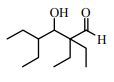
34. Normally, heating an initial aldol product (the β-hydroxyaldehyde) causes dehydration. However, heating the compound below with base does not cause dehydration, but rather, decomposition to form 2-ethylbutanal. This is because: (A) There are no protons β to the carbonyl. (B) There are no protons adjacent to the OH, and the dehydration reaction requires E1 conditions. (C) There are no protons α to the carbonyl, and aldol condensations are reversible. (D) Heating any organic compound above room temperature causes decomposition. (E) None of these is true.
35. Choose the correct statement given the following information:(A) Fe2+(aq) is more likely to be oxidized than Fe2+ complexed to CN-.(B) Fe3+(aq) is more likely to be reduced than Fe3+ complexed to CN-.(C) Both A and B are true.(D) Complexation of Fe ion with CN-has no effect on their tendencies to become oxidized or reduced.(E) None of these is true.
36. Which of the following additions to 2-methylpropene occurs with anti-Markovnikov orientation?(A) Catalytic hydrogenation (H2/Pt) (B) Addition of HOBr (C) Addition of HI(D) Addition of HBr in the presence of ROOR (E) Oxymercuration-Demercuration
37. Which of the following alcohols will react most rapidly with the Lucas reagent?(A) (CH3)3COH (B) CH3CH2CH2CH2OH (C) CH3CH(OH)CH2CH3(D) (CH3)2CHCH2OH (E) (CH3)3CCH2OH
38. Which of the following dienes would undergo a Diels-Alder reaction?(A) 3-methylenecyclohexene (B) 3-methyl-1,4-cyclohexadiene (C) 2-methyl-1,3-cyclohexadiene(D) 1,4-cyclohexadiene (E) 4-methylenecyclohexene
39. Which of the following is the strongest acid?(A) 1-pentene (B) 2-pentene (C) 1,4-pentadiene (D) cyclopentadiene (E) cycloheptatriene
40. The correct decreasing order of reactivity with X+is(A) IV>III>II>I (B) II>IV>III>I (C) III>I>IV>II (D) II>IV>I>III (E) III>I>II>IV
41. Which compound would be expected to show intense IR absorption at 1780 cm-1?(A)(B)(C)(D)(E)
42. Which compound would be expected to show an intense peak in the mass spectrum at m/z 58?(A) CH3C(O)CH2CH2CH3 (B) CH3CH2C(O)CH2CH3 (C) (CH3)3CCHO(D) (CH3)2CHC(O)CH3 (E) (CH3)2CHCH2CHO
43. The acid which could not be prepared by the reaction of an organic halide with cyanide ion followed by acid hydrolysis of the nitrite.(A) CH3CH2CO2H (B) PhCH2CO2H (C) (CH3)3CCO2H(D)(E)
44. The conversion of butanoic acid to 2-pentanone is best accomplished with(A) 1. thionyl chloride; 2. methyl magnesium bromide (B) 1. methyllithium; 2. H3O+(C) 1. CH3OH, H2SO4; 2. methyllithium (D) 1. thionyl chloride; 2. methanol(E) 1. diazomethane; 2. H3O+
45. The conversion of 2-butanone to propanoic acid is best accomplished with(A) 1. ozone; 2. hydrogen peroxide (B) sodium hydroxide, iodine (C) silver oxide, bromine(D) lithium aluminum hydride (E) CO2, H3O+
46. For the following compounds the correct order for decreasing reactivity toward nucleophilic acyl substitution is(A) II>III>IV>I (B) I>IV>II>III (C)III>II>I>IV (D) I>IV>III>II (E) IV>III>II>I
47. The expected product of the reaction below.CH3CH2C(O)OCHO + CH3NH2→(A) CH3NHCHO (B) CH3CN (C) CH3NHC(O)CH2CH3 (D) CH3C(O)NH2 (E) CH3CH2C(O)OC(O)NH2
48. The conversion of acetaldehyde to 2-hydoxypropanoic acid is best accomplished with (A) 1. CH3Li; 2. CrO3, H2SO4 (B) 1. NaCN; 2. H3O+ , heat (C) 1. SOCl2; 2. Mg, ether; 3. CO2 (D) 1.Br2, PBr3; 2. NaOH (E) 1, diazomethane; 2. H3O+
49. The conversion of benzoic acid to phenylacetic acid is best accomplished with (A) 1. LiAlH4; 2. TsCl; 3. NaCN; 4. H3O+ , heat (B) 1. LiAlH4; 2. TsCl; 3. Mg, ether; 4. CO2 (C) 1. SOCl2; 2. Li(CH3)2Cu (D) 1. SOCl2; 2. NH3; 3. Br2, NaOH (E) 1. diazomethane; 2. H3O+
50. The aldehyde which would not undergo a Cannizzaro reaction is(A) PhCHO (B) CH3CH2CHO (C) CH2O (D) (CH3)3CCHO (E) none of the above
51. Addition of alanine to distilled water will produce(A) a slightly basic solution (B) denaturation (C) a neutral solution(D) a slightly acidic solution (E) precipitation
52. Amino acid N-terminal analysis of peptides is often done with(A) carboxypeptidase (B) phenylisothiocyanate (C) dicyclohexylcarbodiimide(D) ethyl chloroformate (E) none of them
53. Which of the following arrangements is usually not found in the secondary structure of proteins?(A) α-helix (B) double helix (C) random coil(D) pleated sheet (E) all of the above arrangements can be found in the secondary structure of proteins
54. The standard amino acids are stereochemically related to(A) D-glucose (B) L-glyceraldehyde (C) D-glyceraldehyde (D) glycine (E) L-alanine
55. The best reagent to distinguish between CH3(CH2)10CO2H and CH3(CH2)4CH=CH(CH2)4CO2H is(A) NaOH, H2O (B) Tollen’s reagent (C) H2Cr2O7 (D) Li, NH3 (E) Br2/CCl4
56. Which of the following is piperidine?(A)(B)(C)(D)(E)
57. Which of the following is indole?(A)(B)(C)(D)(E)
58. Which of the following is oxetane?(A)(B)(C)(D)(E)
59. How many peaks will you expect from 13C NMR spectrum of(A) 5 (B) 6 (C) 7 (D) 8 (E) 9
60. Which of the following molecules will have a net dipole moment?(A)CCl4 (B) H2C=CH2 (C) Cl2C=CCl2(D)(E)
61. What monomer(s) is (are) needed to make the polymer shown below?
I. HOCH2CH2OH II. HOOCCH2CH2COOH III. HOCH2CH2COOHIV. HOCH=CHOH V. HOOCCH=CHCOOH(A) II (B) III (C) I and II (D) IV and V (E) II and III
62. Baking powder, a mixture of cream of tartar (KHC4H4O6, molar mass 188 g/mol) and baking soda (NaHCO3, molar mass 84.0 g/mol), undergoes the following reaction at baking temperature:(The CO2 makes the cake rise.) A recipe calls for two level teaspoons (a total of 8.0g) of cream of tartar. How much baking soda must be added for both materials to react completely?(A) 0.45 g (B) 1.8g (C) 3.6g (D) 8.0 g (E) none of these
63. Which of the following is not an oxidation-reduction reaction?(A) A precipitation reaction. (B) A reaction in which a metal reacts with a nonmetal.(C) A combustion reaction. (D) A metal reacting with an acid.(E) All of the above are oxidation-reduction reactions.
64. Aqueous solution of sodium sulfide and copper(II) chloride are mixed together. Which statement is correct?(A) Both NaCl and CuS precipitate from solution. (B) No precipitate forms.(C) CuS will precipitate from solution (D) NaCl will precipitate from solution.(E) No reaction will occur.
65. Body temperature is about 308 K. On a cold day, what volume of air at 273 K must a person with a lung capacity of 2.00 L breathe in to fill up the lungs? (A) 1.13 L (B) 1.77 L (C) 2.26 L (D) 3.08 L (E) 3.54 L
66. Calculate the temperature at which the average kinetic energy of O2 gas is twice that of He gas at 10℃.(A) 2.50℃ (B) 10.0℃ (C) 20.0℃ (D) 160℃ (E) 293℃
67. The sodium salt, NaA, of a weak acid is dissolved in water; no other substance is added. Which of the statements (to a close approximation) is true? (A) [H+ ] = [A- ] (B) [H+ ] = [OH- ] (C) [A- ] = [OH- ] (D) [HA] = [OH- ] (E) none of these
68. Arrange following 0.10 M solutions from lowest to highest pH: NaF, NaC2H3O2, C5H5NHCl, KOH, HCN. (Ka for HCN is 6.2 × 10⁻¹⁰; Ka for HF is 7.2 × 10⁻⁴; Ka for HC2H3O2 is 1.8 × 10⁻⁵; Kb for C5H5N is 1.7 × 10⁻⁹) (A) HCN, C5H5NHCl, NaF, NaC2H3O2, KOH (B) C5H5NHCl, HCN, NaF, NaC2H3O2, KOH (C) NaF, NaC2H3O2, HCN, C5H5NHCl, KOH (D) KOH, NaC2H3O2, NaF, HCN, C5H5NHCl (E) None of these
69. In the titration of a weak acid HA with 0.100 M NaOH, the stoichiometric point is known to occur at a pH value of approximately 11. Which of the following indicators would be best to use to mark the endpoint of thus titration? (A) an indicator with Ka = 10-10 (B) an indicator with Ka = 10-8 (C) an indicator with Ka = 10-14 (D) an indicator with Ka = 10-11 (E) an indicator with Ka = 10-12
70. Silver acetate (AgC2H3O3) is a sparingly soluble salt with Ksp = 1.9 × 10⁻³. Consider a saturated solution in equilibrium with the solid salt. Compare the effects on the solubility of adding to the solution either the acid HNO3 or the base NH3.(A) Either substance would decrease the solubility.(B) Either substance would increase the solubility.(C) NH3 would increase the solubility, but HNO3 would decrease it.(D) NH3 would increase the solubility, but HNO3 would have virtually no effect.(E) NH3 would decrease the solubility, but HNO3 would increase it.
71. Rank the following solvent in order of decreasing polarity:A. Ethyl acetate B. Methanol C. Methylene Chloride D. Hexane E. Acetone(A) B>E>A>C>D (B) B>A>E>C>D (C) B>A>C>E>D (D) B>C>E>A>D (E) B>A>C>D>E
72. The two compounds below can be differentiated with: (A) Ag(NH3)2 + OH- (B) Br2 /CCl4 (C) H2 CrO4 (D) KMnO4 (E) Tollens reagent
73. Which compound would be expected to show intense IR absorption at 3300 cm-1?(A) butane (B) 1-butene (C) 2-butene (D) 1-butyne (E) 2-butyne
74. Which compound would be expected to show IR absorption at 2250 cm-1?(A) CH3CH2CH2CO2H (B) CH3CH2CH2CH2OH (C) CH3C(O)O(O)CCH3(D) CH3CH2CH2C(O)NH2 (E) CH3CH2CH2CN
75. The amine which can be prepared by a Gabriel synthesis is(A)(B)(C)(D)(E)
76. Penicillins contain(A) aβ-lactam ring (B) aβ-lactone ring (C) a thioester group (D) a α-lactam ring (E) a α-lactone ring
77. Which of the following alcohols would undergo dehydration most rapidly?(A) CH3CH2CH(OH)CH3 (B) (CH3)2C(OH)CH2CH3 (C) (CH3)2CHCH2OH(D) CH3CH2CH2CH2OH (E) PhCH2CH2OH
78. The correct order of decreasing acidity of the following compounds.(A) III>I>IV>II (B) II>III>I>IV (C)IV>I>III>II (D) III>II>I>IV (E) II>IV>I>III
79. The conversion of CH3(CH2)7CH=CH(CH2)7CO2H to CH3(CH2)16CO2H is best accomplished with(A) H2 , Ni (B) Li , NH3 (C) B2H6 (D) LiAlH4 (E) NaBH4
80. Which of the structures below would be aromatic?(A) I and II (B) I, III and IV (C) III and IV (D) II and III (E) none of them
 阿摩線上測驗
登入

 (B)
 (C)
 (D)
 (E)

 (D) CH3CH2CH2CH3 (E) none of these
 (A)
 (B)
 (C)
 (D)
 (E)

 (B)
 (C)
 (D)
 (E)

 (A) A>B>C (B) B>A>C (C) B>C>A (D) C>B>A (E) C>A>B
 (B)
 (C)
 (D)
 (E)


 (B)
 (C)
 (D)
 (E)
 (A) PCC (B) 1. LiAlH4/Et2O, 2. H2O/H2SO4 (C) LiCu(CH3)2 (D) CH3MgBr (E) H3PO4

 (A) There are no protons β to the carbonyl. (B) There are no protons adjacent to the OH, and the dehydration reaction requires E1 conditions. (C) There are no protons α to the carbonyl, and aldol condensations are reversible. (D) Heating any organic compound above room temperature causes decomposition. (E) None of these is true.


 (B)
 (C)
 (D)
 (E)

 (E)


 (B)
 (C)
 (D)
 (E)

 (B)
 (C)
 (D)
 (E)

 (B)
 (C)
 (D)
 (E)


 (E)



 (A) Ag(NH3)2 + OH- (B) Br2 /CCl4 (C) H2 CrO4 (D) KMnO4 (E) Tollens reagent
 (B)
 (C)
 (D)
 (E)


