所屬科目:研究所、轉學考(插大)-普通生物學
1. Organelles other than the nucleus that contain DNA include (A) ribosomes. (B) chloroplasts. (C) mitochondria. (D) B and C only (E) A, B, and C
2. In the fractionation of homogenized cells using centrifugation, the primary factor that determines whether a specific cellular component ends up in the supernatant or the pellet is (A) the percentage of carbohydrates in the component. (B) the number of enzymes in the fraction. (C) the presence or absence of lipids in the component. (D) the size and weight of the component. (E) the relative solubility of the component.
3. In plants the conservation of water promotes (A) photorespiration. (B) photosynthesis. (C) the opening of stomata. (D) the light reactions. (E) a shift to photosynthesis.
4. Which of the following statements is a correct distinction between cyclic and noncyclic electron flow? (A) Only noncyclic electron flow produces ATP. (B) In addition to ATP, cyclic electron flow also produces NADPH. (C) Chemiosmosis is unique to noncyclic electron flow. (D) Only cyclic electron flow can operate in the absence of photosystem II. (E) Only cyclic electron flow utilizes light at 700 nm.
5. A drug designed to inhibit the response of cells to testosterone would almost certainly result in which of the following? (A) an increase in receptor tyrosine kinase activity (B) a decrease in transcriptional activity of certain genes (C) an increase in cytosolic calcium concentration (D) a decrease in G-protein activity (E) lower cytoplasmic levels of cAMP
6. Chemical signal pathways (A) operate in animals, but not in plants. (B) use hydrophilic molecules to activate enzymes. (C) often involve the binding of signal molecules to a protein on the surface of a target cell. (D) are absent in bacteria, but are plentiful in yeast. (E) involve the release of hormones into the blood.
7. Which of the following are primarily responsible for cytokinesis in plant cells? (A) cyclin-dependent kinases (B) Golgi-derived vesicles (C) centrioles and basal bodies (D) kinetochores (E) actin and myosin
8. Vinblastine is a standard chemotherapeutic drug used to treat cancer. Because it interferes with the assembly of microtubules, its effectiveness must be related to (A) myosin denaturation and inhibition of cleavage furrow formation. (B) disruption of mitotic spindle formation. (C) inhibition of DNA synthesis. (D) inhibition of regulatory protein phosphorylation. (E) suppression of cyclin production.
9. Because they accumulate in the body, excess ingestion of which of the following can have toxic effects? (A) calcium and phosphorus. (B) fat-soluble vitamins. (C) sugars. (D) water-soluble vitamins. (E) proteins
10. Which of the following statements about the mammalian digestive system is true? (A) Enzyme production continues in the esophagus. (B) All foods begin their enzymatic digestion in the mouth. (C) The trachea leads to the esophagus and then to the stomach. (D) After leaving the oral cavity, the bolus enters the larynx. (E) The epiglottis prevents food from entering the trachea.
11. Pulse is a direct measure of (A) heart rate. (B) stroke volume. (C) breathing rate. (D) blood pressure. (E) cardiac output.
12. Which of the following blood components would interfere with the functioning of an open circulatory system but not a closed one? (A) red blood cells (B) antibodies (C) water (D) electrolytes (E) amino acids
13. HIV targets include all of the following except (A) cytotoxic T cells. (B) cells bearing CD4 and fusin. (C) brain cells. (D) macrophages. (E) helper T cells.
14. Both the eye and the respiratory tract are protected against infections by which of the following? (A) the mucous membranes that cover their surface (B) the secretion of complement proteins (C) the secretion of lysozyme onto their surface (D) interferons produced by immune cells (E) the release of slightly acidic secretions
15. Which of the following is true of ammonia? (A) It has low toxicity relative to urea. (B) It can be stored as a precipitate. (C) It is soluble in water. (D) Only A and C are true. (E) A, B, and C are true.
16. Unlike an earthworm's metanephridia, a mammalian nephron (A) forms urine by changing the composition of fluid inside the tubule. (B) is intimately associated with a capillary network. (C) functions in both osmoregulation and the excretion of nitrogenous wastes. (D) processes blood instead of coelomic fluid. (E) has a transport epithelium.
17. Short blood vessels connect two capillary beds lying in which of the following? (A) anterior pituitary and posterior pituitary. (B) hypothalamus and thalamus (C) anterior pituitary and adrenal gland. (D) posterior pituitary and thyroid gland (E) hypothalamus and anterior pituitary
18. Prolactin stimulates mammary gland growth and development in mammals and regulates salt and water balance in freshwater fish. Many scientists think that this wide range of functions indicates which of the following? (A) Prolactin is a nonspecific hormone. (B) Prolactin is an evolutionary conserved hormone. (C) Prolactin has a unique mechanism for eliciting its effects. (D) Prolactin interacts with many different receptor molecules. (E) Prolactin is derived from two separate sources.
19. Which of the following is not required for internal fertilization? (A) copulatory organ (B) internal development of the embryo (C) sperm receptacle (D) behavioral interaction (E) All of the above are necessary for internal fertilization.
20. There are five hormones regulating the human menstrual and ovarian cycles. Which of these structures secrete(s) these hormones? (A) hypothalamus (B) pancreas (C) ovaries (D) A and C only (E) A, B, and C
21. Which of the following statements is (are) true concerning the vitelline layer of the sea urchin egg? (A) It has receptor molecules that are specific for binding acrosomal proteins. (B) It releases calcium, which initiates the cortical reaction. (C) It is outside the fertilization membrane. (D) A and B are true. (E) A, B, and C are true.
22. Which mathematical situation has a parallel in embryonic limb development? (A) plotting a graph of a linear growth curve (B) using X, Y, and Z coordinates to plot a graph (C) plotting a graph of an exponential growth curve (D) using parallel lines to construct a parallelogram (E) E=MC²
23. Integration of simple responses to certain stimuli, such as the patellar reflex, is accomplished by which of the following? (A) medulla (B) hypothalamus (C) corpus callosum (D) cerebellum (E) spinal cord
24. The postsynaptic membrane of a nerve may be stimulated by certain neurotransmitters to permit the influx of negative chloride ions into the cell. This process will result in (A) the membrane becoming more positive. (B) membrane depolarization. (C) the production of an EPSP. (D) the production of an IPSP. (E) an action potential.
25. The pathway leading to the perception of sound begins with the (A) hair cells of the organ of Corti, which rests on the tectorial membrane, coming in contact with the basilar membrane. (B) hair cells of the organ of Corti, which rests on the tympanic membrane, coming in contact with the tectorial membrane. (C) hair cells of the organ of Corti, which rests on the basilar membrane, coming in contact with the tectorial membrane. (D) hair cells on the tympanic membrane that stimulate the tectorial membrane neurons leading to the auditory section of the brain. (E) hair cells of the organ of Corti coming in contact with the tectorial membrane as a result of fluid waves in the cochlea causing vibrations in the round window.
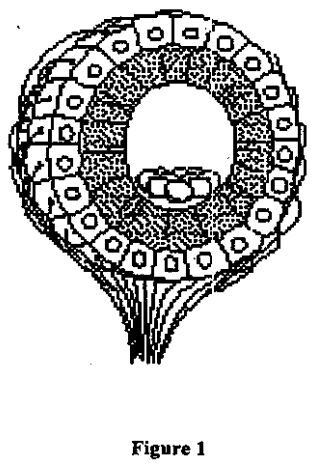
26. What is the structure diagrammed in Figure 1?
(A) an ommatidium (B) a neuromast (C) a statocyst (D) a taste bud (E) an olfactory bulb
27. Coral reefs can be found on the southern east coast of the United States but not at similar latitudes on the southern west coast. Differences in which of the following most likely account for this? (A) ocean currents (B) precipitation (C) sunlight (D) day length (E) salinity
28. Polar regions are cooler than the equator because (A) the poles are permanently tilted away from the sun. (B) there is more ice at the poles. (C) the poles have a thicker atmosphere. (D) sunlight strikes the poles at an oblique angle. (E) the poles are farther from the sun.
29. Reconciliation behavior is likely to follow (A) imprinting by young animals on a member of the wrong species. (B) conflict behavior between members of a permanent social group. (C) mating behavior between a male and a female. (D) agonistic behavior between territorial males. (E) ritualized behavior.
30. In the 14th century, _____ was responsible for the death of more than one-third of the entire European population of humans. (A) pneumonia (B) bubonic plague (C) AIDS (D) influenza (E) tuberculosis
31. Population ecologists follow the fate of same-age cohorts in order to (A) determine the factors that regulate the size of a population. (B) determine a population's carrying capacity. (C) determine if a population is regulated by density-dependent processes. (D) determine the birth rate and death rate of each age group in a population. (E) determine if a population's growth is cyclical.
32. The growing season would generally be shortest in which of the following biomes? (A) taiga (B) temperate broadleaf forest (C) savanna (D) tropical rain forest (E) temperate grassland
33. Which marine zone would have the lowest rates of primary productivity (photosynthesis)? (A) abyssal (B) intertidal (C) neritic (D) continental shelf (E) pelagic
34. In the territorial behavior of the stickleback fish, the red belly of one male elicits attack from another male by functioning as (A) a pheromone. (B) a sign stimulus. (C) an imprint stimulus. (D) a fixed action pattern. (E) a search image.
35. Life history strategies usually result from (A) environmental pressures. (B) natural selection. (C) conscious choice. (D) A and B only (E) A, B, and C
36. A recent study of ecological footprints (described in the text) concluded that (A) it is not possible for technological improvements to increase Earth's carrying capacity for humans. (B) current demand by industrialized countries is much smaller than the ecological footprint of those countries. (C) the ecological footprint of the United States is larger than the ecological capacity of its land. (D) Earth's carrying capacity would increase if per capita meat consumption increased. (E) Earth's carrying capacity for humans is about 10 billion.
37. Which of the following members of a marine food chain is most analogous to a grasshopper in a terrestrial food chain? (A) shark (B) zooplankton (C) phytoplankton (D) detritivore (E) fish
38. Which of the following statements about the biogeographical aspects of diversity is not correct? (A) Species richness on an island reaches an equilibrium point when immigration equals extinction. (B) Island equilibrium theory applies to the relatively short period of time when colonization is the important process determining species composition; over a longer time, actual speciation affects the composition. (C) A species may be limited to a particular range because it never dispersed beyond that range, or it dispersed but failed to survive in other locations. (D) The magnitude of photosynthesis is the factor that accounts for the major variations in species diversity over large areas of Earth. (E) The patterns of continental drift are important considerations in the study of the past and present distributions of species.
39. Which of the following organisms fix nitrogen in aquatic ecosystems? (A) legumes (B) chemoautotrophs (C) cyanobacteria (D) fungi (E) phytoplankton
40. Which of the following statements is correct about biogeochemical cycling? (A) The phosphorus cycle is a sedimentary cycle that involves the weathering of rocks. (B) The carbon cycle has maintained a constant atmospheric concentration of CO2 for the past million years. (C) The carbon cycle is a localized cycle that primarily reflects the burning of fossil fuels. (D) The phosphorus cycle involves the rapid recycling of atmospheric phosphorus. (E) The nitrogen cycle involves movement of nitrogen very little of which is chemically altered by either the biotic or abiotic components of the ecosystem.
41. Which of the following strategies would most rapidly increase the genetic diversity of a population in an extinction vortex? (A) Introduce new individuals transported from other populations of the same species. (B) Sterilize the least fit individuals in the population. (C) Establish a reserve that protects the population's remaining habitat. (D) Control and reduce populations of the endangered population's predators and competitors. (E) Capture all remaining individuals in the population for captive breeding followed by reintroduction to the wild.
42. Which of the following would a landscape ecologist consider in designing a nature reserve? (A) patterns of landscape use by humans (B) possible edge effects related to human activities (C) human economic concerns (D) A and B only (E) A, B, and C
43. A person exposed to a new cold virus would not feel better for one to two weeks because (A) antigen receptors are not the same. (B) phagocytic cells must first be activated by the complement system. (C) it takes up to two weeks to stimulate immunologic memory cells. (D) specific B cells and T cells must be selected prior to a protective response. (E) V-J gene rearrangement must occur prior to a response.
44. Hormone X produces its effect in its target cells via the cAMP second messenger system. Which of the following will produce the greatest effect in the cell? (A) a molecule of hormone X injected into the cytoplasm of the cell (B) a molecule of activated, cAMP-dependent protein kinase injected into the cytoplasm of the cell (C) a molecule of cAMP injected into the cytoplasm of the cell (D) a molecule of hormone X applied to the extracellular fluid surrounding the cell (E) a molecule of cAMP applied to the extracellular fluid surrounding the cell
45. It is very difficult to sneak up to a grasshopper and catch it. Why? (A) They have binocular vision. (B) They have excellent hearing for detecting predators. (C) They have compound eyes with multiple ommatidia. (D) They have a camera-like eye with multiple fovea. (E) They have eyes with multiple fovea.
46. Which of the following is the best explanation for the inability of an animal cell to reduce the concentration in its cytosol compared with the extracellular fluid? (A) low oxygen concentration around the cell (B) loss of transcription factors (C) low levels of protein kinase in the cell (D) blockage of the synaptic signal (E) insufficient ATP levels in the cytoplasm
47. All of the following represent adaptations by terrestrial animals to drying conditions except (A) salt glands. (B) increased thirst. (C) efficient kidneys. (D) anhydrobiosis. (E) impervious surfaces.
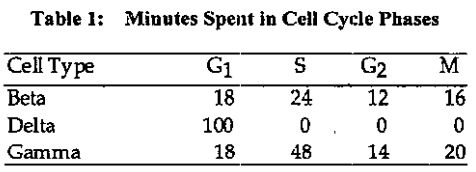
Use the data in Table.I to answer question 48.The data were obtained from a study of the length of tirne spent in each phase of the cell cycle by cells of three eukaryotic organisms designated beta, delta, and gamma.
48. The best conclusion concerning delta is that the cells (A) contain only one chromosome that is very short. (B) contain no DNA. (C) contain no RNA. (D) divide in the G₁ phase. (E) are actually in the G0 phase.
49. Which of the following is a characteristic of the early stages of local inflammation? (A) attack by cytotoxic T cells (B) release of histamine (C) fever (D) antibody- and complement-mediated lysis of microbes (E) arteriole constriction
50. Which of the following is not a component of an insect's defense against infection? (A) phenoloxidase activation, leading to the formation of large deposits around parasites (B) production of antimicrobial peptides (C) activation of natural killer cells (D) a protective exoskeleton (E) phagocytosis by hemocytes
51. sexual reproduction and sexual reproduction are different in that (A) individuals reproducing asexually transmit 100% of their genes to their progeny, whereas individuals reproducing sexually only transmit 50%. (B) asexual reproduction produces offspring that are genetically identical to the parents, whereas sexual reproduction gives rise to genetically distinct offspring. (C) asexual reproduction involves a single parent, whereas sexual reproduction involves two. (D) asexual reproduction only requires mitosis, whereas exual reproduction always involves meiosis. (E) all of the above
52. Referring to a plant sexual life cycle, which of the following terms describes the process that leads directly to the formation of gametes? (A) sporophyte meiosis (B) gametophyte mitosis (C) gametophyte meiosis (D) sporophyte mitosis (E) alternation of generations
53. The F1 offspring of Mendel's classic pea cross always looked like one of the two parental varieties because (A) one allele was completely dominant over another. (B) each allele affected phenotypic expression. (C) the traits blended together during fertilization. (D) no genes interacted to produce the parental phenotype. (E) different genes interacted to produce the parental phenotype.
54. Two plants are crossed, resulting in offspring with a 3:1 ratio for a particular trait. This suggests (A) that the parents were true-breeding for contrasting traits. (B) incomplete dominance. (C) that a blending of traits has occurred. (D) that the parents were both heterozygous. (E) that each offspring has the same alleles.
55. New combinations of linked genes are due to which of the following? (A) nondisjunction (B) crossing over (C) independent assortment (D) mixing of sperm and egg (E) both A and C
56. Which of the following statements is (are) true? (A) The closer two genes are on a chromosome, the higher the probability that a crossover will occur between them. (B) The observed frequency of recombination of two genes that are far apart from each other has a maximum value of 50%. (C) Two of the traits that Mendel studied-seed color and flower color-are linked on the same chromosome. (D) Only B and C are correct. (E) A, B, and C are correct.
57. What does transformation involve in bacteria? (A) the creation of a strand of DNA from an RNA molecule (B) the creation of a strand of RNA from a DNA molecule (C) the infection of cells by a phage DNA molecule (D) the type of semiconservative replication shown by DNA (E) assimilation of external DNA into a cell
58. In trying to determine whether DNA or protein is the genetic material, Hershey and Chase made use of which of the following facts? (A) DNA does not contain sulfur, whereas protein does. (B) DNA contains phosphorus, but protein does not. (C) DNA contains nitrogen, whereas protein does not. (D) A and B only (E) A, B, and C
59. A mutation results in a defective enzyme A. Which of the following would be a consequence of that mutation? (A) an accumulation of A and no production of B and C (B) an accumulation of A and B and no production of C (C) an accumulation of B and no production of A and C (D) an accumulation of B and C and no production of A (E) an accumulation of C and no production of A and B
60. If A, B, and C are all required for growth, a strain mutant for the gene encoding enzyme B would be capable of growing on which of the following media? (A) minimal medium (B) minimal medium supplemented with "A" (C) minimal medium supplemented with "B" (D) minimal medium supplemented with "C" (E) answers B and C
61. Viruses are referred to as obligate parasites because (A) they cannot reproduce outside of a host cell. (B) viral DNA always inserts itself into host DNA. (C) they invariably kill any cell they infect. (D) they can incorporate nucleic acids from other viruses. (E) they must use enzymes encoded by the virus itself.
62. Which of the following statements about the lysogenic cycle of lambda (λ) phage is incorrect? (A) After infection the viral genes immediately turn the host cell into a lambda-producing factory, and the host cell then lyses. (B) Most of the prophage genes are silenced by the product of a particular prophage gene. (C) The phage genome replicates along with the host genome. (D) Certain environmental triggers can cause the phage to exit the host genome, switching from the lysogenic to the lytic cycle. (E) The phage DNA is incorporated by genetic recombination (crossing over) into a specific site on the host cell's DNA.
63. Which of the following statements concerning the eukaryotic chromosome is false? (A) It is composed of DNA and protein. (B) The nucleosome is the most basic structural subunit. (C) The number of genes on each chromosome is different in different cell types. (D) It consists of a single linear molecule of double-stranded DNA. (E) Active transcription occurs on euchromatin.
64. Why do histones bind tightly to DNA? (A) Histones are positively charged, and DNA is negatively charged. (B) Histones are negatively charged, and DNA is positively charged. (C) Both histones and DNA are strongly hydrophobic. (D) Histones are covalently linked to the DNA. (E) Histones are highly hydrophobic, and DNA is hydrophilic.
65. What is the enzymatic function of restriction enzymes? (A) to add new nucleotides to the growing strand of DNA (B) to join nucleotides during replication (C) to join nucleotides during transcription (D) to cleave nucleic acids at specific sites (E) to repair breaks in sugar-phosphate backbones
66. Bacteria containing recombinant plasmids are often identified by which process? (A) examining the cells with an electron microscope (B) using radioactive tracers to locate the plasmids (C) exposing the bacteria to an antibiotic that kills cells lacking the plasmid (D) removing the DNA of all cells in a culture to see which cells have plasmids (E) producing antibodies specific for each bacterium containing a recombinant plasmid.
67. A eukaryotic protein can be made in bacteria by inserting the gene encoding the protein into a(n) (A) protein plasmid. (B) expression vector. (C) yeast artificial chromosome (YAC). (D) PCR vector. (E) restriction plasmid.
68. One striking difference between development in plants and development in animals is the importance of cell in animal embryos. (A) division (B) differentiation (C) growth (D) movement (E) death
69. A cell that remains entirely flexible in its developmental possibilities is said to be (A) differentiated. (B) determined. (C) totipotent. (D) genomically equivalent. (E) epigenetic.
70. Catastrophism, meaning the regular occurrence of geological or meteorological disturbances (catastrophes), was Cuvier's attempt to explain the existence of (A) evolution. (B) the fossil record. (C) uniformitarianism. (D) the origin of new species. (E) natural selection.
71. "Improving the intelligence of an adult through education will result in that adult's descendants being born with a greater native intelligence." This statement is an example of (A) Darwinism. (B) Lamarckism. (C) uniformitarianism. (D) scala naturae. (E) Malthusianism.
72. Even in Darwin's time, the blending hypothesis was incompatible with observed facts. If the blending hypothesis were true, then what should one expect to observe over the course of generations? (A) Phenotypic polymorphisms should increase. (B) Genetic variation should increase. (C) Members of a breeding population should become more uniform in phenotype. (D) Neutral variation should decrease. (E) Genetic polymorphisms should increase.
73. Successfully breeding two individual organisms at a zoo and obtaining fertile offspring for several generations is no guarantee that the same could occur in nature (i.e., in the wild). Which species concept becomes difficult to confirm because of this fact? (A) biological (B) ecological (C) morphological (D) phylogenetic (E) paleontological
74. Which of the following is not considered an intrinsic isolating mechanism? (A) sterile offspring (B) ecological isolation (C) geographic isolation (D) gametic incompatibility (E) timing of courtship display
75. Some molecular data place the giant panda in the bear family (Ursidae) but place the lesser panda in the raccoon family (Procyonidae). The morphological similarities of these two species must therefore be due to (A) inheritance of acquired characteristics. (B) sexual selection. (C) inheritance of shared derived characters. (D) convergent evolution. (E) possession of shared primitive characters.
76. If organisms A, B, and C belong to the same class but to different orders and if organisms D, E, and F belong to the same order but to different families, which of the following pairs of organisms would be expected to show the greatest degree of structural homology? (A) A and B (B) A and C (C) B and D (D) C and F (E) D and F
77. Which of the following has not yet been synthesized in laboratory experiments studying the origin of life? (A) liposomes (B) liposomes with selectively permeable membranes (C) oligopeptides and other oligomers (D) protobionts that use DNA to program protein synthesis (E) amino acids
78. What characteristic would all protobionts have had in common? (A) the ability to synthesize enzymes (B) a surrounding membrane or membrane-like structure (C) RNA genes (D) a nucleus (E) the ability to replicate RNA
79. Which of the following statements about bacterial cell walls is false? (A) Bacterial cell walls differ in molecular composition from plant cell walls. (B) Cell walls prevent cells from bursting in hypotonic environments. (C) Cell walls prevent cells from dying in hypertonic conditions. (D) Bacterial cell walls are similar in function to the cell walls of many protists, fungi, and plants. (E) Cell walls provide the cell with a degree of physical protection from the environment.
80. If penicillin is an antibiotic that inhibits enzymes from catalyzing the synthesis of peptidoglycan, then which prokaryotes should be most vulnerable to inhibition by penicillin? (A) mycoplasmas (B) gram-positive bacteria (C) archaea (D) gram-negative bacteria (E) spore-bearing bacteria
81. The strongest evidence for the endosymbiotic origin of eukaryotic organelles is the similarity between extant prokaryotes and which of the following? (A) nuclei and chloroplasts (B) mitochondria and chloroplasts (C) cilia and mitochondria (D) mitochondria and nuclei (E) mitochondria and cilia.
82. Which process allows nucleomorphs to be first reduced, and then lost altogether, without the loss of any genetic information from the host cell that ultimately surrounds the nucleomorph? (A) conjugation (B) horizontal gene transfer (C) binary fission (D) phagocytosis (E) meiosis
83. A researcher wants to develop an assay (test) that will distinguish charophyceans and land plants from chlorophyte green algae. Which of the following chemicals would be the best subject for such an assay? (A) chlorophyll b-an accessory photosynthetic pigment (B) carotenoids-a class of accessory photosynthetic pigments (C) amylopectin-a starch-like food storage material (D) glycolate oxidase-an enzyme of peroxisomes that is associated with photorespiration (E) flavonoids-a class of phenolic compounds that is often associated with chemical signaling
84. Which of the following characteristics, if observed in an unidentified green organism, would make it unlikely to be a charophycean? (A) phragmoplast (B) peroxisome (C) apical meristem (D) chlorophylls a and b (E) rosette cellulose-synthesizing complex
85. Which of the following is an ongoing trend in the evolution of land plants? (A) decrease in the size of the leaf (B) reduction of the gametophyte phase of the life cycle (C) elimination of sperm cells or sperm nuclei (D) increasing reliance on water to bring sperm and egg together (E) replacement of roots by rhizoids
86. In addition to seeds, which of the following characteristics are unique to the seed-producing plants? (A) a haploid gametophyte retained within tissues of the diploid sporophyte (B) lignin present in cell walls (C) pollen (D) A and C only (E) A, B, and C
87. If all saprobic fungi in an environment were to suddenly die, which group of organisms should benefit as a whole? (A) plants (B) protists (C) prokaryotes (D) animals (E) mutualistic fungi
88. In septate fungi, what structures allow cytoplasmic streaming to distribute needed nutrients, synthesized compounds, and organelles throughout the hyphae? (A) chitinous layers in cell walls (B) pores in septal walls (C) complex microtubular cytoskeletons (D) two nuclei (E) tight junctions that form in septal walls between cells
89. Both animals and fungi are heterotrophic. What distinguishes animal heterotrophy from fungal heterotrophy is that only animals derive their nutrition (A) from organic matter. (B) by preying on animals. (C) by ingesting it. (D) by consuming living, rather than dead, prey. (E) by using enzymes to digest their food.
90. The number of legs an insect has, or the number of vertebrae in a vertebral column, or the number of joints in a digit (such as a finger) are all strongly influenced by _____ genes. (A) haploid (B) introns within (C) heterotic (D) heterogeneous (E) Hox
91. Evidence of which structure or characteristic would be most surprising to find among fossils of the Ediacaran fauna? (A) true tissues (B) mineralized hard parts (C) bilateral symmetry (D) cephalization (E) embryos
92. Which chemical is not normally found in any sponges? (A) chitin (B) spongin (C) calcium carbonate (D) silica (E) cribrostatin
93. Which of these are characteristics of all chordates during at least a portion of their development? (A) a dorsal, hollow nerve cord (B) pharyngeal clefts (C) post-anal tail (D) A and B only (E) A, B, and C
94. What do hagfishes and lampreys have in common with the extinct conodonts? (A) lungs (B) the jawless condition (C) bony vertebrae (D) their mode of feeding (E) swim bladders
95. An evolutionary adaptation that increases exposure of a plant to light in a dense forest is (A) closing of the stomata. (B) lateral buds. (C) apical dominance. (D) absence of petioles. (E) intercalary meristems.
96. Which of the following is not a function of the plasma membrane proton pump? (A) hydrolyzes ATP (B) produces a proton gradient (C) generates a membrane potential (D) equalizes the charge on each side of a membrane (E) stores potential energy on one side of a membrane
97. Which of the following is of least concern to a researcher in a mineral nutrition experiment? (A) purity of the chemicals used to make the nutrient solutions (B) purity of the water used to make the nutrient solutions (C) chemical inertness of the container used to make and store the nutrient solutions (D) ability of a laboratory balance to weigh very small quantities of chemicals (E) medium in which the test seedlings were grown
98. Which of the following is true in plants? (A) Meiosis occurs in gametophytes to produce gametes. (B) Meiosis occurs in sporophytes to produce spores. (C) The gametophyte is the dominant generation in flowering plants. (D) Plants exist continually as either sporophytes or gametophytes. (E) Male gametophytes and female gametophytes have the same structure.
99. If protein synthesis was blocked in etiolated cells, what would be necessary for any de-etiolation to occur? (A) reception of light by phytochrome (B) activation of protein kinase 1 by cAMP (C) activation of protein kinase 2 by Ca2+ (D) post-translational modification of existing proteins (E) A, B, and C.
100. Which of the following is a problem faced by animals as they increase in size? (A) decreasing surface-to-volume ratio (B) reproducing in aqueous environments (C) the tendency for larger bodies to be more variable in metabolic rate (D) A and B only (E) A, B, and C.
 阿摩線上測驗
登入
 (A) an ommatidium (B) a neuromast (C) a statocyst (D) a taste bud (E) an olfactory bulb
 concentration in its cytosol compared with the extracellular fluid? (A) low oxygen concentration around the cell (B) loss of transcription factors (C) low levels of protein kinase in the cell (D) blockage of the synaptic signal (E) insufficient ATP levels in the cytoplasm