所屬科目:學士後西醫-普通生物及生化概論
1. Which of the following statements about cell junctions is correct?(1) Tight junctions are found in both intestinal epithelial cells and vascular endothelial cells of the blood-brain barrier. (2) Desmosomes provide cytoplasmic channels and can be found in muscle fibers.(3) Gap junctions are essential for intercellular communication and are found in cardiac muscle. (A) (2) (B) (1), (2) (C) (2), (3) (D) (1), (3) (E) (1), (2), (3)
2. Tay-Sachs disease is a human genetic abnormality that results in cells accumulating and becoming clogged with very large and complex lipids. Which cellular organelle must be involved in this condition? (A) the endoplasmic reticulum (B) the Golgi apparatus (C) mitochondria (D) the lysosome (E) membrane-bound ribosomes
3. Which of the following statements about histone modification is NOT correct? (A) Histone modifications change gene expression patterns without altering the actual nucleotide sequence of the DNA. (B) The addition of methyl groups to histone tails always leads to the immediate activation of the nearby gene by opening the chromatin structure. (C) Acetylation of histone tails generally neutralizes their positive charge, loosening the bond between histones and DNA to make the template more accessible for transcription. (D) Histone modifications occur primarily on the flexible N-terminal "tails" of the histone proteins that protrude outward from the core of the nucleosome. (E) Certain histone modifications can be inherited by daughter cells during mitosis, allowing a specific cell type to maintain its identity through successive cell divisions.
4. Saffron is a spice that is derived from parts of the flower of the saffron crocus. Saffron contains a disaccharide called gentiobiose. The molecular mass of each of the monosaccharide in gentiobiose is 180. The molecular mass of the carbon, hydrogen, and oxygen is 12, 1, and 16, respectively. Which is the molecular mass of gentiobiose? (A) 144 (B) 162 (C) 342 (D) 360 (E) 388
5. __________ in the circulatory system typically operate under lower internal pressure, carry blood toward the heart, contain valves that prevent backflow, and have relatively thin walls with relatively less smooth muscle and elastic tissue. (A) Arteries (B) Veins (C) Capillaries (D) Lymphatic vessels (E) Arterioles
6. Which products are the net effect of photosynthesis? (A) Carbon dioxide and carbohydrates (B) Carbon dioxide and protein (C) Carbon dioxide and ATP (D) Oxygen and ADP (E) Oxygen and carbohydrates
7. The liver is involved in detoxification of many poisons and drugs. Which of the following structures is primarily involved in this process and therefore abundant in liver cells? (A) rough ER (B) smooth ER (C) Golgi apparatus (D) transport vesicles (E) nuclear envelope
8. What is saltatory conduction? (A) conduction of impulses across electrical synapses (B) an action potential that skips the axon hillock in moving from the dendritic region to the axon terminal (C) rapid movement of an action potential reverberating back and forth along a neuron (D) jumping from one node of Ranvier to the next in a myelinated neuron (E) jumping from one neuron to an adjacent neuron
9. Which organelle in the following is composed of an extensive network of membrane-bounded tubules and sacs, and when it malfunctions, results in the accumulation of misfolded proteins within cells, which has been found as a key driver in neurodegenerative diseases such as Alzheimer's and Parkinson's diseases? (A) ribosome (B) endoplasmic reticulum (ER) (C) Golgi apparatus (D) lysosome (E) mitochondria
10. The following items are events in a typical signaling pathway: (1) An activated transcription factor translocates into the nucleus. (2) A growth factor binds to its receptor. (3) Transcription of a specific gene is initiated. (4) A kinase cascade is triggered. In what sequence does the signaling pathway proceed? (A) (1) → (2) → (4) → (3) (B) (2) → (3) → (1) → (4) (C) (2) → (4) → (1) → (3) (D) (3) → (1) → (4) → (2) (E) (1) → (3) → (4) → (2)
11. The CRISPR-Cas9 system utilizes a specific molecule known as __________ to recognize and bind to a complementary DNA sequence, which then directs the Cas9 nuclease to create a double-strand break at a precise genomic location. (A) transfer RNA (tRNA) (B) DNA ligase (C) guide RNA (gRNA) (D) protospacer adjacent motif (PAM) (E) trans-activating CRISPR RNA (tracrRNA)
12. Which of the following is NOT a hormone secreted by endocrine glands located in the human brain? (A) vasopressin (B) calcitonin (C) prolactin (D) melatonin (E) oxytocin
13. Suppose a person begins breathing very rapidly while resting (hyperventilating), which of the following best describes how homeostasis is restored? (A) Rapid breathing decreases blood CO2 levels, thereby raising blood pH. The frontal cortex detects the change and reduces stimulation of the rib muscles and the diaphragm, thereby decreasing the breathing rate. (B) Rapid breathing increases blood CO2 levels, thereby causing the blood pH to drop. The hypothalamus detects the change and decreases stimulation of the rib muscles and the diaphragm, thereby reducing the breathing rate. (C) Rapid breathing decreases blood CO2 levels, thereby raising blood pH. The hypothalamus detects the change and reduces stimulation of the rib muscles and the diaphragm, thereby decreasing the breathing rate. (D) Rapid breathing increases blood CO2 levels, thereby causing the blood pH to drop. The medulla oblongata detects the change and reduces stimulation of the rib muscles and the diaphragm, thereby decreasing the breathing rate. (E) Rapid breathing decreases blood CO2 levels, thereby raising blood pH. The medulla oblongata detects the change and reduces stimulation of the rib muscles and the diaphragm, thereby decreasing the breathing rate.
14. Meiosis increases genetic variation through independent assortment and crossing over. In which stage of meiosis does crossing over occur? (A) prophase I (B) prophase II (C) metaphase I (D) metaphase II (E) anaphase I
15. What is the primary function of the kidneys in the human body? (A) Filtration of blood and excretion of waste products (B) Production of red blood cells (C) Digestion of food (D) Regulation of body temperature (E) Generate energy
16. In the presence of a competitive inhibitor, which of the following changes in Michaelis-Menten enzyme kinetics is expected? (A) Vmax decreases, Km decreases. (B) Vmax remains unchanged, Km decreases. (C) Vmax decreases, Km increases (D) Vmax remains unchanged, Km increases (E) Vmax increases, Km increases
17. In the electron transport chain, which of the following is the final electron acceptor? (A) Cytochrome C (B) Coenzyme A (C) NADH (D) O2 (E) FADH2
18. In muscle, the first event in glycogen breakdown after a hormone binding is__________. (A) cytoplasmic cAMP levels rise (B) protein kinase A phosphorylates phorsporylase kinase (C) adenylate cyclase is activated (D) protein kinase A is activated (E) Gs protein is activated
19. Which of the following enzymatic activities is NOT possessed by E.coli DNA polymerase I? (A) 5'→3' DNA polymerase activity (B) 3'→5' DNA polymerase activity (C) 5'→3' exonuclease activity (D) 3'→5' exonuclease activity (E) None of the above
20. Which of the following components is NOT required for the polymerase chain reaction (PCR)? (A) Double-stranded DNA template (B) Primer (C) DNA polymerase (D) dNTP (E) Reverse transcriptase
21. The quantitation of proteins by detecting their absorbance at ~280 nm (UV region) is due to the large absorbtivity of the __________ amino acids. (A) anionic (B) aromatic (C) cleaved (D) dansylated (E) polar
22. What is the major epigenetic modification on DNA? (A) Methylation (B) Phosphorylation (C) Glycosylation (D) Ubiquitination (E) Acetylation
23. Which structure shown in the figure above is a ketohexose? ①② ③④(A) ① (B) ② (C) ③ (D) ④ (E) None of the above
24. Which of the following would NOT decrease activity of the citric acid cycle overall? (A) High concentration of citrate (B) High concentration of NADH (C) High concentration of Ca2+ (D) High concentration of ATP (E) All of the above
25. Which of the following accurately ranks lipoproteins from highest to lowest density? (A) chylomicrons > VLDL > IDL > LDL > HDL (B) chylomicrons > HDL > LDL > IDL > VLDL (C) HDL > IDL > LDL > VLDL > chylomicrons (D) HDL > LDL > IDL > VLDL > chylomicrons (E) HDL > VLDL > LDL > IDL > chylomicrons
26. In a protein, the most conformationally restricted amino acid is______; the least conformationally restricted is ______. (A) Ala, Pro (B) Ile, Ala (C) Met, Cys (D) Pro, Gly (E) Trp, Gly
27. In a hepatocyte under high energy conditions, PFK-1 activity is significantly reduced. A simultaneous increase in which of the following would most effectively overcome this inhibition and reactivate glycolysis? (A) Citrate (B) Fructose-2,6-bisphosphate (C) Glucose-6-phosphate (D) ATP (E) Fatty acids
28. A man taking multiple medications develops drug toxicity. Laboratory analysis reveals impaired Phase I metabolism. Which of the following reactions is most likely deficient in this patient? (A) Hydroxylation by cytochrome P450 (B) Glucuronidation by UDP-glucuronyltransferase (C) Sulfation by sulfotransferase (D) Glutathione conjugation by glutathione S-transferase (E) Acetylation by N-acetyltransferase
29. A researcher incubates hepatocytes with 15NH4Cl and observes that 15N appears first in glutamate, then subsequently in aspartate. Which of the following best explains this sequential labeling? (A) 15NH4+ → glutamine (by glutamine synthetase) → glutamate → aspartate (by transamination) (B) 15NH4+→ glutamate (by glutamate dehydrogenase) → aspartate (by transamination with oxaloacetate) (C) 15NH4+→ carbamoyl phosphate (by CPS I) → glutamate → aspartate (via urea cycle intermediates) (D) 15NH4+ → glutamate (by glutamate dehydrogenase using succinate) → aspartate (by transamination with fumarate) (E) 15NH4+→ glutamate (by glutamine synthetase) → aspartate (by reductive amination of oxaloacetate)
30. Which enzyme is responsible for the synthesis of prostaglandins and thromboxanes from arachidonic acid? (A) Lipoxygenase (B) Cyclooxygenase (C) Desaturase (D) Elongase (E) Peroxidase
31. During a stressful event, the body produces both immediate and long-term physiological responses. Which of the following best describes how the hypothalamus and adrenal glands work together in this stress response? (A) The hypothalamus releases corticotropin-releasing hormone (CRH) directly into the bloodstream to stimulate the adrenal medulla to secrete glucocorticoids. (B) The adrenal medulla secretes glucocorticoids and mineralocorticoids, which produce rapid "fight-or-flight" responses. (C) The hypothalamus signals the pituitary gland to release adrenocorticotropic hormone (ACTH), which stimulates the adrenal cortex to secrete glucocorticoids during long-term stress. (D) Mineralocorticoids released from the adrenal medulla primarily increase heart rate during acute stress. (E) During the short-term stress response, the anterior pituitary releases epinephrine directly into the bloodstream to bypass the slower neural pathways of the sympathetic nervous system.
32. During DNA replication of an eukaryotic cell, a guanine (G) is mistakenly paired with a thymine (T) and escapes the initial proofreading by DNA polymerase. This G-T pair becomes fully incorporated into the double helix. Which of the following best describes how the cell corrects this mismatch/error? (A) The cell utilizes DNA photolyase to break the hydrogen bonds between the mismatched bases and flip them into the correct orientation. (B) The cell utilizes specific endonucleases to recognize the helical distortion and identify the newly synthesized strand to cut out the segment containing the incorrect nucleotide. (C) The cell utilizes RNA primase to recognize the mismatched sites, where it initiates reverse transcription to replace the DNA segment with a temporary RNA patch. (D) The cell utilizes DNA ligase to identify the incorrect hydrogen bonding site and uses its 5' to 3' exonuclease activity to chew back the faulty nucleotide. (E) The cell utilizes a multi-protein complex to scan the DNA for bulky lesions and remove a 12-30 nucleotide oligomer of the damaged strand.
33. Long-term potentiation (LTP) represents a fundamental cellular mechanism underlying learning and memory. Which of the following best describes a critical requirement for the induction of early-phase LTP? (A) Sustained activation of NMDA receptors leading to Ca2+ influx, which directly promotes rapid insertion of AMPA receptors into the postsynaptic membrane. (B) Ca2+ influx through NMDA receptors following postsynaptic depolarization, which triggers the translocation of additional AMPA receptors to the postsynaptic membrane via calcium/calmodulin-dependent protein kinase II (CaMKII) signaling. (C) Increased presynaptic glutamate release caused by enhanced vesicle docking, which by itself is sufficient to maintain persistent synaptic potentiation. (D) Activation of postsynaptic glycine receptor chloride channels, which leads to the depolarization that relieves the Mg2+ block of NMDA receptors. (E) Immediate activation of cAMP response element-binding protein (CREB)-dependent gene transcription in the absence of Ca2+ influx, which primes neurons for later potentiation.
34. The number and size of Golgi apparatus vary depending on the type of cell. How many of the following are functions of the Golgi apparatus? I. formation of extracellular enzymes II. modification of proteins III. formation of peptide bonds through condensation reactions IV. synthesis of certain polysaccharides (A) None of the above. (B) One of the above. (C) Two of the above. (D) Three of the above. (E) All of the above.
35. In 2018, an organization carried out a global survey into the attitudes of people towards vaccines. Vaccines provide artificial active immunity. Which of the following is not a correct statement about how a vaccine results in active immunity? (A) A vaccine results in active immunity by that Vaccine contains an inactive/attenuated form of the pathogen / virus / bacteria /microorganism. (B) Macrophages engulf and display the antigen on their cell surface. (C) Macrophages will present the antigen to T helper cells. (D) T helper cells will activate B/T killer cells. (E) The vaccine provides ready-made antibodies that immediately neutralize the pathogen.
36. If a dog is suffering from an autoimmune response. On further investigation, you find that the cells of various tissues are loosely arranged and do not have characteristic shapes, and the animal is prone to hemorrhaging because of poor blood clotting. Based on these results, the target of the autoimmune response is most likely to be __________. (A) fibronectins (B) laminins (C) extensins (D) pectins (E) elastins
37. Which of the following conditions is not caused by a fungus? (A) giardiasis (B) athlete's foot (C) candidiasis (D) coccidioidomycosis (E) ringworm
38. In the human genome, a variation in a single DNA base pair, such as the substitution of a cytosine ( C ) for a thymine (T), that occurs in more than 1% of the population is known as a __________. They serve as powerful molecular markers in genome-wide association studies (GWAS) to identify genetic predispositions to complex diseases. (A) insertion-deletion mutation (InDel) (B) haplotype block (C) single nucleotide polymorphism (SNP) (D) copy number variant (CNV) (E) short tandem repeat (STR)
39. In humans, the primary nitrogenous waste product is __________, a compound that is much less toxic than __________ and more water-soluble than __________, allowing it to be safely transported in the bloodstream and excreted in urine. (A) uric acid; ammonia; urea (B) uric acid; urea; ammonia (C) ammonia; urea; uric acid (D) urea; ammonia; uric acid (E) urea; uric acid; ammonia
40. Which of the following statements about the inheritance of human ABO blood types is correct? (A) It is an example of polygenic inheritance. (B) There are three alleles, IA, IB, and i, for one gene locus. Hence, it does not follow Mendelian Genetics, which only considers two alleles at a single gene locus. (C) ABO blood types refer to glycolipids in the membrane of red blood cells. (D) A couple with blood type AB and blood type O, individually, is not likely to have a child with blood type AB. (E) The blood type AB follows the inheritance pattern of incomplete dominance.
41. Animals and plants can detect and respond to light. Rod cells respond to light by producing action potentials in the optic nerve. In which structure are rod cells located? (A) Iris (B) Pupil (C) Retina (D) Spinal cord (E) Crystalline lens
42. People with lactose intolerance cannot digest lactose. Lactose intolerance is due to a lack of the enzyme lactase. Which are the products of lactose digestion? (A) Fructose and galactose (B) Fructose and glucose (C) Glucose and glucose (D) Mannose and glucose (E) Galactose and glucose
43. Which of these statements correctly describes genetic engineering? (A) Only breeding from crop plants that are resistant to pests. (B) Using yeast to produce ethanol. (C) Altering the DNA in crop plants so that they are resistant to herbicides. (D) Production of insulin in the pancreas. (E) Grafting branches from one fruit tree onto another.
44. In a cross of two individuals, both of whom have genotype AaBb, what proportion of the offspring are expected to have the genotype AABB? (A) 9/16 (B) 1/8 (C) 1/16 (D) 1/4 (E) 3/16
45. G protein-coupled receptors (GPCRs) are the most prominent and diverse family of cell-surface receptors and are therefore targets for approximately 40% of marketed drugs. The following is a typical scenario of GPCR-mediated signaling pathway: GPCR receives extracellular signals → activated GPCR acts as a guanine nucleotide exchanger (GEF) → Galpha subunit of G protein releases GDP and binds GTP → Galpha subunit binds and activates its target enzyme upon GTP hydrolysis → a secondary messenger is generated → another protein is activated → cellular responses follow. Which of the following is a common secondary messenger used in the scenario? (A) sodium ions (Na+) (B) magnesium ions (Mg2+) (C) nitric oxide (NO) (D) guanine monophosphate (GMP) (E) cyclic adenosine monophosphate (cAMP)
46. The global monitoring of influenza viruses, such as H1N1 and H5N1, is a primary focus of public health biology. Influenza viruses are classified based on two primary variables, hemagglutinin (H) and neuraminidase (N). Which of the following statements about influenza viruses is correct? (A) Influenza viruses are double-stranded DNA viruses that infect mainly humans. (B) H5N1 is currently classified as an avian flu that mainly infects birds and can cause severe disease in humans, but usually does not spread easily between people. (C) The "H" and "N" in H5N1 refer to the numbers of viral strains and enzymes, respectively. (D) The Influenza B virus is responsible for most influenza pandemics. (E) New influenza subtypes arise when small genetic mutations allow viral RNA segments to mix between different strains during infection of the same host cell.
47. The digestion and absorption of dietary fats require several coordinated processes in the human digestive system. Which of the following statements best describes how fats are digested and absorbed? (A) Bile salts emulsify fats into micelles within the intestinal lumen, allowing them to be absorbed directly into the intestinal capillaries. (B) Bile salts emulsify fats into chylomicrons within the intestinal lumen, allowing them to be absorbed directly into the hepatic portal vein. (C) Fatty acids and monoglycerides are absorbed into intestinal epithelial cells, reassembled into triglycerides, packaged into chylomicrons, and transported through lacteals before eventually entering the bloodstream. (D) Fatty acids and monoglycerides are absorbed into the intestinal capillaries and transported via the hepatic portal vein to the liver for storage. (E) Fatty acids and monoglycerides are absorbed into intestinal epithelial cells, reassembled into triglycerides, packaged into micelles, and transported into the intestinal capillaries.
48. Helper T cells play a central role in coordinating adaptive immunity. Which of the following is NOT an outcome after a naive helper T cell is activated by an antigen-presenting cell? (A) Cytotoxic T cells are activated and subsequently destroy infected cells. (B) B cells are activated and subsequently differentiate into memory B cells and antibody-secreting plasma cells. (C) Activated helper T cells secrete cytokines and undergo clonal expansion. (D) Natural killer cells are activated and subsequently destroy infected cells. (E) Clonal helper T cells secrete cytokines that activate other immune cells.
49. The ras and p53 genes encode key proteins that function in cell-signaling pathways. Mutations in ras occur in about 30% of human cancers, and mutations in p53 occur in more than 50%. Based on their physiological roles in regulating the cell cycle, the ras gene is classified as a(n) __________, and the p53 gene is a(n) __________. (A) proto-oncogene; oncogene (B) oncogene; tumor-suppressor gene (C) proto-oncogene; tumor-suppressor gene (D) tumor-suppressor gene; proto-oncogene (E) tumor-suppressor gene; oncogene
50. The postsynaptic response at a chemical synapse depends on both the neurotransmitter released from the presynaptic neuron and the receptor present on the postsynaptic membrane. Which of the following statements about neurotransmitters is NOT correct? (A) The magnitude of synaptic transmission can be influenced by the amount of neurotransmitter released. (B) Released neurotransmitter molecules can be taken back up into the presynaptic neuron. (C) A single neurotransmitter can activate both ionotropic and metabotropic receptors, producing distinct physiological effects. (D) In the adult human brain, the amino acid gamma-aminobutyric acid (GABA) is a neurotransmitter that typically depolarizes the postsynaptic neuron, making it more likely to fire an action potential. (E) Certain gaseous molecules, such as nitric oxide (NO), can act as retrograde neurotransmitters and are not stored in synaptic vesicles before release.
51. Often referred to as the "hunger hormone," __________ is a peptide hormone secreted primarily by endocrine cells of the stomach. Its concentration rises sharply before meals to stimulate appetite-regulating centers in the hypothalamus and declines following stomach distension after food intake. (A) glucagon (B) peptide YY (PYY) (C) leptin (D) ghrelin (E) insulin
52. A normal heartbeat begins with spontaneous electrical activity that coordinates atrial and ventricular contraction. Which of the following describes the correct physiological sequence of electrical conduction in the human heart? (A) signals from the sinoatrial (SA) node spreading through atria → signals delayed in the atrioventricular (AV) node → bundle branches passing signals to the heart apex → signals spreading upward throughout ventricles via Purkinje fibers. (B) signals from the atrioventricular (AV) node spreading through atria → signals delayed in the sinoatrial (SA) node → bundle branches passing signals to the heart apex → signals spreading upward throughout ventricles via Purkinje fibers. (C) signals from the sinoatrial (SA) node spreading through ventricles → signals delayed in the atrioventricular (AV) node → bundle branches passing signals to the heart apex → signals spreading upward throughout atria via Purkinje fibers. (D) signals from the sinoatrial (SA) node spreading through atria → bundle branches passing signals to the heart apex → signals delayed in the atrioventricular (AV) node → signals spreading upward throughout ventricles via Purkinje fibers. (E) signals from the atrioventricular (AV) node spreading through atria → bundle branches passing signals to the heart apex → signals delayed in the sinoatrial (SA) node → signals spreading upward throughout ventricles via Purkinje fibers.
53. Many predatory animals produce toxins to disable their prey. Some of these toxins inhibit nervous communication. Nerve impulses are transmitted along axons. Some axons are myelinated. Which type of cell produces myelin? (A) Neurone (B) Rod cell (C) Schwann cell (D) Astrocyte (E) Lymphocyte
54. In cells, energy can be released from substrates by anaerobic and aerobic respiration. Most eukaryotic cells can respire anaerobically. Which of the following describes a step in the process of anaerobic respiration? (A) decarboxylation of lactate (B) phosphorylation of hexoses (C) oxidation of pyruvate (D) removal of phosphate groups from glucose (E) decarboxylation of pyruvate to form acetyl-CoA
55. According to the description, which statement about sodium ions (Na+) is NOT correct? (A) Na+ influx into nerve cells drives depolarization during impulse conduction. (B) Slow Na+ influx into the SA node generates regular heart impulses. (C) Na+ gradient powers co-transport of glucose/amino acids into intestinal cells. (D) The Na+/K+ pump directly causes depolarization by moving Na+ into cells. (E) Na+ movement is essential for initiating cardiac muscle contractions.
56. Tumour necrosis factor (TNF) is a protein that can be released by several types of cell. It plays an important part in the immune response. This protein binds to specific receptors on the surface of cell membranes stimulating chemical reactions inside the cell. As a result, a number of responses may occur that include inflammation and the stimulation of phagocytosis by macrophages. Antibodies to TNF are used to treat rheumatoid arthritis. According to the text, why are antibodies to TNF used to treat rheumatoid arthritis? (A) They increase TNF-induced phagocytosis by macrophages. (B) They promote the release of TNF to strengthen the immune response. (C) They reduce inflammation caused by TNF activity. (D) They block TNF receptors on cell membranes. (E) They decrease the risk of bacterial infections in joints.
57. Polytene chromosomes of Drosophila salivary glands each consist of multiple identical DNA strands that are aligned in parallel arrays. How could these arise? (A) malfunction of the Topoisomerase (B) replication without separation (C) meiosis followed by mitosis (D) fertilization by multiple sperm (E) special association with histone proteins
58. Cyanide poisons mitochondria by blocking the final step in the electron transport chain. Human red blood cells placed in an isotonic solution containing cyanide are likely to__________. (A) retain the normal cell shape, but the mitochondria will be poisoned (B) lyse as the cyanide concentration increases inside the cell (C) switch to anaerobic metabolism (D) become unable to carry oxygen (E) be unaffected
59. In an immunologically naive mammal, a bacterial infection would most rapidly trigger its__________. (A) Toll-like receptors that bind to lipopolysaccharides (B) memory cells to produce antibodies (C) plasma cells to produce antigens (D) cytotoxic T cells (E) humoral immune responses
60. Radish flowers may be red, purple, or white. A cross between a red-flowered plant and a white-flowered plant yields all-purple offspring. The part of the radish we eat may be oval or long, with long being the dominant characteristic. If true-breeding red long radishes are crossed with true-breeding white oval radishes, which of the following phenotypic ratios would be expected in the F2 generation? (A) 9:3:3:1 (B) 9:4:3:1 (C) 4:1:1:4 (D) 4:1:1:3:1:1 (E) 6:3:3:2:1:1
61. In a person who eats three regular meals per day, which of the following is the primary source of blood glucose before lunch? (A) Protein (B) Muscle glycogen (C) Glucose from adipose tissue (D) Liver glycogen (E) Lipid
62. Which of the following mechanisms involved in signal transduction is irreversible? (A) Receptor conformational change (B) Protein phosphorylation (C) Complex formation (D) Proteolytic cleavage (E) All of the above
63. Which of the following statements regarding RNA is correct? (A) Eighty percent (80%) of RNA can be translated into protein. (B) Non-coding RNA has no function in cells. (C) siRNA consists of approximately 21-23 nucleotides. (D) rRNA is the least abundant RNA in the cell. (E) Guide RNA binds to double-stranded RNA.
64. To recombine DNA fragments from two plasmids, which of the following enzymes would most likely be used? (A) Restriction enzyme (B) RNA polymerase (C) Reverse transcriptase (D) Polynucleotide kinase (E) None of the above
65. Which of the following mutations causes premature termination of protein synthesis during translation? (A) In-frame insertion mutation (B) Missense mutation (C) In-frame gene fusion mutation (D) Nonsense mutation (E) None of the above
66. In eukaryotes, mitochondrial DNA may have higher mutation rate (5-10 times) than nuclear DNA due to__________. (A) a small circular DNA (B) genetical code differs from the standard code (C) no histone protection (D) contained untranslated sequence (E) all of the above
67. Which of the following experimental methods cannot be used to analyze protein-protein interactions? (A) Co-immunoprecipitation (B) Yeast two-hybrid assay (C) Chromatin immunoprecipitation (ChIP assay) (D) Fluorescence Resonance Energy Transfer (FRET) (E) Tandem Affinity Purification
68. Which of the following hormones requires a cell membrane receptor to exert its effects? (A) Glucocorticoid (B) Insulin (C) Estrogen (D) Thyroid hormone (E) None of the above
69. Which of the following statements about histones is NOT correct? (A) Histones are basic proteins. (B) Histones are rich in lysine and arginine residues. (C) Histones help package DNA into nucleosomes. (D) Histones are negatively charged at physiological pH. (E) Histones undergo post-translational modifications.
70. Sickle-cell anemia is caused by__________. (A) a decreased production of α chains of hemoglobin. (B) a substitution of a Glu residue for a Phe residue at the β6 position. (C) the loss of the heme group because the proximal His is oxidized. (D) a substitution of a Val residue for a Glu residue at the β6 position. (E) a substitution of Glu residue for His at the C-terminal of the α chain.
71. Which statement about insulin is correct? (A) Insulin is composed of two polypeptides, the A chain and the B chain. (B) Insulin contains an intrachain disulfide bond. (C) Insulin contains interchain disulfide bonds. (D) The A chain and the B chain of insulin are encoded by a single gene. (E) All of the above.
72. An enzyme-linked immunosorbent assay requires __________. (A) a radioactive substrate (B) a radioactive standard for binding to the antibody (C) a catalytic antibody (D) an antibody that binds the protein of interest (E) aromatic amino acids
73. Which of the following is an example of a heteropolysaccharide? (A) Cellulose (B) Chitin (C) Glycogen (D) Hyaluronic acid (E) Starch
74. Rank the melting points of the following fatty acids from highest to lowest: ① cis-oleic (18:1) ② trans-oleic (18:1) ③ linoleic (18:2) ④ stearic (18:0) ⑤ palmitic (16:0) (A) ⑤ > ④ > ② > ① > ③ (B) ④ > ⑤ > ② > ① > ③ (C) ③ > ② > ① > ④ > ⑤ (D) ⑤ > ③ > ② > ① > ④ (E) ③ > ② > ① > ⑤ > ④
75. Which of the following correctly rank the steps in erythrocyte glucose transport by GLUT1?① The transporter reverts to initial conformation. ② Glucose binds to the transporter on one side of the membrane. ③ Glucose binding results in a conformational change, opening the binding site on the opposite side of the membrane. ④ The glucose disassociates. (A) ①②③④ (B) ②③④① (C) ③④②① (D) ④①②③ (E) ④③②①
76. Enzyme activity in cells is controlled by which of the following? (A) allosteric effectors (B) covalent modifications (C) feedback inhibition (D) modulation of expression levels (E) all of the above
77. The enzymes that catalyze glycolysis are located in the __________. (A) cytosol (B) endoplasmic reticulum (C) inner mitochondrial membrane (D) mitochondrial matrix (E) outer mitochondrial membrane
78. The β cells of the islets of Langerhans secrete __________ in response to__________ glucose levels in the muscle and/or adipose tissue. (A) glucagon; low (B) glucagon; elevated (C) insulin; low (D) insulin; elevated (E) somatostatin; elevated
79. Increased levels of epinephrine in the blood will __________. (A) activate adenylate cyclase in liver and muscle cells (B) inhibit glycolysis in the muscle cell (C) stimulate glycogen synthesis (D) stimulate gluconeogenesis in the muscle cell (E) all of the above
80. RNA interference is a mechanism of posttranscriptional RNA-dependent __________. (A) apoptosis (B) chromatin-remodeling (C) coactivation (D) gene silencing (E) histone methylation
81. In quantitative RT-PCR for SARS-CoV-2 detection, two patient samples are analyzed. Sample A has a Ct value of 22, while Sample B has a Ct value of 30. Assuming equal amplification efficiency, which statement best describes the relative viral loads in these samples? (A) Sample A has approximately 2-fold higher viral load than Sample B (B) Sample A has approximately 8-fold higher viral load than Sample B (C) Sample B has approximately 100-fold higher viral load than Sample A (D) Sample A has approximately 256-fold higher viral load than Sample B (E) Viral loads cannot be compared using Ct values
82. A researcher studying epigenetic changes in colorectal cancer identifies hypermethylation of the MLH1 gene promoter, leading to loss of DNA mismatch repair function. This methylation occurs at the 5-position of cytosine residues within CpG dinucleotides. Which molecule serves as the methyl group donor for this reaction? (A) Methylcobalamin (B) N5-Methyl-THF (C) S-Adenosylmethionine (D) Betaine (E) Choline
83. Human somatic cells in culture stop dividing after approximately 50 to 60 population doublings, known as the Hayflick limit. This replicative senescence is associated with the progressive shortening of the ends of chromosomes. Which enzymatic activity is normally suppressed in most somatic cells but reactivated in cancer cells and could prevent this shortening? (A) DNA ligase (B) Primase (C) Topoisomerase (D) 3' to 5' exonuclease activity of DNA polymerase (E) Reverse transcriptase activity of telomerase
84. Isoform A of LDH has Km = 0.1 mM and kcat = 500 s-1. Isoform B has Km = 0.5 mM and kcat = 1000 s-1. When substrate concentration is 10 mM, which statement is correct? (A) Isoform A is more efficient because kcat/Km is higher. (B) Isoform B is faster because both enzymes are saturated and Isoform B has higher kcat. (C) Isoform A is faster because it reaches saturation at lower substrate concentration. (D) Both isoforms have equal reaction rates because substrate is in excess. (E) Efficiency cannot be compared without knowing enzyme concentrations.
85. Researchers used CRISPR-Cas9 to generate a gene knockout clone in mammalian cells. After transfection with Cas9 and sgRNA targeting exon 3 of a gene of interest, they observed frameshift mutations in the target region. Which DNA repair pathway is primarily responsible for generating these frameshift mutations? (A) Base excision repair (B) Nucleotide excision repair (C) Mismatch repair (D) Homology-directed repair (E) Non-homologous end joining
86. Mechanical strain in the heart leads to the transcriptional activation of the NPPB gene. This process involves the recruitment of specific transcription factors to the promoter region. Which of the following best describes the initial event in this biochemical signaling cascade? (A) Activation of mechanosensitive ion channels and protein kinase signaling (B) Direct binding of sodium ions to the DNA promoter (C) Inhibition of RNA polymerase II (D) Dephosphorylation of histone tails (E) Export of mature mRNA through nuclear pores
87. A researcher is purifying a 150 kDa protein complex using size-exclusion chromatography. The column is calibrated with standard proteins: thyroglobulin (669 kDa), ferritin (440 kDa), aldolase (158 kDa), and ovalbumin (44 kDa). The void volume (Vo) is 8 mL and the total column volume (Vt) is 24 mL. If the target complex elutes at 14 mL, which statement is correct? (A) The complex is eluted near the Vo, indicating it is larger than 669 kDa. (B) The complex elutes at a volume consistent with its 150 kDa mass, confirming it is in its monomeric/native form. (C) The complex elutes later than ovalbumin (44 kDa), suggesting it is a small peptide. (D) The complex is completely excluded, meaning it is larger than the pore size of the gel. (E) The elution at 14 mL indicates the column is packed incorrectly.
88. Glucose-6-phosphatase is a key regulatory enzyme localized in the endoplasmic reticulum membrane. In von Gierke disease, the deficiency of this enzyme prevents the hydrolysis of glucose-6-phosphate. Which of the following biochemical pathways is/are directly impaired by this deficiency during fasting? (A) Glycogenesis only (B) Glycogenolysis only (C) Gluconeogenesis only (D) Both glycogenolysis and gluconeogenesis (E) The pentose phosphate pathway
89. The figure below shows the absorbance curve at 260 nm of five 100 bp double-stranded DNA fragments (samples A to E) when subjected to heat. DNA denaturation produces a hyperchromic effect. Which sample has the highest G-C content, according to this graph? (A) A (B) B (C) C (D) D (E) E
90. A researcher purified a specific protein and performed structural analysis using two different techniques. The data are as follows: (1) Size-Exclusion Chromatography: Under native (non-denaturing) conditions, the protein elutes at a position corresponding to a molecular weight of 200 kDa; (2) SDS-PAGE (with β-mercaptoethanol): After boiling the sample in SDS and a reducing agent, a single sharp band appears at 50 kDa. Which of the following best describes the native structure of this protein? (A) A monomeric 200 kDa protein that is non-specifically degraded into 50 kDa fragments during electrophoresis (B) A homotetramer composed of four 50 kDa subunits held together by non-covalent interactions or disulfide bonds (C) A homodimer composed of two 100 kDa subunits that were incorrectly measured during chromatography (D) A heterotetramer composed of two 75 kDa subunits and two 25 kDa subunits. (E) A 200 kDa protein that consists of a single polypeptide chain containing four internal protease cleavage sites
 阿摩線上測驗
登入
 ②
 ③
 ④
 (A) ① (B) ② (C) ③ (D) ④ (E) None of the above
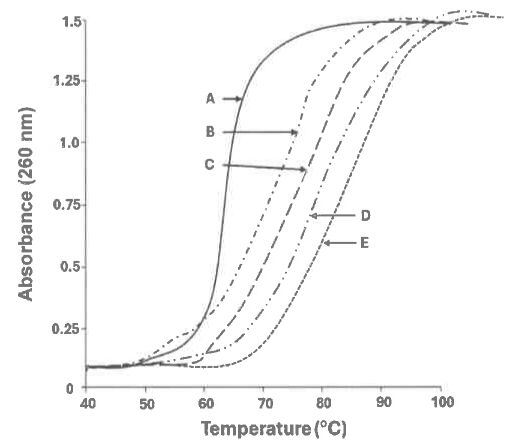 (A) A (B) B (C) C (D) D (E) E